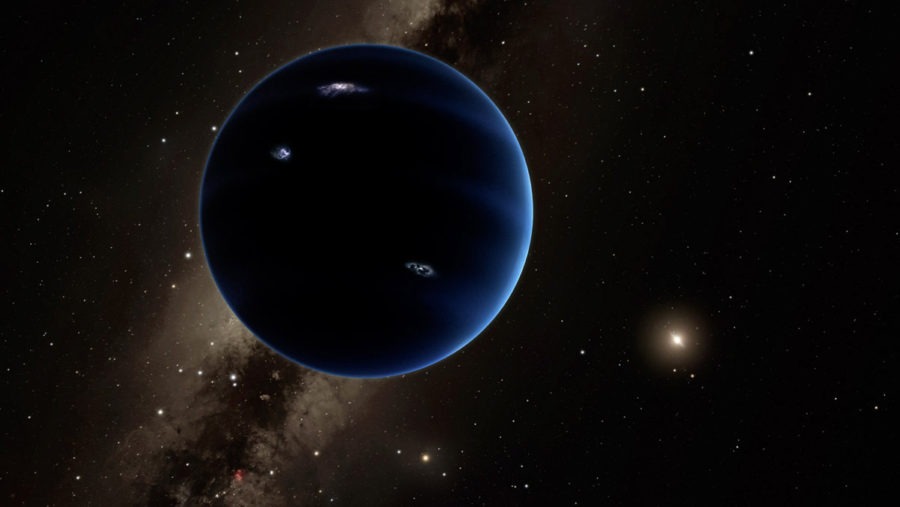
Astronomers using the European Southern Observatory’s Very Large Telescope and NASA’s James Webb Space Telescope have discovered a giant exoplanet, Beta Pictoris d. Hiding within a bright cosmic debris disk 63 light-years away, the cold gas giant is roughly 2.4 times Jupiter's mass and was detected using advanced direct spectroscopy.
PARIS, France — An international team of astronomers has discovered a giant exoplanet, designated Beta Pictoris d, hiding within the intensely studied Beta Pictoris star system located 63 light-years from Earth. The discovery was confirmed through complementary observations by the European Southern Observatory (ESO)’s Very Large Telescope (VLT) in Chile and NASA’s James Webb Space Telescope (JWST).
The planet remained undetected for years because it sits inside a bright debris disk of dust and rock that scattered starlight like fog. The findings, published in The Astrophysical Journal Letters, make Beta Pictoris only the second known planetary system to feature at least three directly imaged giant exoplanets.
Technical Discovery and Spectroscopic Profiling
Beta Pictoris d was detected using the ERIS instrument on the VLT and NIRSpec (Near-Infrared Spectrograph) on the Webb Space Telescope. Rather than relying solely on visual light points, scientists isolated the planet's atmospheric signature by tracking distinct carbon monoxide absorption lines.
The exoplanet orbits its host star at approximately 30 Astronomical Units (AU)—a distance comparable to Neptune's orbit around the Sun—placing it along the inner boundary of the system's massive debris disk. Following the initial detection, researchers re-examined archival data from the VLT’s SPHERE instrument and confirmed the planet had been captured in previous survey frames spanning over a decade.
Implications for Exoplanet Imaging and System Evolution
Beta Pictoris d is smaller than its sister planets, Beta Pictoris b and c, which are both roughly 10 times more massive than Jupiter. Being cooler and approximately 100 times fainter than Beta Pictoris b, it represents one of the faintest and lowest-mass exoplanets directly imaged from Earth.
The successful isolation of Beta Pictoris d demonstrates that high-resolution spectroscopic techniques can identify faint worlds buried within dense circum-stellar debris disks. This method is expected to assist astronomers using upcoming observatories, such as ESO’s Extremely Large Telescope (ELT), to locate lower-mass planets in young planetary systems.
Official Sources Section
Observational results, spectroscopic datasets, and discovery papers are archived by the European Southern Observatory (ESO) under press release release eso2609, with complementary observational reports issued by NASA and published in The Astrophysical Journal Letters.
Quote Section
"According to researchers in official study disclosures, detecting Beta Pictoris d demonstrates that advanced spectroscopic instruments can reveal low-mass planets hiding within dense cosmic dust, opening up new pathways to study young planetary systems."
Why It Matters
For Astronomical Science: Provides a real-time laboratory to study how gas giants form and interact with circumstellar debris disks during early solar system evolution.
For Deep Space Observation: Proves that spectral barcoding can detect faint exoplanets previously obscured by dust, improving target selection for future space missions.
For Planetary Models: Establishes key empirical benchmarks to calibrate theoretical models governing gas giant cooling rates and orbital dynamics.
Key Facts at a Glance
Discovery: Giant exoplanet Beta Pictoris d discovered 63 light-years away in the constellation Pictor.
Mass & Orbit: Roughly 2.4 Jupiter masses orbiting at 30 AU inside a bright debris disk.
Instruments Used: ESO Very Large Telescope (ERIS/SPHERE) and NASA James Webb Space Telescope (NIRSpec).
Milestone: One of the faintest exoplanets directly imaged, expanding the Beta Pictoris system to three confirmed giant planets.
Frequently Asked Questions (FAQ)
What is Beta Pictoris d?
Beta Pictoris d is a newly discovered gas giant exoplanet orbiting the star Beta Pictoris, located 63 light-years from Earth. It is about 2.4 times as massive as Jupiter.
Why was this planet hidden for so long?
Beta Pictoris d remained undetected because it sits within a dense, bright disk of gas and dust surrounding its host star. The dust scatters starlight, creating a "fog" that hides faint planetary light sources.
Which space telescopes made the discovery?
The planet was identified using the NIRSpec instrument on NASA's James Webb Space Telescope (JWST) and the ERIS and SPHERE instruments on the European Southern Observatory's Very Large Telescope (VLT).
Source: Official astronomical research releases published by the European Southern Observatory (ESO) and mission updates issued by NASA and the Space Telescope Science Institute (STScI).