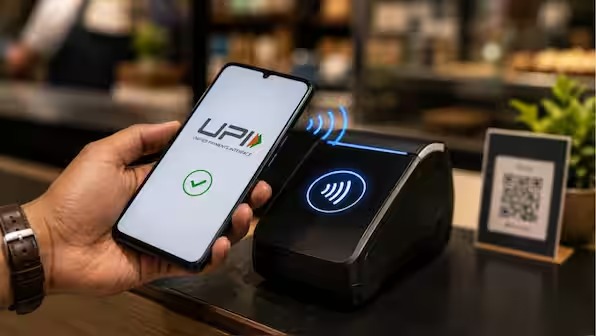
The NPCI is developing an NFC-based offline UPI payment system allowing transactions up to ₹2,000 without an internet connection. By tapping an NFC-enabled smartphone on a certified PoS terminal, users can pay using funds pre-loaded in their UPI Lite wallet, offering a reliable alternative in low-connectivity areas or remote locations.
National Payments Corporation of India (NPCI) is developing an advanced NFC-based offline payment feature to enable digital transactions without requiring active internet connectivity.
NEW DELHI — Digital payments in India are set to become even more accessible as the National Payments Corporation of India (NPCI) reportedly develops a new offline transaction system. This upcoming feature is designed to allow users to make payments at merchant point-of-sale (PoS) terminals using Near Field Communication (NFC) technology, eliminating the need for mobile data or Wi-Fi during the transaction process.
This development builds upon existing offline solutions like *99# and UPI 123Pay, but aims to remove the dependency on telecom network signals entirely for the payment itself. By leveraging NFC, the system will facilitate seamless, short-range wireless communication between a smartphone and a certified offline PoS terminal.
How the New Offline Payment System Works
According to reports, the proposed offline mechanism will utilize an on-device digital wallet, specifically the existing "UPI Lite" infrastructure. The process is expected to function as follows:
Pre-loading Funds: Users will first load money into their UPI Lite wallet while connected to the internet.
NFC Tap-to-Pay: Once funds are loaded, users can simply tap their NFC-enabled smartphone on an NPCI-certified offline PoS terminal to initiate a payment.
PIN-Free Transactions: The system is designed to allow payments without requiring a UPI PIN, streamlining the checkout experience.
Verification: The offline terminal will record the transaction authorization and transmit it for final verification once the device or terminal regains network connectivity.
This innovation is expected to benefit users in environments where connectivity is often unreliable, such as underground metro networks, remote rural areas, or even during air travel.
Transaction Limits and Constraints
While regular UPI transactions currently support high-value transfers of up to ₹1 lakh (and up to ₹5 lakh for specific categories), offline NFC payments will be focused on smaller, everyday micro-transactions.
Per-Transaction Cap: The new offline NFC-based payments are reportedly being developed with a transaction limit of ₹2,000.
Daily Usage: Usage will be governed by the balance available in the user's UPI Lite wallet, which currently allows for a maximum balance of ₹2,000 at any given time.
Technology Requirement: Users will require an NFC-enabled smartphone and must interact with NPCI-certified PoS terminals, which manufacturers are expected to begin rolling out later this year.
Existing Offline Solutions vs. New NFC Feature
India already offers several ways to transact without high-speed internet, though they differ from the upcoming NFC-based system:
| Feature | UPI Lite X (Current) | UPI 123Pay / *99# | NFC Offline (Upcoming) |
| Connectivity | NFC-based offline | USSD/Voice (needs GSM signal) | Fully offline (NFC) |
| PIN Required | No | Yes | No |
| Primary Use | Small daily payments | Feature phone/Low-data users | Retail PoS terminals |
While *99# and UPI 123Pay remain crucial for financial inclusion—allowing users with feature phones to transact via voice or USSD—the upcoming NFC feature focuses on "tap-to-pay" convenience at physical retail points.
Why It Matters
For merchants and consumers, this evolution reduces the impact of "Server Busy" or "No Network" errors that can disrupt business during peak hours. By enabling digital transactions through device-to-device communication, the NPCI is further reducing India’s dependence on physical cash in scenarios where digital infrastructure previously struggled.
As the NPCI begins the process of certifying PoS manufacturers, this feature is expected to expand the reach of digital payments to even the most connectivity-challenged regions of the country.
Key Facts at a Glance
Technology: Uses short-range NFC (Near Field Communication) for secure, offline data transfer.
Transaction Cap: Payments are expected to be limited to ₹2,000 per transaction.
Funding: Works via the existing UPI Lite on-device wallet, which must be loaded while online.
Availability: Requires NFC-enabled smartphones and certified PoS merchant terminals.
Frequently Asked Questions (FAQ)
1. Do I need an internet connection to make these payments?
No. The core advantage of this upcoming NFC feature is that the actual payment transaction does not require active mobile data or Wi-Fi. However, you must be connected to the internet beforehand to "top up" your UPI Lite wallet.
2. Is this the same as UPI Lite?
It uses the UPI Lite wallet infrastructure, but the upcoming NFC-based feature specifically enables "tap-to-pay" at offline PoS terminals, whereas current UPI Lite is primarily an app-based, small-value payment solution.
3. What happens if I lose my phone?
The system relies on device-level security. Furthermore, because it uses a pre-loaded wallet (like UPI Lite) with small transaction limits, the potential for unauthorized large-value loss is significantly minimized compared to direct bank-account access.
4. Can I pay any merchant with this?
You will be able to pay at merchants using NPCI-certified offline PoS terminals. The NPCI is currently in the process of certifying these devices.
Source: National Payments Corporation of India (NPCI), Business Standard Reports, Indiatoday Technology, Oxigen Wallet