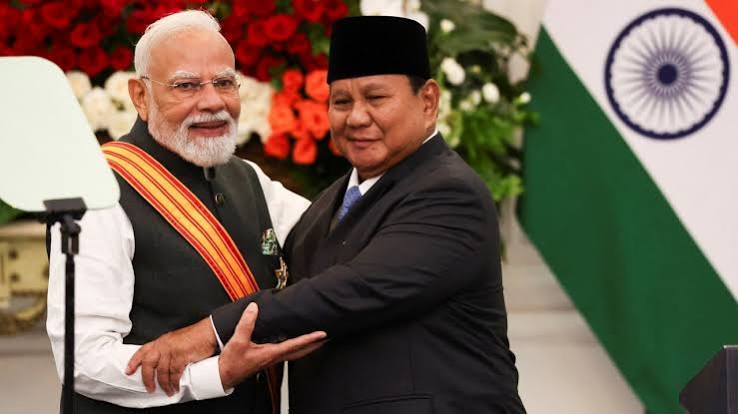
Prime Minister Modi’s agreement to jointly develop Indonesia’s Sabang Port marks a major strategic expansion for India in the Indo-Pacific. Located at the entrance to the Strait of Malacca, the port project—paired with new defence deals—aims to boost regional trade, improve naval surveillance, and counter China’s maritime influence.
JAKARTA — During a high-stakes diplomatic visit to Indonesia on July 7, 2026, Prime Minister Narendra Modi reached a landmark agreement with Indonesian President Prabowo Subianto to jointly develop the strategically vital Sabang Port. Situated on Weh Island at the northern tip of Sumatra, the port overlooks the Strait of Malacca, one of the world’s most critical maritime chokepoints.
This development is widely viewed by geopolitical analysts as a cornerstone of India’s "Act East" policy, designed to enhance maritime visibility and security in the Indo-Pacific. By securing a foothold near the mouth of the Malacca Strait—a route that carries roughly 40% of global trade and the majority of East Asia's energy imports—India is positioning itself to safeguard its regional interests amid intensifying competition for influence.
Strategic Significance: Checkmating the 'String of Pearls'
For years, India has sought to address the strategic challenge posed by China’s "String of Pearls" strategy—a network of Chinese-backed military and commercial port facilities encircling the Indian Ocean. Analysts suggest that the Sabang Port project serves as a calculated response to this encirclement.
Located approximately 160 kilometers from India’s upcoming Great Nicobar transshipment hub, Sabang Port allows New Delhi to establish a dual-front presence on either side of the northern entrance to the Malacca Strait. This geographical synergy is expected to enhance India’s surveillance capabilities, facilitate naval logistics, and provide a reliable hub for humanitarian assistance and disaster relief operations in the eastern Indian Ocean.
Strengthening Bilateral Defence Ties
The port agreement was accompanied by significant defence cooperation, with India finalizing the export of BrahMos supersonic cruise missiles and Astra air-to-air missiles to Indonesia. This deepening of the security partnership signals a transition in India's role from a regional participant to a credible exporter of high-tech defence systems.
According to officials, the synergy between infrastructure development and defence exports is intentional. By fostering deeper economic and military ties, India and Indonesia aim to build a robust framework for regional stability and supply-chain resilience.
Why It Matters: Beyond the Horizon
The practical implications of the Sabang Port development are substantial:
Maritime Surveillance: It provides India with a permanent footprint near the Malacca chokepoint, a critical vulnerability for energy-dependent economies.
Trade Connectivity: Once fully operational, the port is expected to lower logistics costs and improve shipping links across the Bay of Bengal and Southeast Asia.
Regional Stability: Pairing the Sabang project with the Great Nicobar transshipment terminal creates a maritime corridor that strengthens India’s influence in the Indo-Pacific.
Key Facts at a Glance
Strategic Location: Weh Island, Indonesia, overlooking the Strait of Malacca.
Proximity: Roughly 160 kilometers from India’s Great Nicobar transshipment hub.
Primary Objective: Improve maritime trade, regional connectivity, and security cooperation.
Related Defence Deals: Export of BrahMos and Astra missile systems to Indonesia.
FAQ
1. Why is the Strait of Malacca so critical to this deal?
The strait is a global chokepoint through which approximately 40% of global trade and 80% of China's oil imports pass, making it a vital area for regional energy security.
2. Is the Sabang Port a military base?
While the project primary focus is commercial trade and connectivity, its infrastructure allows for the potential servicing of naval vessels, including submarines, enhancing India's logistical reach.
3. How does this counter China’s influence?
By establishing a maritime foothold near key chokepoints, India strengthens its ability to monitor regional maritime activity, effectively challenging China’s expansionist maritime footprint in the Indian Ocean.
Source: Business Standard, India Today, SPSMAI, The Indian Express