Skyroot Aerospace’s Vikram-I rocket successfully achieved orbit on its maiden test flight from Sriharikota, making it India's first privately developed orbital launch vehicle. The historical milestone drew high praise from Prime Minister Narendra Modi and space industry leaders, signaling India's transformation into a competitive hub for international commercial satellite logistics.
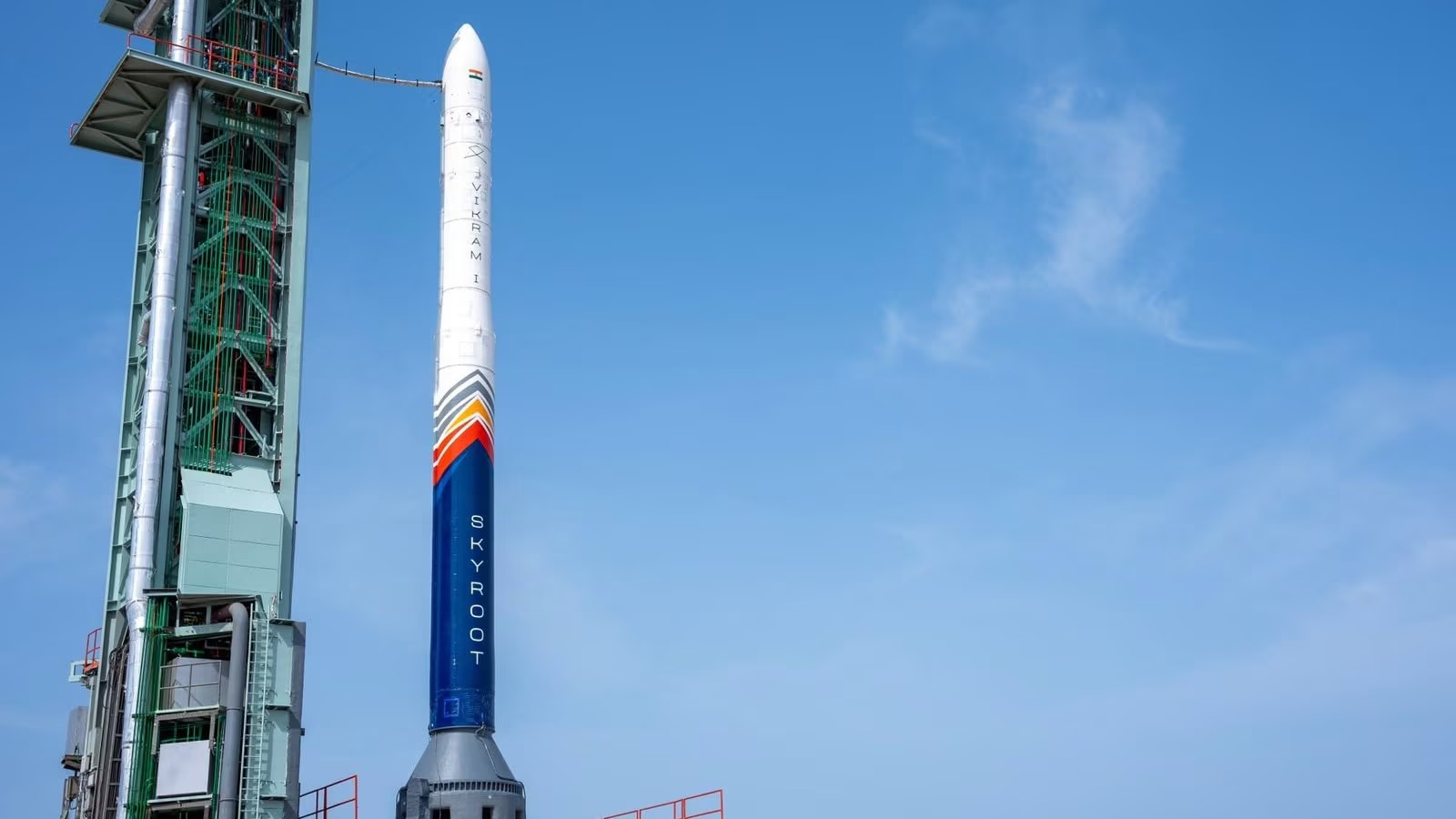
SRIHARIKOTA — The Indian space sector achieved a historic milestone on Saturday, July 18, 2026, as the maiden orbital flight of the privately developed Vikram-I rocket successfully reached its targeted Low Earth Orbit (LEO). Developed by space technology startup Skyroot Aerospace, the multi-stage launch vehicle lifted off from the First Launch Pad at the Satish Dhawan Space Centre (SDSC-SHAR) at 12:05 PM IST. The mission, codenamed "Aagaman" (The Arrival), marks the first time a private Indian enterprise has successfully designed, built, and launched an orbital-class rocket into space from domestic soil, prompting nationwide celebration among public figures and space sector professionals.
Flawless Maiden Flight and Technical Performance
According to formal statements issued by the Indian Space Research Organisation (ISRO) and the regulatory body IN-SPACe, the four-stage vehicle completed all structural separation sequences with textbook precision. Standing seven storeys tall and constructed with an all-carbon composite structure, Vikram-I utilized three solid-propellant core stages alongside a liquid-fueled Orbital Adjustment Module (OAM) to achieve final deployment.
The vehicle carried multiple functional payloads into a 450-kilometer orbit at a 60-degree inclination, including the SCOPE and Grahaa satellites, alongside global technology demonstration arrays from DCubed and Cosmoserve.
The technical milestones validated during the flight encompass:
Validation of proprietary high-thrust solid rocket motors (Kalam series) cast at ISRO facilities.
Flight performance verification of 3D-printed liquid-fuel upper-stage engines.
Seamless orbital payload injection metrics confirmed via satellite tracking arrays.
The achievement places India into an elite group of countries possessing sovereign, privately developed orbital launch assets. Notably, Skyroot Aerospace succeeded on its very first attempt—a rare feat in private space history compared to global peers like SpaceX, which required four attempts to reach orbit with its early Falcon 1 rocket.
Nationwide Public and Political Commendation
The historic orbital deployment triggered widespread praise across political, academic, and industrial organizations. Prime Minister Narendra Modi spoke directly with Skyroot founders Pawan Kumar Chandana and Naga Bharath Daka immediately following the confirmation of payload separation. The Prime Minister praised the startup's engineers, stating that the milestone beautifully validates the government's 2020 decision to introduce comprehensive space-sector reforms allowing independent commercial players to utilize national launch pads.
The mood inside the mission control center turned celebratory as the rocket crossed the 100-kilometer altitude threshold into space. Prominent scientists and administrative officials, including current ISRO leadership and the directorate of the Indian Space Association (ISpA), witnessed the deployment firsthand, highlighting the strong public-private partnership that enabled the mission's success.
Official Sources Section
The engineering data, orbital parameters, and official timelines featured in this report are verified by formal agency notices.
All core metrics match launch data published by the Indian Space Research Organisation and regulatory tracking data managed by IN-SPACe. Corporate funding records and financial variables are in line with official announcements from the Ministry of Commerce & Industry and the Press Information Bureau (PIB) of India.
Quote Section
"According to officials familiar with the launch review, the successful deployment of such complex, IP-heavy payloads proves that our private ecosystem is now building critical global infrastructure for space sustainability and high-resolution Earth intelligence. The flight data generated will be foundational to establishing a regular launch cadence."
Why It Matters
For commercial satellite operators, communication firms, and international tech developers, the flawless validation of Vikram-I provides an accessible, on-demand avenue to insert small payloads into precise configurations without waiting for larger rideshare options.
For institutional investors, venture capital houses, and financial analysts, the successful orbital mission underscores the massive commercial potential of India's deep-tech start-up ecosystem. By proving they can successfully execute orbital launches on the first try, Indian space startups can aggressively compete for a larger share of the global small-satellite launch market, transforming the country into a highly competitive international space logistics hub.
Key Facts at a Glance
Historic Flight: Vikram-I successfully completed its maiden orbital launch from Sriharikota on July 18, 2026.
Unicorn Achievement: Skyroot Aerospace becomes the first private Indian company to successfully place payloads into orbit, succeeding on its very first try.
Payload Package: The rocket safely injected multiple functional demonstration satellites, including SCOPE and Grahaa, into a 450-km orbit.
Ecosystem Expansion: Reflects the massive growth of India's private space sector, which has expanded to over 400 active startups since major regulatory reforms were introduced.
FAQ Section
What is the primary difference between the Vikram-S and Vikram-I rockets?
The Vikram-S rocket, launched successfully in November 2022, was a sub-orbital test vehicle designed to briefly reach space before returning. Vikram-I is a significantly larger, seven-storey, four-stage orbital rocket engineered to accelerate payloads to the exact speeds required to continuously circle the Earth.
What kinds of payloads did the Vikram-I carry during the "Aagaman" mission?
The rocket carried functional small satellites for Earth observation and communication (SCOPE and Grahaa), advanced mechanical deployment tests, and specialized space-sustainability demonstration models.
How does this successful launch affect the global commercial satellite industry?
It introduces a reliable, highly cost-effective, on-demand private launch alternative from India. This gives international customers quicker and more flexible options to deploy small satellite constellations.
Source: Indian Space Research Organisation Press Desk, IN-SPACe Regulatory Disclosure Registry, Indian Space Association Industry Review, Press Information Bureau - Government of India.