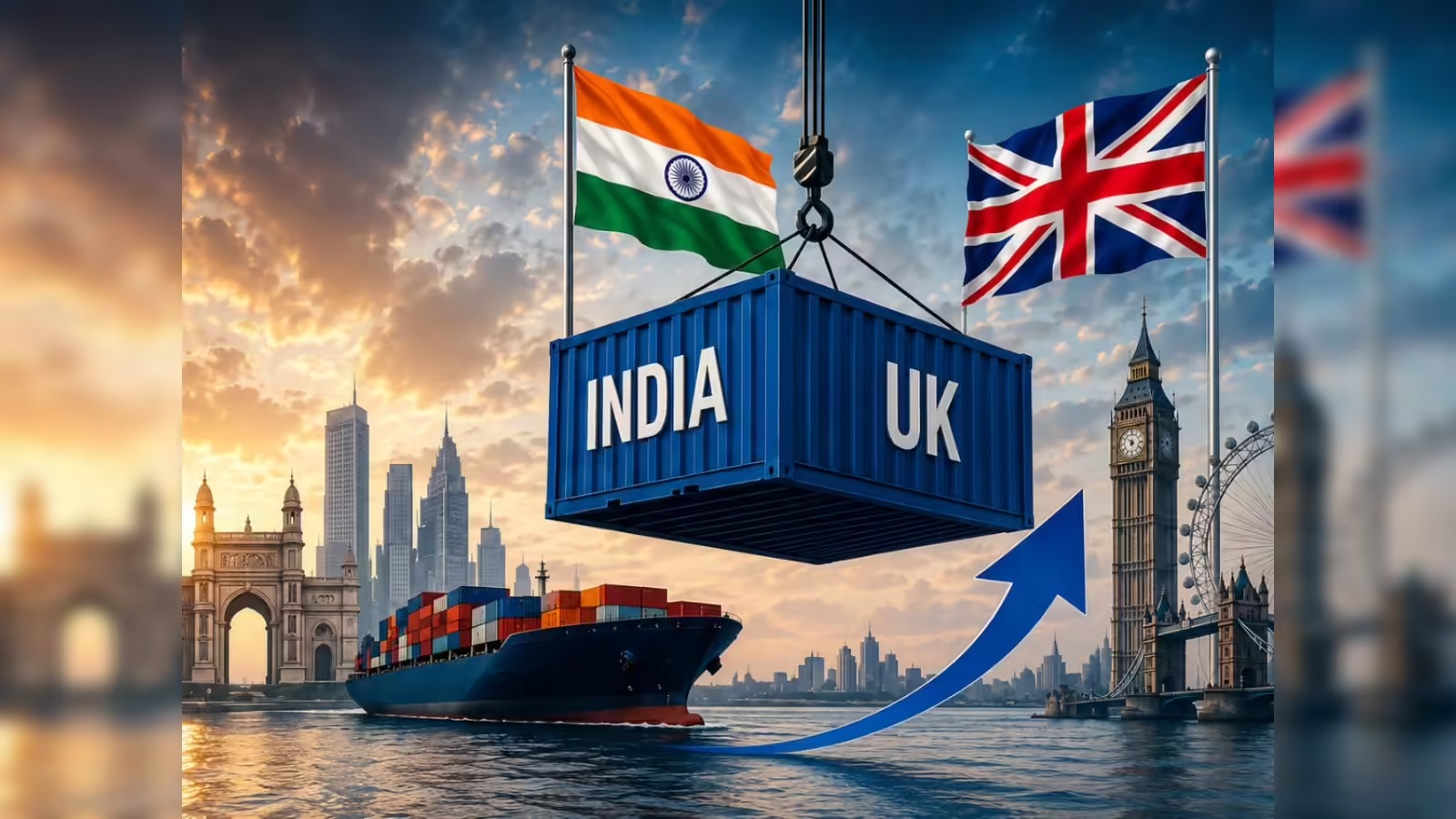
The India–UK Comprehensive Economic and Trade Agreement (CETA), effective July 15, 2026, grants India duty-free access to 99% of its exports in the $900 billion UK market. This landmark pact aims to double bilateral trade to $100 billion by 2030, significantly boosting competitive sectors like textiles, engineering, and professional services.
The landmark India–UK Comprehensive Economic and Trade Agreement (CETA) officially entered into force on July 15, 2026, marking a transformative shift in bilateral trade and offering Indian exporters unprecedented access to one of the world's largest developed markets.
NEW DELHI — India has officially unlocked significant new avenues for its domestic industries following the implementation of the India–UK Comprehensive Economic and Trade Agreement (CETA). Designed to deepen bilateral economic integration, the trade pact provides zero-duty market access for nearly 99% of India’s exports to the United Kingdom, a market valued at approximately $900 billion.
With India currently supplying only about $14 billion worth of goods to this massive market, analysts see a "huge" untapped export potential. The agreement, which became effective on July 15, 2026, is a cornerstone of the broader strategic partnership between the two nations, aiming to double bilateral trade from its current base to $100 billion by 2030.
Boosting Competitiveness for Labour-Intensive Sectors
The CETA is particularly transformative for India’s labour-intensive manufacturing sectors, which previously faced stiff tariff disadvantages in the British market compared to regional competitors like Bangladesh, Pakistan, and Cambodia. By removing tariffs that previously ranged between 4% and 16%, the agreement immediately strengthens the price competitiveness of Indian goods.
Key sectors poised for growth include:
Textiles and Apparel: Duty-free access is expected to drive export growth, with projections suggesting a rise to $3.1 billion over the next five years.
Leather and Footwear: Duties have been reduced to zero, supporting a projected increase in market share from 5% to 10% within five years.
Engineering and Electronics: The pact is set to bolster exports of televisions, monitors, and telecom instruments, with projections for this category reaching $4 billion by FY31.
Agriculture and Marine Products: Tariff-free access for marine products, rice, and spices is expected to significantly enhance price realization for farmers and coastal industries.
Landmark Provisions: Mobility and Strategic Cooperation
Beyond merchandise trade, the agreement features a first-of-its-kind "Double Contribution Convention" (DCC). This social security pact exempts short-term Indian professionals working in the UK from contributing to the British National Insurance grid for up to 60 months, provided they continue their contributions in India. This measure is expected to save Indian professionals and companies over $600 million annually, facilitating smoother cross-border talent movement.
Furthermore, the CETA introduces calibrated market liberalization. For the first time in an Indian trade pact, India has agreed to reduce high import tariffs on fully built British passenger vehicles—from levels as high as 110% down to 10% over a decade—subject to annual quotas. Conversely, India has strategically protected sensitive domestic interests, including dairy, select agricultural products, and early-stage electric vehicle manufacturing, through phased implementation timelines.
Official Perspective
According to government releases and trade ministry documentation, the CETA is more than a tariff-reduction exercise; it is a deep-integration framework that addresses regulatory standards, sanitary and phytosanitary measures, and digital trade. The agreement opens up India's central government procurement market to UK suppliers for the first time, while simultaneously creating new export opportunities for Indian service providers across 137 sub-sectors.
Why It Matters
The implementation of CETA represents a definitive shift in India's global trade strategy, moving away from defensive protectionism toward high-yield integration into Western supply chains. By aligning professional standards and simplifying customs procedures, the pact not only boosts immediate trade figures but also strengthens the resilience of bilateral supply chains, providing a clear roadmap for MSMEs and startups to scale their operations internationally.
Key Facts at a Glance
Trade Goal: Doubling bilateral trade to $100 billion by 2030.
Duty-Free Access: UK granted zero-duty access on nearly 99% of Indian exports.
Key Beneficiaries: Textiles, leather, gems & jewellery, engineering goods, and marine products.
Talent Mobility: Double Contribution Convention (DCC) exempts Indian professionals from UK social security for 5 years.
FAQ
What is the primary objective of the India–UK CETA?
The agreement aims to deepen economic integration, liberalize commerce in both goods and services, and remove traditional border barriers to boost bilateral trade.
Does the agreement offer duty-free access for all products?
While nearly 99% of India’s export lines to the UK are duty-free, India has retained protections for sensitive sectors like dairy, specific agricultural items, and select manufacturing areas.
How does the Double Contribution Convention benefit professionals?
It exempts Indian professionals on short-term assignments in the UK from paying into the British National Insurance system for up to 5 years, saving them and their employers significant costs.
What are the main sectors seeing immediate benefits?
Labour-intensive sectors such as textiles, garments, leather, gems and jewellery, and engineering goods are identified as primary beneficiaries of the new tariff-free regime.
Source: Bank of Baroda Economics Research, PIB India, Drishti IAS, Next IAS, The Economic Times