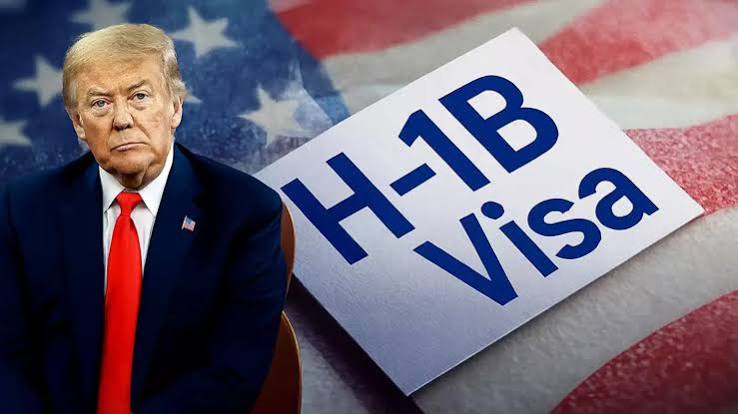
As the Trump administration pursues sweeping H-1B visa reforms, including a contested $100,000 fee, federal courts have placed the policy on hold. Indian tech workers and U.S. employers continue to monitor the legal battles closely amid warnings that high costs could shift tech jobs overseas.
WASHINGTON — Indian technology workers, major U.S. corporations, and immigration stakeholders are closely monitoring ongoing developments surrounding the U.S. H-1B visa program following executive proclamations and subsequent federal court rulings regarding steep supplemental fees.
The regulatory shifts, initially introduced via a presidential proclamation by the Trump administration to curb perceived program abuses, have created a complex landscape for foreign professionals—who historically account for over 70% of all H-1B beneficiaries, with Indian nationals representing the vast majority.
Legal Challenges and the $100,000 Fee Battle
The central point of contention involves an administration initiative to impose a $100,000 supplemental fee on new H-1B visa petitions. While the measure was designed to make sponsoring foreign workers significantly more expensive and encourage the hiring of domestic labor, it immediately triggered widespread opposition from industry associations and immigration advocates.
The policy faced a major legal setback when federal courts intervened. According to official court records and legal updates:
District Court Ruling: On June 8, 2026, the U.S. District Court for the District of Massachusetts vacated agency guidance implementing the $100,000 payment requirement, ruling it an unauthorized tax.
Appeals Court Decision: On July 24, 2026, a three-judge panel of the First Circuit Court of Appeals denied the federal government's motion to stay the lower court's ruling pending appeal.
Current Enforcement Status: While the administration's fee collection is currently on hold due to the judicial block, the Department of Homeland Security (DHS) has indicated it intends to pursue further legal options if the injunction is lifted.
Broader Reforms: Alongside fee proposals, the administration has explored wage-weighted lottery models and enhanced site visits by Fraud Detection and National Security (FDNS) officers.
Official Sources Section
Quote Section
According to statements released by lawmakers and legal experts evaluating the economic and workforce implications:
"The proposed fee effectively acts as a $100,000 tax on a group of workers who fill some of the most specialized technical roles in our economy, potentially driving companies to offshore work rather than absorb the cost."
— Raja Krishnamoorthi, U.S. Congressman
Why It Matters
For Indian professionals already working in the United States or planning to migrate, ongoing policy shifts introduce significant uncertainty regarding long-term career planning and family stability. For U.S. employers, managing immigration compliance requires careful scenario-planning to navigate potential cost shocks and evolving regulatory standards.
Key Facts at a Glance
Primary Program: H-1B non-immigrant specialty occupation visa.
Key Demographic: Indian nationals represent the majority of H-1B visa beneficiaries.
Controversial Proposal: A $100,000 supplemental fee on new petitions.
Legal Status: Federal appeals court blocked the administration's stay request, keeping the fee requirement on hold.
FAQ Section
What is the status of the $100,000 H-1B fee proposal?
The fee collection is currently on hold following rulings by a federal district court and the First Circuit Court of Appeals, which blocked the administration's implementation guidance while legal appeals continue.
How does this impact current H-1B visa holders from India?
According to USCIS guidance, existing visa holders and previously approved petitions are not subject to the proposed new fees, and current holders can travel and renew in accordance with established rules.
What are the broader concerns raised by lawmakers about these policy changes?
Critics, including several U.S. lawmakers, warn that excessively high fees could discourage top technical talent from coming to the U.S. and incentivize corporations to offshore specialized tech jobs.
Where can applicants review official government updates on H-1B rules?
Official announcements, filing instructions, and legal compliance notices are published directly on the USCIS and Department of Labor web portals.
Source: USCIS, Department of Labor, First Circuit Court of Appeals, Hindustan Times