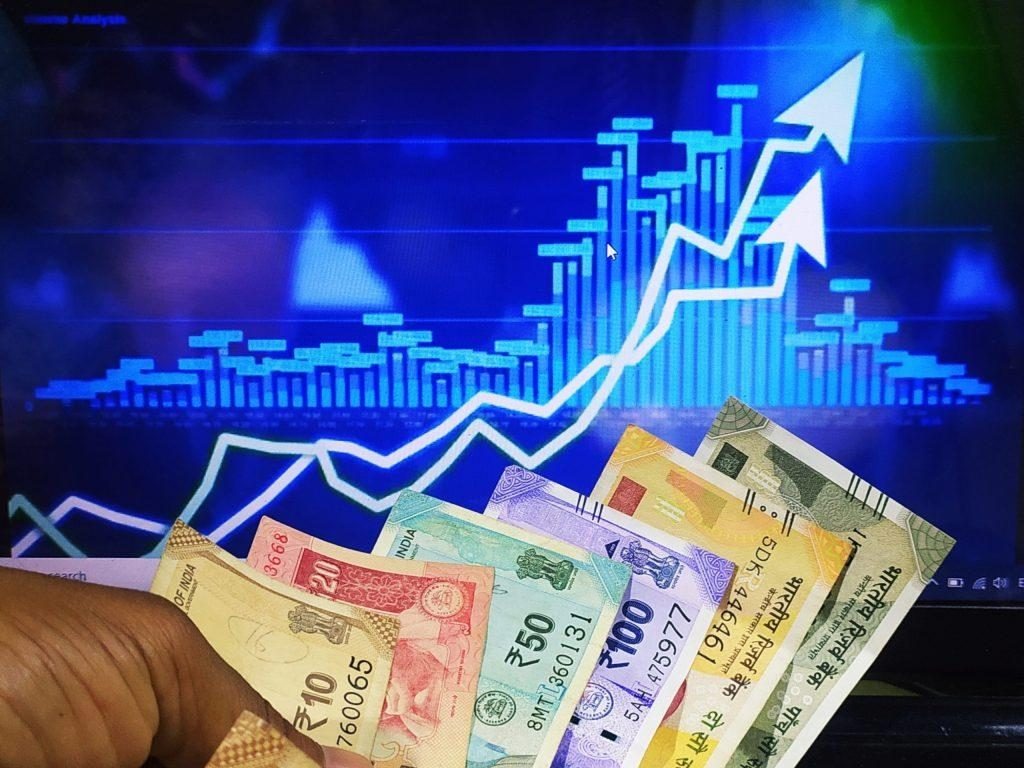
Indian equities ended in the green on July 6, 2026, with the Nifty 50 index rising 0.63% on the back of strong banking sector performance. Conversely, the Indian Rupee dipped 0.2% to 95.3950 against the US Dollar, pressured by a firm greenback ahead of key global monetary policy developments.
Indian equity markets extended their winning streak on Monday, fueled by robust banking gains and sustained foreign institutional interest, even as the rupee softened against the US dollar.
MUMBAI — Indian equity markets maintained a positive momentum on Monday, July 6, 2026, with the Nifty 50 index provisionally closing 0.63% higher. The benchmark index, which opened on a positive note, was primarily driven by a rally in banking stocks following upbeat quarterly business updates from major private-sector lenders.
While domestic equities saw a broad-based advancement, the Indian Rupee (INR) faced downward pressure, ending the session at 95.3950 against the US Dollar. This represents a 0.2% decline from the previous day’s close of 95.21, as the greenback saw renewed strength globally ahead of key upcoming monetary policy signals.
Banking Sector Leads Nifty 50 Rally
The Nifty 50 index benefited significantly from a surge in the banking sector. Investors responded positively to provisional business updates for the April–June 2026 quarter released by several leading private banks. HDFC Bank, in particular, was a standout performer after reporting strong year-on-year growth in both gross advances and deposits.
Market breadth remained encouraging throughout the session, with a significant number of stocks advancing across the National Stock Exchange (NSE). Analysts noted that continued buying by Foreign Institutional Investors (FIIs) has been a crucial pillar of support for the current market rally, providing a counter-balance to the profit-booking observed among domestic institutional players.
Currency Dynamics and Global Cues
The Indian Rupee’s movement on July 6 reflected a global strengthening of the US dollar. The dollar index has shown increased volatility as international investors adjust their positions in anticipation of the Federal Open Market Committee (FOMC) minutes, due for release later this week.
Despite the rupee's depreciation, the domestic market sentiment was buoyed by easing crude oil prices, which have remained below the US$72 per barrel mark. Lower oil prices are generally viewed as a positive macroeconomic indicator for India, given the nation's heavy reliance on imported energy.
Official Sources
Market performance data and sector-specific updates were sourced from the National Stock Exchange (NSE) of India and real-time market analysis provided by financial service platforms. Official regulatory filings from major private banks served as the basis for the sector-specific sentiment shifts.
Quote Section
"According to market analysts," the current resilience in the Nifty 50 index demonstrates a clear shift in investor confidence, particularly in financial services and IT sectors, which have provided a defensive hedge against currency fluctuations. Organizers and market observers stated that the current rally is indicative of a "constructive technical structure," provided the Nifty 50 sustains its momentum above the 24,400-point psychological threshold.
Why It Matters
The divergence between the strengthening equity market and the softening rupee highlights the complex macroeconomic environment currently facing Indian investors. While the stock market rally reflects internal growth prospects and strong corporate earnings expectations, the rupee's decline serves as a reminder of global interest rate sensitivity and the influence of foreign capital flows. For businesses, a weaker rupee increases the cost of imports, while for investors, the sustained equity gains offer a potential offset to currency-related inflationary pressures.
Key Facts at a Glance
Nifty 50 Performance: Closed provisionally 0.63% higher on July 6, 2026.
Currency Movement: The Indian Rupee (INR) ended at 95.3950 per US Dollar, a 0.2% decrease.
Sector Focus: Banking stocks led the day's gains following positive Q1 business updates.
Crude Oil Influence: Continued trading of crude oil below US$72 per barrel supported domestic market sentiment.
Institutional Activity: Sustained FII buying remains a primary driver of the current equity rally.
FAQ
Why did the Nifty 50 index rise today?
The index was lifted by strong performances in the banking sector following positive quarterly business updates, coupled with sustained foreign institutional investor (FII) buying and stable crude oil prices.
Why is the Indian Rupee softening?
The rupee's decline is largely attributed to the strengthening of the US Dollar globally, as investors prepare for upcoming signals from the Federal Reserve regarding future monetary policy.
What should investors watch in the coming sessions?
Investors are closely monitoring the upcoming FOMC meeting minutes, corporate earnings reports for the June quarter, and further trends in foreign capital inflows.
Does the rupee's decline impact the stock market?
Generally, a weaker rupee can increase costs for import-heavy companies, but the Indian equity market's current momentum is being sustained by strong domestic corporate performance and sector-specific growth.
Source: National Stock Exchange (NSE), RBI Exchange Rate Data, Market Analysis via Kotak Neo