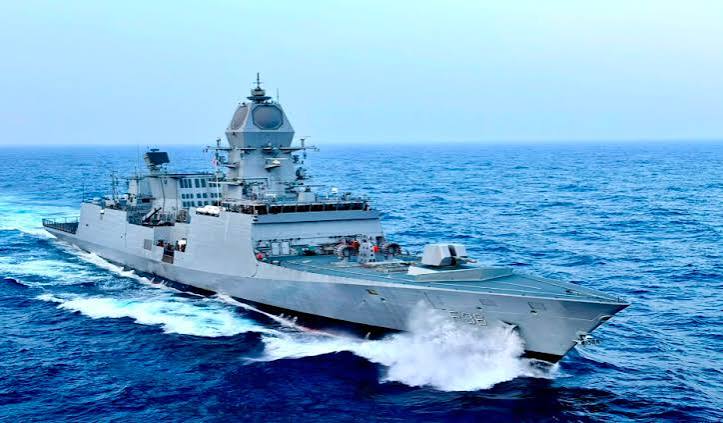
The Indian Navy will commission three indigenously constructed platforms—stealth frigate Dunagiri, survey vessel Sanshodhak, and anti-submarine craft Agray—in Kolkata on June 21, 2026. Presided over by Prime Minister Narendra Modi, the simultaneous induction marks a major milestone for self-reliance, with domestic industrial content exceeding 75 percent across the fleet additions
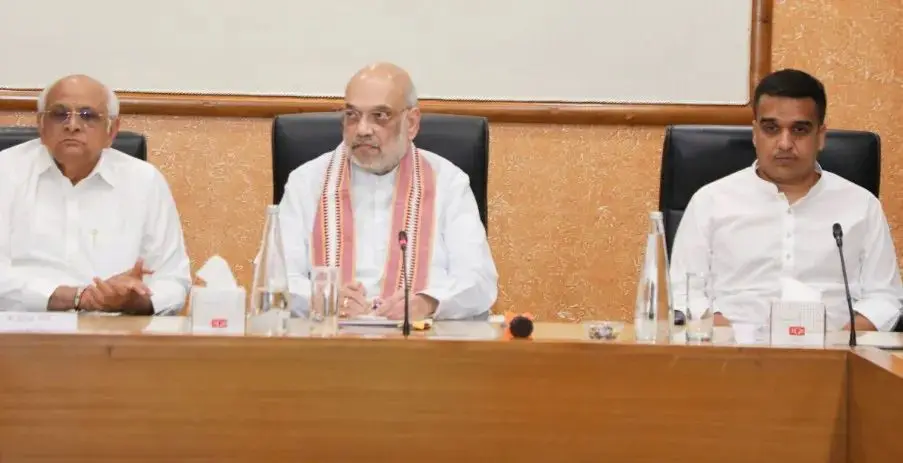
KOLKATA — The Indian Navy is scheduled to host a landmark simultaneous commissioning ceremony for three indigenously built frontline naval platforms at the Syama Prasad Mookerjee Port in Kolkata on June 21, 2026. The high-profile defence event will be presided over by Prime Minister Narendra Modi during his two-day official visit to West Bengal. The introduction of these distinct maritime assets a stealth frigate, an anti-submarine warfare craft, and a major survey vessel comes at a critical juncture as India strategically modernizes its fleet to meet evolving security challenges across the Indian Ocean Region.
Strategic Shift Toward Balanced Naval Capabilities
The three platforms scheduled for formal induction into the fleet are Dunagiri, Sanshodhak, and Agray. All three vessels were designed domestically by the Indian Navy's Warship Design Bureau and constructed by Kolkata-based public sector undertaking Garden Reach Shipbuilders & Engineers.
According to official documentation released by the Ministry of Defence, the concurrent commissioning demonstrates a balanced approach to the Navy's structural capability expansion. The vessels satisfy distinct requirements spanning high-intensity blue-water combat operations, detailed oceanographic mapping, and littoral anti-submarine defenses.
Technical Specifications and Weapon Armaments
Project 17A Stealth Guided-Missile Frigate: Dunagiri
Dunagiri enters service as the fifth advanced stealth frigate built under the Navy’s ambitious Project 17A program. Engineered with a reduced radar cross-section, the guided-missile warship is designed to operate in high-threat environments. Armed with indigenous BrahMos surface-to-surface supersonic cruise missiles and the Medium Range Surface-to-Air Missile (MRSAM) system, the vessel provides the fleet with enhanced anti-air, anti-surface, and sub-surface offensive fire capabilities.
Survey Vessel Large: Sanshodhak
As the fourth vessel under the Sandhayak-class Survey Vessel (Large) project, Sanshodhak is built for extensive hydrographic charting and oceanographic research. The platform is configured for deep-sea and coastal data collection, supporting civilian maritime infrastructure projects alongside military tasking. It features advanced oceanographic sonar suites and is fully equipped to deploy Autonomous Underwater Vehicles (AUVs) and Remotely Operated Vehicles (ROVs) for sub-surface mapping.
Anti-Submarine Warfare Shallow Water Craft: Agray
Agray represents the fourth hull of the Arnala-class anti-submarine warfare shallow water craft (ASW-SWC). This platform is optimized specifically for coastal patrolling and littoral operations. It is outfitted with shallow-water sonar arrays, lightweight torpedoes, and indigenous rocket launchers designed to detect and neutralize hostile submarine threats operating near ports, chokepoints, or internal sea lanes.
Supply Chain Impact and Domestic Manufacturing
The structural execution of these projects underscores a growing maturity in the domestic industrial base. The Ministry of Defence confirmed that all three platforms feature an overall indigenous content exceeding 75 percent.
The manufacturing process heavily integrated domestic commercial entities, drawing materials, specialized systems, and components from more than 200 micro, small, and medium enterprises (MSMEs) nationwide. Naval analysts note that this industrial integration satisfies national Aatmanirbhar Bharat (self-reliance) goals while providing direct skilled manufacturing employment across the domestic shipbuilding supply chain.
Official Statements
"The simultaneous commissioning of Dunagiri, Sanshodhak, and Agray reflects the close collaboration between the Government of India, the Indian Navy, public sector shipyards, and private industry. These platforms collectively enhance our blue-water operations, strengthen maritime domain awareness, and secure coastal waters against emerging threats."
— Ministry of Defence, Official Statement
Why It Matters
The induction of these three vessels carries practical geopolitical and economic implications:
Securing Trade Routes: Enhanced anti-submarine and frigate patrols safeguard essential commercial sea lines of communication (SLOCs) from evolving regional disruptions.
Maritime Safety: The hydrographic capabilities of the survey vessel directly improve navigation safety charts, benefiting international commercial cargo liners and domestic ports.
Economic Multiplier: Sourcing over three-quarters of specialized components from over 200 domestic MSMEs secures long-term capital investment within India's industrial sector.
Key Facts at a Glance
Event Date and Location: June 21, 2026, at the Syama Prasad Mookerjee Port in Kolkata, West Bengal.
Presiding Official: Prime Minister Narendra Modi.
Vessels Commissioned: Dunagiri (Stealth Frigate), Sanshodhak (Large Survey Vessel), and Agray (Anti-Submarine Warfare Craft).
Indigenous Content: Exceeds 75 percent across all three military platforms.
Primary Shipbuilder: Garden Reach Shipbuilders & Engineers (GRSE), Kolkata.
Frequently Asked Questions (FAQ)
Q1: Who designed and manufactured these three new naval platforms? The vessels were designed indigenously by the Indian Navy's Warship Design Bureau and constructed by the public sector shipyard Garden Reach Shipbuilders & Engineers (GRSE) located in Kolkata.
Q2: What primary weapons systems are integrated into the new stealth frigate Dunagiri? Dunagiri is equipped with BrahMos surface-to-surface supersonic cruise missiles, Medium Range Surface-to-Air Missile (MRSAM) systems, and specialized anti-submarine warfare weaponry.
Q3: How do civilian industries benefit from the induction of the survey vessel Sanshodhak? Sanshodhak conducts deep-water hydrographic surveys and collects geophysical data. This information is vital for civilian applications, including commercial port development, marine navigation chart updates, and maritime infrastructure security.
Source: