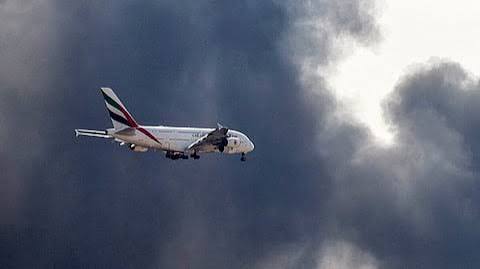
Indian pilots, represented by ALPA, have urged the government to suspend flights to Gulf destinations amid rising regional tensions, citing safety hazards like GPS interference and missile threats. The industry remains divided, balancing these critical safety concerns against the economic impact of losing market share to foreign competitors.
NEW DELHI — A deepening rift has emerged within India’s aviation sector as renewed U.S.-Iran hostilities heighten security risks for civilian aircraft in West Asia. The Airline Pilots’ Association of India (ALPA), which represents over 2,500 pilots, has formally urged the Ministry of Civil Aviation and the Directorate General of Civil Aviation (DGCA) to immediately suspend commercial flight operations to Gulf destinations, including Dubai and Abu Dhabi, until a comprehensive, independent threat assessment is conducted.
The request, submitted on Monday, July 20, 2026, highlights the growing anxiety among flight crews regarding the deteriorating security situation. However, the proposal has faced resistance from other quarters within the aviation industry, where stakeholders argue that suspending services would cause Indian carriers to lose significant market share to foreign airlines that continue to operate in the region.
Security Hazards in Conflict-Affected Airspace
In its letter to authorities, ALPA India emphasized that civilian aircraft operating in or over conflict-affected regions face multifaceted vulnerabilities. According to the association, these risks extend beyond direct military activity to include:
Operational Hazards: Potential for missile engagements, misidentification, and the effects of electronic warfare.
Navigation Risks: Significant GPS interference and rapidly changing airspace restrictions that limit the situational awareness of flight crews.
Intelligence Gaps: Limitations in accessing timely and accurate security data, complicating the ability of pilots to navigate safely.
ALPA India has offered its technical expertise to assist the DGCA in conducting thorough conflict-zone risk assessments. The association maintains that pilots should not be subjected to commercial pressure to operate in airspace deemed potentially unsafe.
Business Concerns vs. Safety Mandates
While safety remains the primary focus of the pilots' request, the broader aviation industry remains concerned about the economic consequences of a flight suspension. Industry observers note that the Gulf region is a critical hub for international travel and transit, and a unilateral halt by Indian carriers could have long-term repercussions for their competitive positioning.
The DGCA has historically managed such regional escalations through stringent safety advisories, often mandating that airlines conduct robust, operator-specific Safety Risk Assessments (SRAs) before continuing operations in high-risk zones. In March 2026, the regulator issued detailed guidance requiring airlines to avoid certain airspaces and implement stricter monitoring systems, demonstrating a preference for nuanced risk management over blanket service suspensions.
Official Sources
Directorate General of Civil Aviation (DGCA): The aviation regulator responsible for oversight, safety standards, and airspace advisories.
Airline Pilots’ Association of India (ALPA India): The largest pilots' association in India, representing over 2,500 members.
Ministry of Civil Aviation, Government of India: The governing body currently reviewing the formal appeal from ALPA India.
Quote Section
"Civil aircraft operating into or over conflict-affected regions remain vulnerable not only to direct military activity, but also to misidentification, missile engagements, electronic warfare, GPS interference, rapidly changing airspace restrictions, and limitations in timely intelligence," according to a statement from ALPA India.
Why It Matters
For travelers, the tension underscores the complex balance between maintaining international connectivity and ensuring passenger and crew safety. For businesses and airlines, the situation creates operational uncertainty, as they must continuously adapt to shifting geopolitical realities while complying with evolving safety directives from national aviation regulators.
Key Facts at a Glance
Core Demand: ALPA India is seeking a suspension of flights to Gulf destinations like Dubai and Abu Dhabi until an independent security assessment is completed.
Identified Risks: Pilots have flagged GPS jamming, electronic warfare, and missile strike risks as major concerns.
Historical Precedent: Similar concerns were raised by the association in March 2026, when conflict also flared in the region.
Regulatory Stance: The DGCA typically relies on specific Safety Risk Assessments (SRAs) and NOTAMs (Notice to Airmen) to guide airline operations in volatile airspaces.
FAQ
Why is ALPA India requesting a flight suspension?
The association cites heightened security risks in West Asia, including potential missile threats, GPS interference, and electronic warfare, which they argue endanger civilian flights.
What is the counter-argument from other industry groups?
Critics of the suspension suggest that stopping flights would lead Indian airlines to lose market share to international carriers that continue to operate in the region.
How does the DGCA typically handle these risks?
The DGCA generally issues safety advisories and mandates that airlines conduct their own rigorous safety risk assessments to determine if flights can continue safely under specific conditions.
Source: The Economic Times, LiveMint, NDTV Profit, Hindustan Times