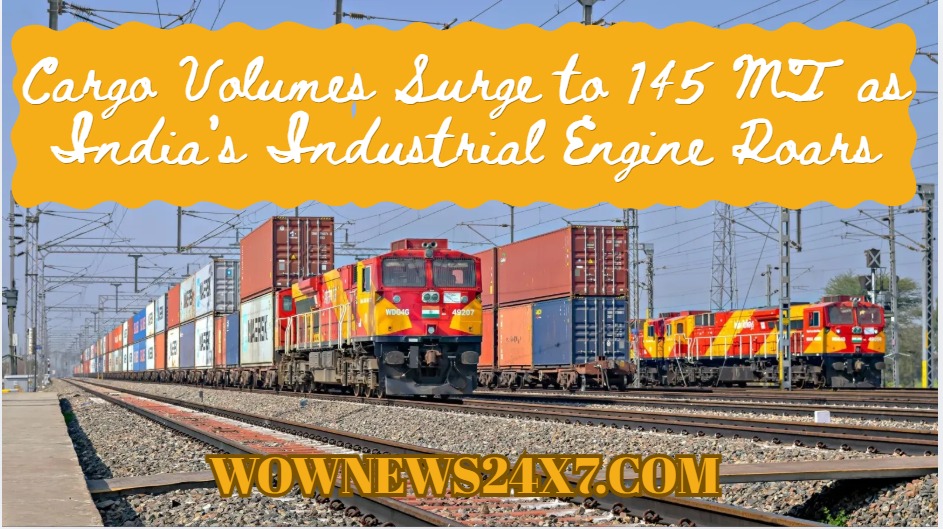
Indian Railways sustained its freight momentum by loading 145 million tonnes of cargo in May 2026, marking a 1.3% increase year-on-year. Driven by strong volumes in steel, iron ore, and fertilizers, this growth was achieved despite West Asian geopolitical challenges affecting global logistics pipelines.
National transporter registers a 1.3% growth to secure domestic industrial supply chains against global market turbulence.
NEW DELHI, India — Indian Railways successfully navigated persistent global headwinds to load 145 million tonnes (MT) of freight in May 2026, marking a 1.3% increase compared to the same period last year. Data released by the Ministry of Railways on June 1, 2026, confirms that the state-owned transporter sustained its freight growth momentum despite escalating geopolitical tensions in West Asia, which have indirectly strained international logistics and commercial supply chains.
The operational expansion demonstrates the resilience of India's internal industrial demand today. By ensuring the uninterrupted movement of critical raw materials, the national rail network has cushioned domestic manufacturing and energy sectors from external macroeconomic shocks.
Commodity Breakdown Reveals Strong Industrial Core
The bulk of the performance gains during May 2026 were driven by heavy volume surges in core infrastructure commodities. According to the ministry's statistical breakdown, the "Balance Other Goods" classification recorded the most significant year-on-year jump, spiking by 16%. Other major commodity sectors also registered healthy growth rates:
Iron Ore: Total loading volumes increased by 4.8% over May 2025.
Pig Iron & Finished Steel: The industrial manufacturing sector saw loading figures grow by 3.5%.
Fertilisers: Essential agricultural shipments grew by 6.2%, reflecting prioritized supply lines to support the upcoming crop cycles.
Coal, which remains the single largest component of Indian Railways' freight portfolio, maintained a steady upward trajectory with an approximate 1% growth over the previous year. The ministry noted that it accorded maximum priority to coal transit across its network to satisfy the high power generation demands of domestic thermal plants, securing national energy buffers against peak summer requirements.
Dual Focus: Container Tracking and Record Passenger Traffic
To combat the indirect bottlenecks originating from West Asian logistics disruptions, Indian Railways implemented intensified monitoring frameworks for both domestic and Export-Import (EXIM) container traffic. These proactive oversight measures ensured seamless intermodal transfers, protecting regional business activity from costly delays.
Simultaneously, the network accommodated an immense seasonal surge in passenger traffic. The carrier transported more than 61 crore (610 million) passengers during the month, climbing from 59 crore in May 2025. This consumer demand was predominantly led by the non-suburban transit segment, which registered a 7.4% rise. To fulfill this high seasonal volume, the ministry expanded modern rolling stock operations, scaling its active Vande Bharat portfolio to 164 services and adding three new Amrit Bharat trains to its fleet of 68.
Official Sources Section
Operational cargo metrics, commodity breakdowns, and passenger transit indexes were verified via the official media tracking desks and official press releases published by the Ministry of Railways, Government of India, through the Press Information Bureau (PIB) in New Delhi.
Quote Section
"According to officials from the Ministry of Railways, these strategic logistics measures have successfully sustained steady freight growth and maintained high supply chain efficiency under challenging global circumstances. The national transporter continues to systematically reinforce its structural role as the backbone of the nation's bulk transportation network, actively facilitating industrial economic continuity across all states."
Why It Matters
The 145 MT volume milestone holds immense practical value for corporate investors and industrial consumers alike. In a period where maritime trade routes remain highly volatile, the efficiency of India's internal land logistics ensures that domestic steel plants, energy stations, and agricultural dealers avoid costly production pauses, thereby limiting input price inflation across consumer goods.
Key Facts at a Glance
Total May Volume: Loaded 145 million tonnes, yielding a 1.3% growth over the previous year.
Top Performers: Led by a 16% surge in miscellaneous goods and a 6.2% rise in fertilizer transit.
Energy Security: Coal transport maintained a steady 1% increase to support power grids.
Passenger Surge: Network volume crossed 61 crore passengers, backed by 164 active Vande Bharat services.
FAQ Section
Q: How did global headwinds impact Indian Railways' operations?
A: Ongoing geopolitical conflicts in West Asia created indirect supply chain and maritime logistics friction, forcing the national transporter to implement tighter operational monitoring to shield internal trade.
Q: Which sector saw the highest percentage growth in May 2026?
A: The "Balance Other Goods" segment recorded the highest growth with a robust 16% year-on-year expansion.
Q: How is the railway supporting power generation needs?
A: Indian Railways has given tracking and transit priority to coal wagons to ensure that domestic thermal power plants receive uninterrupted fuel supplies during peak periods.
Source: [Press Information Bureau (PIB) Delhi - Ministry of Railways Release ID: 2267673] [Indian National Transporter Operational Asset Manifests] [Government of India Ministry of Commerce Trade Logs].