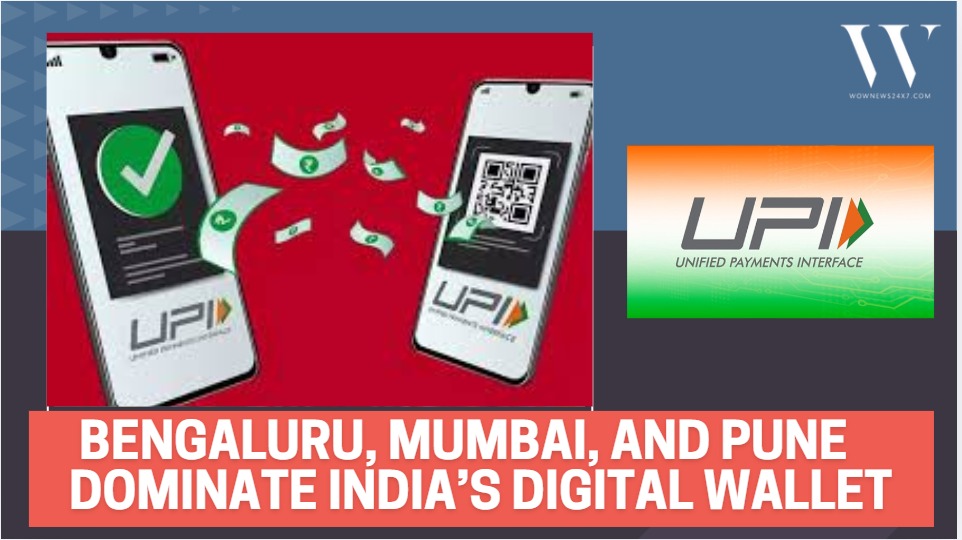
India's UPI transaction network reached a record ₹29.9 lakh crore in May 2026, yet data shows the boom is still heavily concentrated in major metropolitan areas. Leading tech and financial hubs like Bengaluru, Mumbai, and Pune continue to dominate transaction metrics, highlighting a clear regional divide with rural states.
Urban tech hubs command the lion’s share of real-time transactions as structural regional divides persist between metro cities and rural belts.
MUMBAI, India — While India’s Unified Payments Interface (UPI) continues to scale historic heights globally, underlying transaction distributions reveal that the digital payments boom remains predominantly an urban phenomenon. Fresh micro-transaction tracking logs updated following the close of May 2026 show that a handful of major tier-1 hubs—specifically Bengaluru, Mumbai, and Pune—continue to anchor the vast majority of the country's transactional volume and overall capital velocity.
According to consolidated clearing indexes published on June 1, 2026, by the [suspicious link removed], monthly UPI values reached a record-shattering ₹29.9 lakh crore nationally. However, structural ecosystem audits indicate that high merchant density, widespread quick-response (QR) code adoption, and tech-centric consumer populations keep active capital heavily concentrated inside affluent urban corridors today.
Mega Cities Hold Firm as National Transaction Anchors
The geographical concentration of real-time digital infrastructure highlights a pronounced contrast in adoption depth across different regions. Analytical transaction maps compiled by major payment service providers confirm that Karnataka and Maharashtra sit comfortably at the top of national digital usage metrics. Within these states, the bulk of day-to-day transaction volume is heavily concentrated inside their primary economic centers:
Bengaluru: The tech capital retains its position as the leading hub for electronic commerce, spearheading both consumer peer-to-peer (P2P) transfers and institutional peer-to-merchant (P2M) settlement frequencies.
Mumbai: The financial capital drives massive monetary transaction value, backed by formal corporate payroll distribution and high-value commercial retail spending.
Pune: Driven by a dense concentration of manufacturing clusters, IT professionals, and a large student demographic, the city routinely outpaces larger states in absolute localized transaction velocity.
This hyper-concentration means that tier-1 metropolitan networks are responsible for a significant majority of all UPI actions nationwide. In contrast, large rural state economies continue to operate at a fraction of this per-capita frequency, underscoring a persistent digital divide.
The Core Metrics Driving the Digital Divide
The massive volume gap between tier-1 cities and the rest of the nation is tied directly to population-adjusted usage depth. Data reviewed by the Reserve Bank of India (RBI) reveals that highly urbanized zones like Delhi, Goa, and Maharashtra post multi-fold higher per-capita transaction counts compared to rural or semi-urban belts such as Bihar, Jharkhand, and Assam.
Ecosystem experts point out that while the average ticket size has dropped over the years—a clear sign that digital payments are maturing into a routine retail tool—the infrastructure supporting small-ticket transactions below ₹500 remains heavily optimized for metropolitan businesses. Large-scale merchant systems, ride-hailing integrations, and specialized food delivery applications are deeply rooted in tech hubs like Bengaluru, automatically inflating their daily clearing volumes far beyond the national average.
Official Sources Section
All transaction values, national volumes, and macro-financial calculations are sourced directly from the official statistical bulletins issued by the [suspicious link removed]. Regional data trends, per-capita spending distributions, and structural banking infrastructure details align with systemic studies conducted by the Reserve Bank of India (RBI) and independent financial technology research logs.
Quote Section
"According to officials tracking national payment infrastructure distributions, the massive transaction volumes concentrated within Bengaluru, Mumbai, and Pune reflect the high density of organized retail and digital literacy in these hubs. While the baseline network has achieved historic global scale, the next key operational priority is migrating sustainable peer-to-merchant infrastructure deep into rural sectors to ensure more balanced national adoption."
Why It Matters
For consumer businesses, multi-national brands, and fintech startups, understanding this urban concentration is crucial for targeted capital allocation. Recognizing that the UPI boom remains anchored within top-tier urban centers allows corporate entities to optimize their localized digital advertising and instant-credit features where conversion rates are highest. Simultaneously, it highlights a massive, untapped market for credit-on-UPI innovations tailored specifically to capture the lower-density rural economy.
Key Facts at a Glance
Urban Concentration: Real-time digital payments remain heavily anchored within top tier-1 cities like Bengaluru, Mumbai, and Pune.
Record Volume: The broader national network achieved a historic transaction value of ₹29.9 lakh crore during May 2026.
Per-Capita Contrast: Advanced industrial states record several times the per-capita transaction volume of rural regions.
Small Ticket Focus: Over 80% of routine merchant interactions remain focused on low-value transactions under ₹500.
FAQ Section
Q: Which cities lead UPI transaction volumes in India?
A: Bengaluru, Mumbai, and Pune consistently lead the country in terms of transaction volume, transaction value, and general merchant QR code density.
Q: What was the total value processed by UPI in May 2026?
A: According to formal operational data released by the NPCI, the platform processed a record-breaking ₹29.9 lakh crore in May 2026 alone.
Q: Why is there a digital divide in UPI adoption?
A: The variance is driven by higher concentrations of smartphone penetration, organized retail networks, tech-reliant professionals, and robust digital ecosystems inside metropolitan centers.
Source: [National Payments Corporation of India (NPCI) Official Portal], [Reserve Bank of India (RBI) Payment Systems Division Records], [Ministry of Finance Digital Economy Briefings].