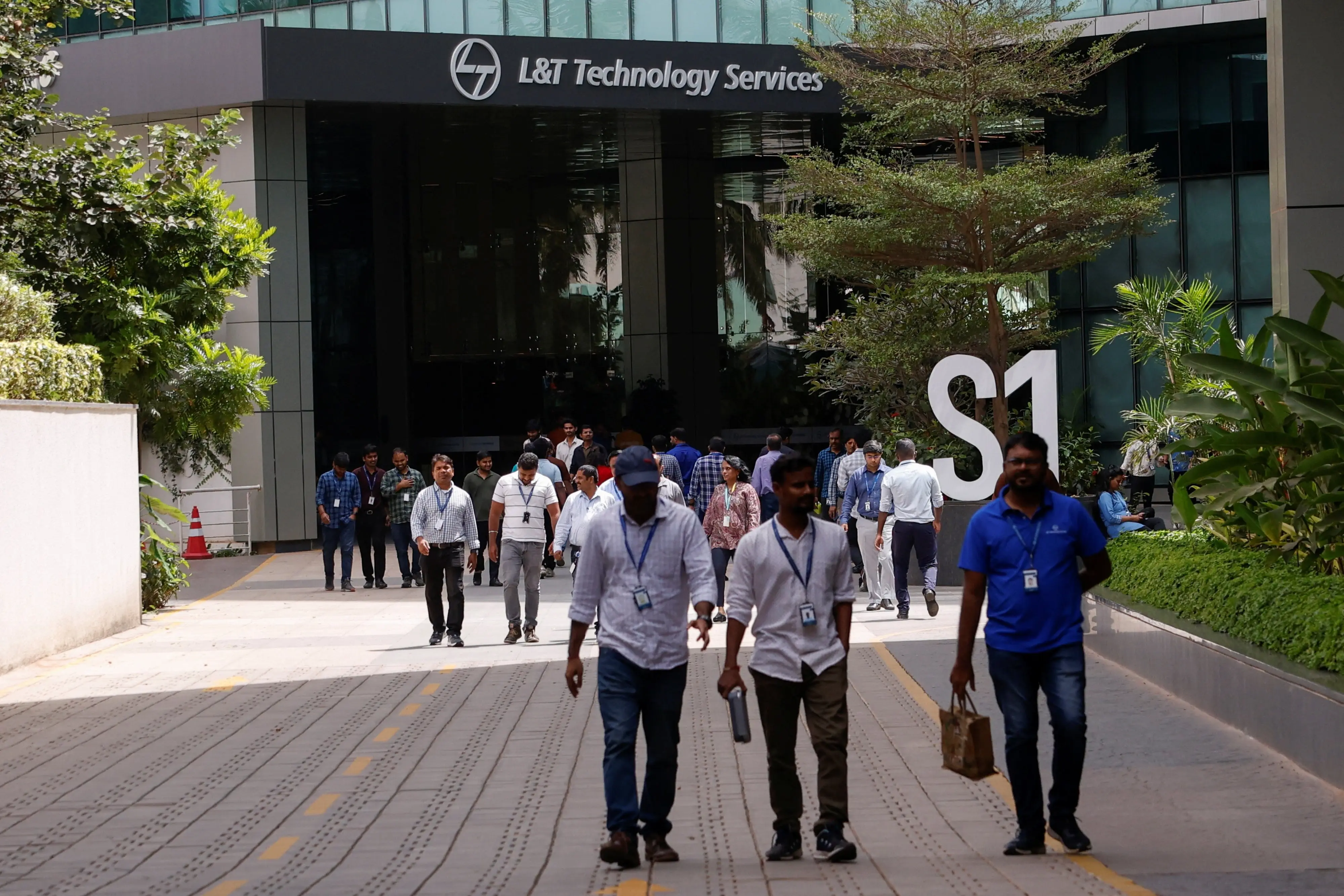
The Indian benchmark index overcame early morning weakness to trade firmly in positive territory, driven by a strong rally in information technology stocks amid global artificial intelligence spending.
Geopolitical Headwinds Give Way to Tech-Led Recovery
The trading session commenced on a cautious note, with both the benchmark index and the BSE Sensex registering notable declines in early deals. According to exchange data, the Nifty 50 initially dropped, reflecting broader Asian market sentiment reacting to the complex geopolitical situation involving the United States and Iran. Investor anxiety was primarily fueled by repeated setbacks in diplomatic ceasefire talks and Brent crude oil prices hovering in the $91 to $94 per barrel range. These elevated energy costs have consistently raised fears of supply disruptions and imported inflation, particularly for an energy-dependent economy like India.
The negative market breadth in the opening hour was further exacerbated by targeted selling in the fast-moving consumer goods (FMCG), healthcare, and financial services sectors. Market participants were evidently balancing their portfolios ahead of the upcoming monetary policy announcements from the central bank, looking for definitive forward guidance on domestic interest rates.
Despite these initial pressures, the market breadth improved significantly as the session progressed. By mid-day, the India Nifty 50 index extended its gains, rallying approximately 0.5% from its previous close. Market data indicated that institutional buyers returned at lower valuation levels, effectively absorbing the selling pressure initiated by Foreign Institutional Investors (FIIs) who have actively reduced their India exposure over the past week due to global uncertainties.
IT Sector Rally Cushions Broader Market Weakness
The primary catalyst for the intraday reversal was a sharp surge in the Nifty IT sector, which advanced more than 4% during the session according to market tracking platforms. Shares of major technology firms, including Infosys, Tata Consultancy Services (TCS), and HCL Technologies, emerged as the top contributors to the overall market recovery.
Exchange data showed Infosys and TCS leading the most active equities list by traded value. The robust buying in Indian software companies was triggered by positive earnings reports and forecasts from United States-based enterprise software firms, which confirmed an accelerating global spending cycle on cloud infrastructure and AI integration. Furthermore, as IT companies derive a majority of their revenue in US dollars, they are positioned as structural beneficiaries of the recent depreciation in the Indian Rupee, which traded near 95.00 against the dollar on Tuesday morning.
Foreign Institutional Activity and Global Context
The intraday turnaround for the Nifty 50 index occurred against a backdrop of mixed global cues. Foreign investors have maintained a cautious stance on Indian equities recently, weighing the elevated valuation of domestic markets against the unpredictability of energy costs and the potential impact of the ongoing monsoon season on rural demand. The extended period of outflows from foreign funds had previously suppressed the benchmarks, creating a challenging environment for bulls.
However, domestic institutional investors and retail participants consistently absorbed this liquidity, preventing a steeper correction and showcasing the maturation of the domestic capital base. Globally, Asian markets showed a divided performance on Tuesday. While South Korea’s Kospi and Japan’s Nikkei 225 registered losses of over 1.5% mirroring the global risk-off sentiment, the sustained domestic buying allowed Indian equities room to rebound. This divergence illustrates how specific sectoral strengths—in this case, IT and certain large-cap financials—can insulate the Nifty 50 index from broader regional sell-offs, setting it apart from its regional peers.
Official Sources Section
According to market data published by the National Stock Exchange of India (NSE), the Nifty 50 index recorded a steady intraday recovery after opening lower. Trading metrics from the Bombay Stock Exchange (BSE) confirmed that information technology and select banking stocks led the positive momentum. Furthermore, foreign exchange updates from the Reserve Bank of India (RBI) reference rates noted the local currency's depreciation, adding necessary context to the tech sector's outperformance.
Quote Section
"According to market officials and exchange analysts, the trend of sustained artificial intelligence trade and robust capital expenditure forecasts in the U.S. technology sector are providing a strong buffer for Indian IT stocks, compensating for the sustained selling by foreign portfolio investors," stated equity research desks monitoring the live trading session.
Additionally, exchange representatives noted, "The afternoon recovery in the benchmark index demonstrates domestic institutional support stepping in at crucial technical levels to stabilize overall market sentiment."
Why It Matters
For retail investors and mutual fund participants, the resilience of the market signals underlying institutional strength despite global volatility. The decoupling of the tech sector from broader macroeconomic concerns offers portfolio diversification opportunities. For businesses, the market's quick recovery implies stable access to capital and sustained investor confidence in India's corporate earnings trajectory. Consumers and everyday citizens should note that while the stock market is stabilizing, elevated crude oil prices and a weaker rupee could continue to influence domestic inflation and fuel costs in the near term.
Key Facts at a Glance
- The Nifty 50 index rebounded from early morning lows to trade 0.5% higher by mid-day.
- The IT sector surged over 4%, acting as the primary driver for the broader market recovery.
- Infosys and TCS were the most active equities by traded value on the NSE mainboard.
- Early market declines were attributed to global geopolitical tensions and Brent crude oil trading above $91 per barrel.
- The Indian Rupee remained under pressure, trading near 95 against the U.S. dollar, fundamentally benefiting export-heavy IT firms.
FAQ Section
Why did the Nifty 50 index fall in early morning trade?
The index initially declined due to negative global sentiment surrounding geopolitical tensions between the U.S. and Iran, combined with elevated global crude oil prices and continuous selling by foreign institutional investors.
What caused the stock market to recover by mid-day?
A sharp rally in technology stocks fueled the recovery. Strong earnings and forecasts from U.S. enterprise software companies signaled robust global AI and cloud spending, prompting aggressive buying in Indian IT majors like Infosys and TCS.
How does a weak Indian Rupee affect the stock market?
A weaker rupee generally increases the cost of imported goods like crude oil, which can pressure sectors tied to domestic consumption. However, it benefits export-oriented sectors like Information Technology and Pharmaceuticals, as their dollar-denominated earnings translate into higher rupee revenue.
Which stocks were the most active during the Tuesday session?
According to live exchange data, Infosys and Tata Consultancy Services (TCS) were the most active equities in terms of total traded value, driving the majority of the market's trading volume.
Source: National Stock Exchange (NSE) Live Market Data, Bombay Stock Exchange (BSE) Trading Updates, and Reserve Bank of India (RBI) official interbank foreign exchange market feeds.