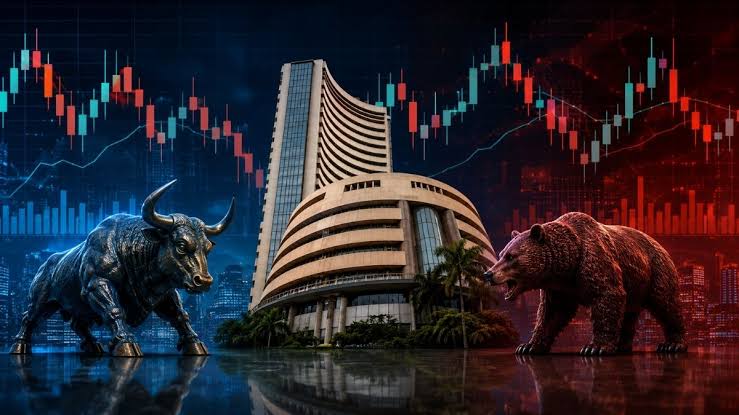
The Indian Rupee depreciated by 0.1% to 95.7575 against the US Dollar at the market close. Concurrently, domestic equities faced pressure as the BSE Sensex closed 0.42% lower and the Nifty 50 ended down 0.32%, reflecting cautious investor sentiment and broader macroeconomic realignments across India's financial markets.
MUMBAI, India — The Indian Rupee (INR) depreciated against the US Dollar on Wednesday, mirroring a broader downturn in domestic equity markets where both the BSE Sensex and NSE Nifty 50 closed in the red. As of 3:30 p.m. IST, the domestic currency was down 0.1%, trading at 95.7575 per US Dollar compared to its previous close of 95.68. Simultaneously, India's benchmark stock indices ended their trading sessions lower, reflecting cautious investor sentiment and global macroeconomic pressures influencing South Asian financial markets.
Indian Rupee Depreciates Against the Greenback
The Indian Rupee experienced a marginal decline in interbank foreign exchange markets, slipping 0.1% to settle at 95.7575 against the US Dollar. The currency had closed at 95.68 during the previous trading session. Market analysts attribute this depreciation to a combination of corporate dollar demand, adjustments in foreign portfolio investments, and broader strength in the US Dollar index globally.
The mild depreciation of the Rupee impacts import costs, particularly for crude oil and electronic goods, while providing a slight competitive edge for India's export-oriented sectors such as IT services, textiles, and pharmaceuticals. Currency market participants continue to monitor global cues, as foreign exchange rates are heavily influenced by international monetary policies and inflation data.
BSE Sensex and Nifty 50 Register Losses
On the equity front, Dalal Street witnessed a bearish trend throughout the trading day. The BSE Sensex, India's prominent stock market index, closed the session 0.42% lower. The broader NSE Nifty 50 index ended the day down 0.32%, though it managed to pare some of its earlier intraday losses that had reached as much as 0.44%. The recovery from the day's lowest points indicates some selective buying at lower valuation levels, despite the overall negative market breadth.
While the headline indices reported losses, the sectoral performance across the National Stock Exchange of India (NSE) and Bombay Stock Exchange (BSE) showed a mixed picture. Heavyweight sectors such as banking, financial services, and information technology experienced localized selling pressure, which heavily weighed down the BSE Sensex and Nifty 50. Conversely, defensive sectors provided a slight cushion, allowing the Nifty 50 to recover marginally before the closing bell.
Foreign Exchange Dynamics and Market Liquidity
The currency market's response, marking the Rupee at 95.7575 per US Dollar, underscores the ongoing volatility in global forex markets. The 0.1% depreciation is symptomatic of broader geopolitical uncertainties and shifting expectations regarding international interest rates. When global bond yields remain elevated, emerging market currencies like the Indian Rupee often face depreciation pressure as capital flows seek risk-free returns in dollar-denominated assets.
The Reserve Bank of India (RBI) routinely monitors these fluctuations to prevent excessive volatility in the exchange rate. While the central bank does not target a specific level for the Rupee, it utilizes its foreign exchange reserves to smooth out sudden currency market movements, ensuring systemic financial stability.
Impact on Investors and the Economy
The synchronized decline in both the domestic currency and benchmark stock indices highlights a period of consolidation for Indian financial markets. For retail and institutional investors, the dip in the BSE Sensex and Nifty 50 underscores the need for cautious portfolio management amid global economic uncertainties. Meanwhile, a weaker Rupee translates to higher imported inflation, potentially affecting future monetary policy decisions, corporate margins, and trade balances.
Official Sources Section
The currency valuations and stock market closing figures are based on official market data recorded at the end of the trading session. Data regarding the Indian Rupee's exchange rate is tracked via the Reserve Bank of India (RBI) and interbank forex trading desks. Equity market performance metrics are officially documented by the Bombay Stock Exchange (BSE) and the National Stock Exchange of India (NSE), with macroeconomic oversight provided by the Ministry of Finance.
Quote Section
"According to market officials, the dual pressure on the Indian Rupee and domestic equities reflects broader capital realignments, as investors weigh global macroeconomic data against local corporate earnings and liquidity conditions."
Why It Matters
The simultaneous depreciation of the Indian Rupee and the decline in major stock indices like the BSE Sensex and Nifty 50 signal a cautious approach by foreign and domestic investors. These financial movements directly influence inflation expectations, domestic fuel prices, and the overall valuation of Indian corporate assets on the global stage.
Key Facts at a Glance
Currency Movement: The Indian Rupee fell 0.1% to 95.7575 per US Dollar as of 3:30 p.m. IST.
Previous Close: The Rupee's previous closing rate was 95.68 per US Dollar.
BSE Performance: The BSE Sensex closed the trading session 0.42% lower.
NSE Performance: The Nifty 50 index ended 0.32% lower, recovering slightly from an intraday drop of 0.44%.
Frequently Asked Questions (FAQ)
What was the closing rate of the Indian Rupee against the US Dollar?
As of 3:30 p.m. IST, the Indian Rupee traded at 95.7575 against the US Dollar, down 0.1% from its previous close of 95.68.
How did the BSE Sensex perform today?
The BSE Sensex closed the trading session 0.42% lower, reflecting negative market sentiment across key sectors.
Did the Nifty 50 index recover from its initial losses?
The Nifty 50 closed 0.32% lower, paring some of its deeper intraday losses that had reached 0.44% earlier in the session.
Why did the Indian Rupee depreciate?
Currency movements are typically influenced by corporate dollar demand, foreign fund outflows, and global dollar strength, which collectively impact the Rupee's daily valuation.
Source: Reserve Bank of India (RBI), Bombay Stock Exchange (BSE), National Stock Exchange of India (NSE), Ministry of Finance.