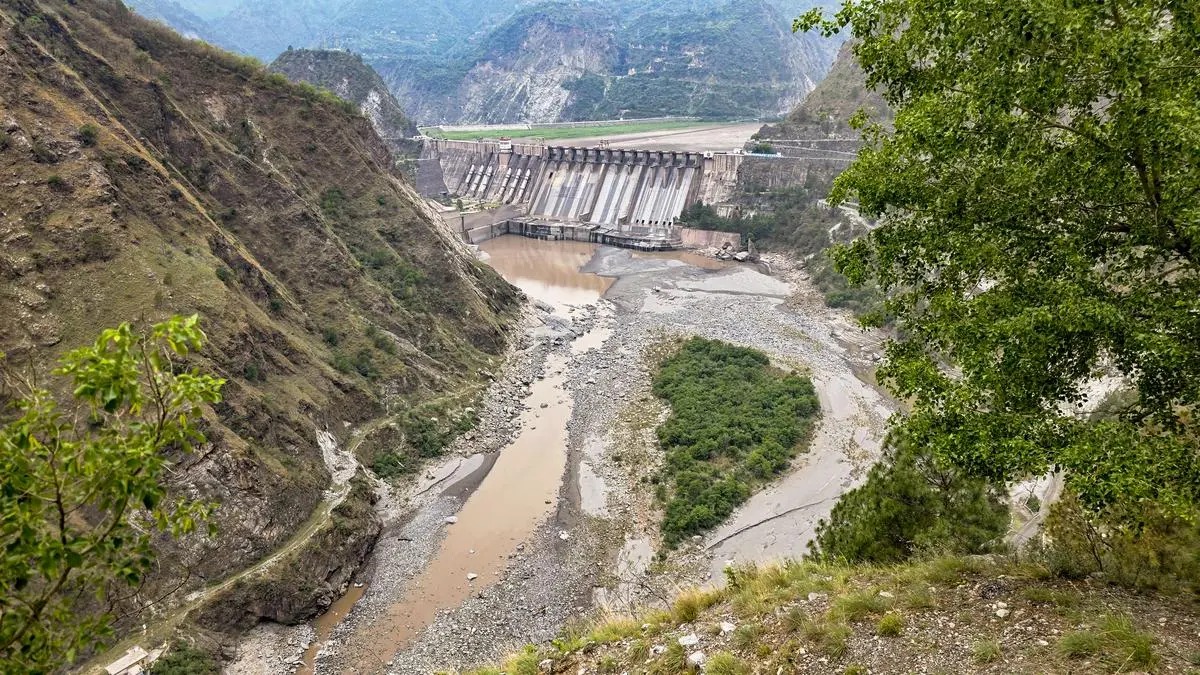
India has accelerated the development of 5,300 MW of hydropower capacity across the Chenab river basin in Jammu and Kashmir. Following the formal suspension of the 1960 Indus Waters Treaty (IWT), New Delhi confirmed the pact will remain in abeyance until Pakistan permanently halts cross-border terrorism.
NEW DELHI, India — India has accelerated construction across multiple run-of-the-river hydroelectric projects along the Chenab basin in Jammu and Kashmir, marking a strategic shift in its management of the Indus water system. The accelerated infrastructure push follows New Delhi’s decision to keep the 1960 Indus Waters Treaty (IWT) in abeyance.
Government sources confirmed that any future activation or renegotiation of the six-decade-old agreement will not restore the pact in its historic format. New Delhi has made any reconsideration contingent on Pakistan "credibly and irrevocably" terminating its support for cross-border terrorism.
The Chenab Hydropower Expansion Framework
The push in the Chenab basin targets adding 5,300 MW of generation capacity to Jammu and Kashmir's existing 3,300 MW operational base. The initiative prioritizes four major projects located in the Kishtwar district:
Alongside new project construction, India is implementing systematic reservoir sediment flushing at existing installations, including the Salal and Baglihar dams. Government officials stated that continuous silt accumulation has reduced Salal's usable storage to roughly 5% of its original capacity. De-silting measures follow internationally accepted dam safety practices to restore design generation capacity.
Policy Evolution and Legal Context
Brokered by the World Bank in 1960, the Indus Waters Treaty allocated unrestricted rights over the three eastern rivers (Ravi, Beas, Sutlej) to India, while granting Pakistan rights over the three western rivers (Indus, Jhelum, Chenab). However, the treaty permitted India non-consumptive uses, including run-of-the-river power generation on the western rivers.
The decision to place institutional mechanisms—including meetings of the Permanent Indus Commission and data exchanges in abeyance stems from an April 2025 Cabinet Committee on Security (CCS) decision. Indian officials contend that Pakistan eroded the treaty's foundational premise of "goodwill and peaceful coexistence" through persistent state-sponsored cross-border attacks and routine procedural delays targeting Indian civil engineering projects.
Official Sources Section
Policy updates, project statuses, and international stance reports are published by the Ministry of External Affairs (MEA) and the Ministry of Power, with press briefings archived by the Press Information Bureau (PIB) and parliamentary submissions recorded by the Rajya Sabha Secretariat.
Quote Section
"According to government officials, the Indus Waters Treaty in its present form can no longer function. Agreements of this nature depend on mutual trust and peaceful coexistence, which have been destroyed by persistent cross-border hostility."
Why It Matters
For Regional Energy Security: The addition of over 5,000 MW of clean hydropower strengthens the northern regional power grid and accelerates J&K's industrial development.
For Downstream Riparian Dynamics: Maximizing India's legitimate water storage and generation rights reduces unutilized water outflow, encouraging modern water conservation practices across the basin.
For International Water Governance: Sets a legal precedent where upper riparian states tie long-standing transboundary water agreements to broader national security and counter-terrorism conditions.
Key Facts at a Glance
Total New Capacity: 5,300 MW under execution in Jammu and Kashmir's Kishtwar district.
Treaty Status: Placed in abeyance; institutional data sharing suspended.
Prerequisite for Talks: Pakistan must verifiably eliminate support for cross-border terrorism.
Key Projects: Sawalkote (1,856 MW), Pakal Dul (1,000 MW), Ratle (850 MW), Kiru (624 MW), and Kwar (540 MW).
Frequently Asked Questions (FAQ)
Is India completely shutting off water flow to Pakistan?
No. Under international law and run-of-the-river dam designs, water utilized for hydroelectric power generation passes through turbines and returns to the river channel downstream. India also continues to issue flood warnings to Pakistan on humanitarian grounds.
Why is India expanding hydro projects on the Chenab now?
India is accelerating these long-delayed projects to meet domestic clean energy targets, improve grid stability, and fully exercise its legitimate rights under basin management principles following the suspension of the treaty.
What is the status of the Indus Waters Treaty?
The treaty is currently held in abeyance by India. Formal institutional meetings, joint inspections, and routine hydrological data exchanges remain paused until security conditions are met.
Source: Official briefings by the Ministry of External Affairs (MEA), parliamentary records from the Rajya Sabha Secretariat, official releases from the Ministry of Power, and documentation from the Press Information Bureau (PIB).