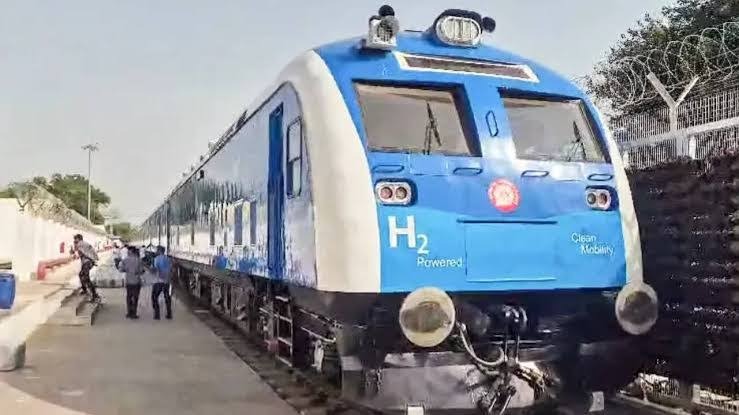
Indian Railways announced that India's first hydrogen train clocks 1,200 km, saves 3,200 litres of diesel during operational testing on the Jind–Sonipat route. Powered by an indigenous 2,400 kW fuel cell system, the zero-emission train emits only water vapor, marking a major milestone in clean transport infrastructure.
NEW DELHI — India’s first indigenous hydrogen fuel cell train has covered over 1,200 kilometers during operational testing along the Jind–Sonipat section in Haryana, replacing more than 3,200 litres of diesel fuel.
The Ministry of Railways released performance metrics on Saturday, July 25, 2026, confirming that the 10-coach trainset achieved zero tailpipe carbon emissions, emitting only water vapor as a byproduct during its runs. The milestone confirms the operational viability of Indian Railways’ zero-emission propulsion technology as the national transporter prepares to extend trial runs onto the main Delhi route.
Technical Architecture of the Zero-Emission Power System
The 10-coach train operates using onboard electricity generated through a chemical reaction between green hydrogen and atmospheric oxygen. Developed indigenously by Indian Railways, the train features two Hydrogen Driving Power Cars that deliver a combined output of 2,400 kilowatts.
The propulsion system combines high-pressure hydrogen storage cylinders with lithium iron phosphate batteries to maintain steady energy distribution and power backup. Fueling operations rely on Indian Railways' dedicated hydrogen storage facility located at Jind, which houses up to 3,000 kilograms of green hydrogen. The fuel is stored under pressures up to 500 bar and dispensed into the train's storage tanks at 350 bar.
Safety mechanisms include automated leak detection sensors, flame and heat monitoring equipment, continuous cabin ventilation systems, and emergency shut-off valves meeting international validation standards.
Strategic Shift Away from Conventional Diesel Traction
The successful 1,200-kilometer run represents a core step in Indian Railways’ broader decarbonization strategy. While the national rail network is over 95% electrified, non-electrified branch lines and suburban routes continue to depend on diesel multiple units (DEMUs).
Replacing diesel engines with hydrogen-powered trainsets eliminates particulate matter, nitrogen oxides ($NO_x$), and carbon dioxide ($CO_2$) emissions. Following the Jind–Sonipat runs, Union Railways Minister Ashwini Vaishnaw confirmed that India holds full intellectual property (IP) rights for the 2,400 kW hydrogen propulsion technology, paving the way for eventual international technology exports.
Official Sources Section
According to official project disclosures issued by the Ministry of Railways and technical validation reports from the Research Designs and Standards Organisation (RDSO), the hydrogen fuel cell train complies with safety standards established by the Petroleum and Explosives Safety Organisation (PESO) for compressed gas storage and dispensing.
Quote Section
"According to officials from the Ministry of Railways, the indigenous 2,400 kW hydrogen propulsion system has proven its operational stability in field conditions, establishing a scalable foundation for green rail mobility across non-electrified routes."
Why It Matters
Demonstrating that India's first hydrogen train clocks 1,200 km, saves 3,200 litres of diesel validates green hydrogen as a practical alternative to fossil fuels in heavy transportation. Scaling this technology reduces long-term operational fuel costs, improves urban air quality along rail corridors, and positions domestic manufacturing firms to build zero-emission rolling stock for global markets.
Key Facts at a Glance
Distance & Savings: The India's first hydrogen train clocks 1,200 km, saves 3,200 litres of diesel during initial service trials.
Power Output: Dual Hydrogen Driving Power Cars generate a total output of 2,400 kW supported by lithium iron phosphate battery banks.
Fuel Storage: Jind refuel station maintains a 3,000 kg capacity, dispensing green hydrogen at 350 bar pressure.
Next Expansion: Trial runs are scheduled to expand onto the Delhi rail route following successful runs in Haryana.
Frequently Asked Questions
What are the main emissions produced by the hydrogen train?
The hydrogen train produces zero smoke or tailpipe carbon emissions. The onboard fuel cell process emits only water vapor.
Where was the trial run conducted?
The operational runs took place on the Jind–Sonipat section in Haryana under Northern Railway supervision, with future trials planned for the Delhi route.
Who developed the technology for India's hydrogen train?
The 2,400 kW propulsion system and hydrogen train design were developed indigenously by Indian Railways, which retains all intellectual property rights for the technology.
Source: Official statements and releases from the Ministry of Railways and Press Information Bureau (PIB).