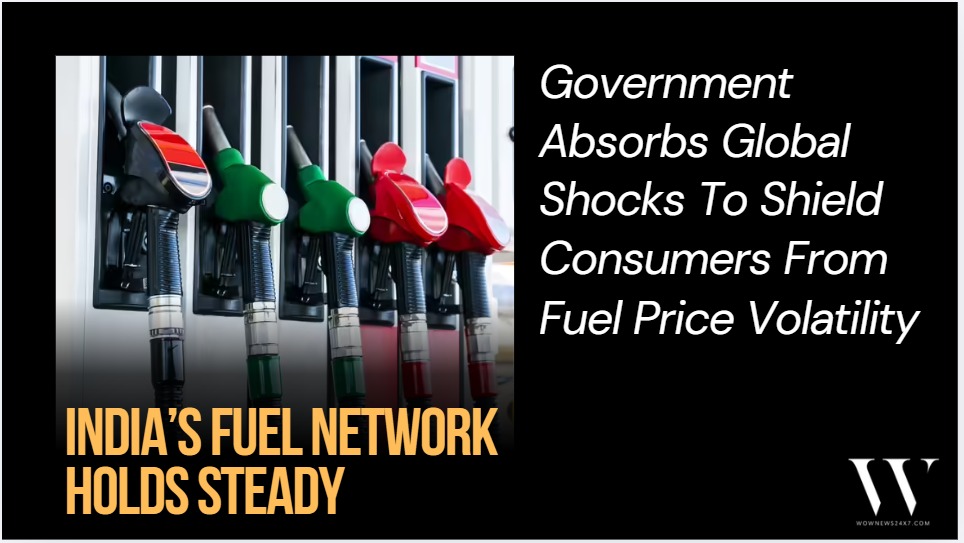
India’s fuel distribution remains stable despite global crude price surges and supply disruptions in West Asia. Union Ministers Pralhad Joshi and Hardeep Singh Puri assured that retail fuel supplies are uninterrupted, with the government absorbing global shocks to shield consumers from steep price hikes.
Union Minister Pralhad Joshi emphasized that India’s fuel distribution network continues to function smoothly, even as international crude oil prices rise sharply. Addressing media in Karnataka, he noted that while commercial LPG cylinder prices have increased, domestic fuel supplies remain unaffected. The government has attributed stability to long-term planning and diversified sourcing.
Global Context And Domestic Impact
The surge in crude prices is linked to ongoing conflicts in West Asia, which have disrupted global energy supply chains. Despite these challenges, India has maintained uninterrupted availability of petrol, diesel, LPG, and aviation fuel. Union Minister Hardeep Singh Puri highlighted that the government absorbed fiscal impacts rather than passing them on to consumers, ensuring retail fuel prices remained unchanged for over 60 days.
Commercial LPG Price Concerns
Opposition leaders have criticized the sharp increase in commercial LPG cylinder prices, which recently rose by nearly ₹1,000 in a single day, reaching ₹3,239 for a 19 kg cylinder. This hike has severely impacted restaurants, hotels, and small businesses, raising concerns about inflationary pressures. However, domestic LPG supplies continue to be prioritized, with no reported shortages at distributorships.
Government Measures To Ensure Stability
Authorities have intensified enforcement against hoarding and black marketing, conducting over 2,300 raids nationwide. Refinery output has been enhanced, booking intervals extended, and alternative fuels such as PNG and kerosene promoted. The government is also accelerating city gas distribution networks to encourage long-term energy security.
Political And Economic Dimensions
While opposition parties link fuel price stability to electoral considerations, the government insists that consumer protection remains paramount. Ministers argue that India’s resilience reflects proactive policy interventions, shielding households from global shocks that have sharply raised fuel costs in other economies.
Key Highlights
- Union Ministers confirm fuel distribution remains stable despite global crude price surge
- Retail petrol and diesel prices unchanged for over 60 days
- Commercial LPG cylinder prices rose sharply, impacting businesses
- Government absorbed global shocks at fiscal level to protect consumers
- Enforcement against hoarding and black marketing intensified nationwide
- Alternative fuels like PNG and kerosene promoted for long-term energy security
Sources: The Hindu BusinessLine, The Hindu, ET EnergyWorld, United News of India