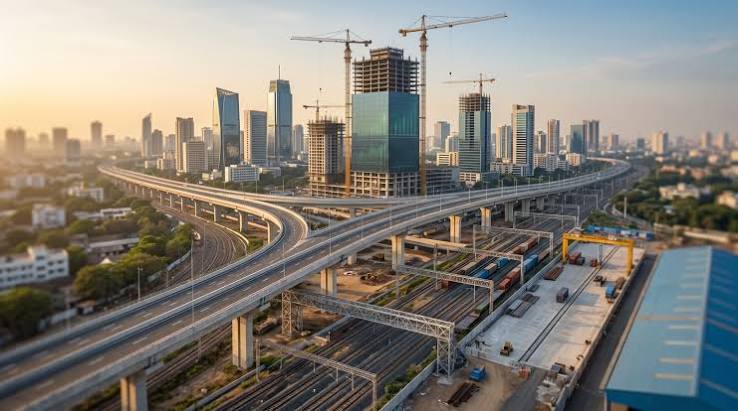
India's ambitious infrastructure push, including the Great Nicobar development and the Dharavi redevelopment, is facing significant public resistance. Communities and activists are protesting against ecological destruction, displacement, and lack of transparency, creating a complex challenge for the government as it balances national development goals with environmental and tribal rights.
Across India, a wave of high-profile infrastructure projects—ranging from mega-ports and urban redevelopment schemes to renewable energy plants—is facing significant resistance from local communities and environmental groups. As of July 2026, the intensifying protests reflect a mounting tension between the government’s ambitious "development-led" growth strategy and the preservation of ecological and indigenous rights.
The pushback is not confined to a single region. In the Andaman and Nicobar Islands, the Great Nicobar Island Development Project has become the center of a nationwide debate, while in Mumbai, the Dharavi Redevelopment Project continues to struggle under the weight of local concerns regarding housing and commercial displacement. Further south, protests against hydro-power projects in Andhra Pradesh and tunneling schemes in Kerala underscore a recurring pattern: citizens are increasingly challenging infrastructure planning that they claim lacks transparency, ecological sensitivity, and community consultation.
Great Nicobar: A Strategic vs. Ecological Conflict
The Great Nicobar Island Development Project, an ₹81,000–₹92,000 crore initiative, is perhaps the most contentious. While the government maintains that a transshipment port and airport at Galathea Bay are vital for national security and economic autonomy, critics argue the environmental cost is too high.
Opposition leader Rahul Gandhi recently visited the island, labeling the project a "crime" against the country’s natural heritage. Environmentalists warn that the project, which involves diverting approximately 130 square kilometers of forest land, threatens the habitats of the Shompen, a Particularly Vulnerable Tribal Group, and the nesting grounds of leatherback sea turtles. Although the National Green Tribunal ruled in February 2026 that the project could proceed with safeguards, legal challenges persist in the Calcutta High Court.
Mumbai’s Dharavi and the Question of Displacement
In Mumbai, the Dharavi Redevelopment Project a massive effort to transform one of Asia’s largest urban clusters remains embroiled in controversy. While the Bombay High Court recently upheld the awarding of the tender to the Adani Group, residents and activists continue to raise concerns about the "existential threat" to the area’s unique small-scale manufacturing ecosystem and the eligibility criteria for redeveloped housing.
Local protests have intensified in recent weeks following reports that authorities are moving to acquire land plots for the project. Critics argue that the current plan favors high-end commercial interests over the needs of the approximately 1 million people who currently live and work in the dense 220-hectare area.
Growing Pushback in Other Regions
The trend of local resistance is also evident in other parts of the country:
Andhra Pradesh: Villagers in the Alluri Sitharama Raju district are demanding the scrapping of proposed hydro-power projects, citing a lack of consent from gram sabhas and potential violations of tribal land rights.
Kerala: Environmental groups staged a sit-in protest on July 9, 2026, in Kalpetta, demanding the permanent cancellation of the Anakkampoyil-Kalladi-Meppadi tunnel project, which they argue poses a severe threat to the ecologically fragile Western Ghats.
Gujarat: Maldhari pastoralists and villagers have launched a campaign against a 900 MW solar project proposed by NTPC in the Kutch region, citing the loss of essential grazing pastures and its impact on biodiversity near the Chhari Dhandh Ramsar site.
Official Sources
According to project developers and government spokespersons, these initiatives are essential for national development. Representatives for the Dharavi project have consistently termed allegations of intimidation as "unfounded," stating that the redevelopment is planned with "complete fairness and transparency." Similarly, district officials in Andhra Pradesh have urged protesters to rely on official channels for consultation rather than rumors, promising that all projects will conform to applicable environmental and social laws.
Why It Matters
The rise in infrastructure protests points to a widening gap in expectations between state planners and local stakeholders. As India pursues a multi-trillion dollar infrastructure pipeline, the ability of the state to manage these projects effectively—by balancing economic imperatives with social and environmental justice—will be critical to preventing long-term project delays, legal gridlocks, and social unrest.
Key Facts at a Glance
Great Nicobar Project: An ₹81,000–₹92,000 crore plan involving a transshipment port, airport, and township; currently facing legal challenges over forest diversion and tribal rights.
Dharavi Redevelopment: A multi-billion dollar project awarded to Adani Group; facing ongoing protests over displacement and the potential loss of local industrial livelihoods.
Renewable Energy Conflicts: Large-scale solar and hydro projects in Gujarat and Andhra Pradesh are meeting resistance over land-use and ecological impact.
Common Grievance: Across projects, protesters consistently cite a lack of meaningful community consultation and environmental transparency as core issues.
FAQ
Why are communities protesting infrastructure projects?
Protests are typically driven by concerns over displacement, loss of livelihood (especially in grazing and artisan industries), environmental degradation, and a perceived lack of transparency in the planning and clearance processes.
What is the status of the Great Nicobar project?
The project received environmental clearance in 2022 and a favorable ruling from the National Green Tribunal in February 2026, but it remains subject to ongoing litigation in the Calcutta High Court.
What is the main concern in the Dharavi redevelopment?
Critics fear that the redevelopment plan, which aims to turn the area into a commercial hub, will displace a large segment of the current population and destroy the unique, organic ecosystem of local leather and recycling industries.
Source: LawStreet Journal, The Hindu, The Guardian, Mongabay-India, PMF IAS