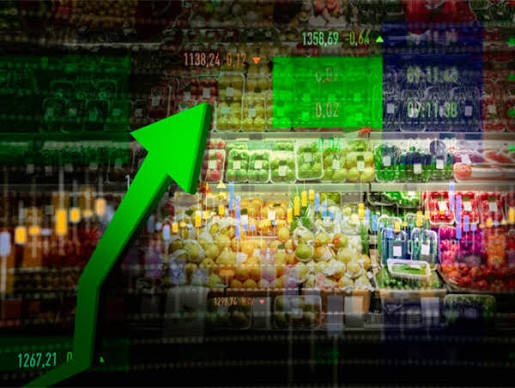
India’s consumer price-based food inflation rose to 5.32% year-on-year in June 2026, according to government data. The increase highlights persistent pressures on essential commodity prices, affecting household budgets and national consumption patterns as authorities continue to monitor supply-side challenges and their impact on the broader economic landscape.
NEW DELHI – India’s consumer price-based food inflation climbed to 5.32% in June 2026 on a year-on-year basis, according to the latest data released by the government on Monday. This increase in food prices continues to be the dominant factor influencing the broader Consumer Price Index (CPI), reflecting ongoing supply-side challenges and seasonal volatility affecting essential commodities.
The Ministry of Statistics and Programme Implementation (MoSPI) published the provisional data, which highlights the significant impact that food and beverage costs have on the overall cost of living for Indian citizens. This rise in food inflation comes as the country navigates a complex economic environment, where agricultural output and distribution logistics remain critical variables in determining retail price stability.
Drivers of Retail Food Price Trends
Government data indicates that the 5.32% food inflation figure for June is indicative of broader pressures within the agricultural supply chain. Analysts observe that while some segments have shown stability, localized supply constraints, rising transportation costs, and evolving climate conditions have contributed to the uptick in the food price index.
The food component, which constitutes a significant weight in the overall CPI basket, often dictates the inflationary experience of average consumers. As households allocate a larger share of their monthly income to food and essential commodities, the sustained elevation of these prices necessitates careful monitoring by both policy planners and retail businesses.
Economic Impact and Policy Context
The persistent nature of food inflation remains a central point of discussion for the Reserve Bank of India (RBI) and the Ministry of Finance. While headline retail inflation is influenced by multiple sectors, the volatility in food prices frequently poses the most immediate challenge to maintaining price stability.
For consumers, the 5.32% year-on-year rise implies that the cost of a standard grocery basket has increased significantly compared to the same period last year. For investors and businesses, these figures are critical indicators used to forecast future consumption trends and potential monetary policy shifts. Sustained food inflation can lead to a decline in discretionary spending, as families prioritize essential food items over other categories, potentially dampening broader economic growth.
Official Sources and Methodology
The June 2026 inflation figures were released by the Ministry of Statistics and Programme Implementation (MoSPI), the nodal agency responsible for the collection and dissemination of key macroeconomic data in India. These provisional statistics are derived from a comprehensive survey of price movements across rural and urban centers, ensuring that the indices reflect the realities of the national consumer market.
Quote Section
According to officials, the government continues to closely monitor retail price movements and is implementing supply-side interventions to mitigate the impact of food price volatility. Organizers stated that stabilization efforts are currently focused on improving agricultural supply chain efficiency and managing buffer stocks to ensure the availability of essential commodities at reasonable prices for all consumers.
Why It Matters
Food inflation is a vital health metric for the Indian economy. Its current trajectory directly affects the purchasing power of citizens and informs the strategic direction of monetary policy. Understanding these fluctuations is essential for businesses involved in retail, logistics, and consumer goods, as they must adjust their pricing and inventory strategies to reflect the changing cost environment and consumer demand patterns.
Key Facts at a Glance
Food Inflation Rate: India's retail food inflation was recorded at 5.32% year-on-year in June 2026.
National Context: Food inflation continues to be a primary driver of the overall Consumer Price Index (CPI).
Data Source: The figures were released by the Ministry of Statistics and Programme Implementation (MoSPI).
Economic Impact: Elevated food prices exert immediate pressure on household disposable income and retail consumption patterns.
FAQ
Why is food inflation tracked so closely in India?
Food items carry the highest weight in India’s CPI basket, meaning movements in food prices have a disproportionate impact on the headline inflation rate and the cost of living for the general population.
What factors contribute to the 5.32% food inflation?
Primary factors include supply chain bottlenecks, seasonal production cycles, transportation costs, and external climate-related impacts on agricultural yields.
How does this impact the average household?
A year-on-year rise in food prices means that consumers are paying more for the same volume of essential goods, which can reduce their capacity to spend on non-essential products and services.
What measures are being taken to stabilize food prices?
The government typically manages food price volatility through supply-side interventions, such as adjusting import duties, releasing stocks from central reserves, and enhancing logistics to reduce post-harvest losses.
Source: Ministry of Statistics and Programme Implementation (MoSPI), Reserve Bank of India (RBI)