India's cash transfer programs have surged to nearly $30 billion annually, accounting for 1% of national GDP. To sustain this consumption buffer, policy experts suggest transitioning to programmable central bank digital currencies and predictive AI systems to lower processing fees, eliminate fraud, and optimize targeting for vulnerable households.
NEW DELHI — India’s extensive welfare state has become increasingly reliant on direct financial hand-outs, prompting economists and policy researchers to call for a substantial structural overhaul of the nation’s distribution architecture. According to data compiled by policy research group ProjectDEEP and analyzed by Crisil Intelligence on Thursday, June 18, 2026, combined federal and state cash-based welfare allocations have skyrocketed from under $2 billion in 2015 to nearly $30 billion. Now commanding roughly 1% of India's gross domestic product (GDP) and more than 10% of total social sector spending, policy experts warn that India's rapidly expanding cash transfers must become systematically cheaper to manage and smarter in their targeting to ensure long-term fiscal sustainability.
The Scale and Drivers of the Cash Transfer Boom
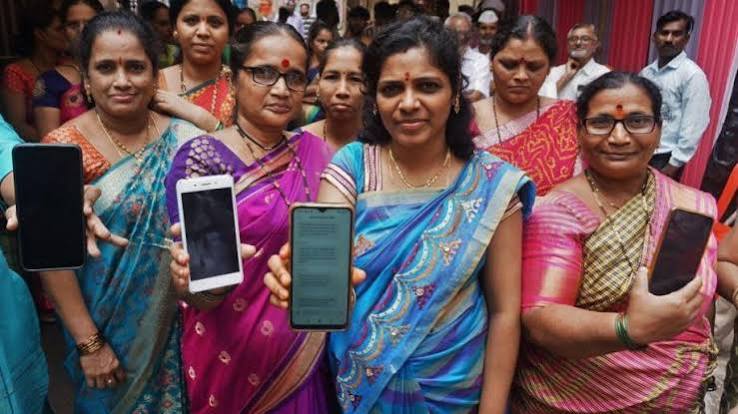
The rapid proliferation of direct cash assistance reflects an evolving paradigm in India's macroeconomic management. In 2019, only four regional states offered routine monthly income support. Data from Crisil Intelligence reveals that 17 out of 28 Indian states alongside the National Capital Territory of Delhi now run active monthly cash distribution schemes. These transfers primarily target vulnerable demographics, specifically female heads of households and marginal agricultural landowners.
Depending on the specific region, the monthly payouts generally scale between ₹1,000 and ₹2,500. According to Crisil’s evaluation, a median regional cash transfer of ₹1,500 per month currently fulfills roughly 74% of total rural household expenditure and 51% of urban expenditure for the lowest 20% of the economic pyramid. This significant liquidity injection acts as an essential macroeconomic buffer, stabilizing baseline consumer demand against ongoing weather anomalies, such as El Niño, and global energy price volatility. Just today, on June 19, 2026, Prime Minister Narendra Modi is scheduled to disburse an additional ₹2,400 crore in direct incentives to 15 lakh formal sector workers under the Pradhan Mantri Viksit Bharat Rojgar Yojana (PM-VBRY), highlighting the government's continued commitment to this delivery model.
The Cost Efficiency Imperative: Making Transfers Cheaper
Despite the celebrated successes of the initial Jan Dhan-Aadhaar-Mobile (JAM) Trinity framework, independent analysis shows that the administrative machinery underlying these distributions is growing increasingly costly. High transaction processing percentages, bank agent commission structures, and repetitive biometric failure rates impose a frictional drag on public finances.
To counter these operational overheads, the central government has initiated pilot programs designed to transition cash transfers onto decentralized blockchain networks. In late February 2026, the Union Ministry for Consumer Affairs, Food and Public Distribution inaugurated a landmark Central Bank Digital Currency (CBDC) token pilot under the Pradhan Mantri Garib Kalyan Anna Yojana (PMGKAY) in Puducherry.
By delivering subsidies as programmable digital rupees ($e₹$) directly into recipient digital wallets, the state can entirely bypass commercial banking intermediaries. Officials estimate that wide-scale digital rupee integration across the Direct Benefit Transfer (DBT) Mission architecture could save the exchequer hundreds of crores annually by lowering administrative clearing fees and eliminating recurring e-POS biometric authentication failures at regional distribution centers.
Algorithmic Governance: Making Transfers Smarter
Beyond reducing transaction friction, the next evolution of Indian welfare involves optimizing data intelligence. Historically, static database entries have allowed leakage; however, current "DBT 2.0" structural reforms leverage machine learning to make systemic allocations significantly smarter.
According to regional evaluation reports from the India Policy Hub, the deployment of continuous, AI-driven registry audits allowed the government to save an aggregate ₹3.48 lakh crore by the first quarter of 2026. This optimization was achieved primarily by identifying and removing approximately 5.2 crore fraudulent or duplicate entries across 450 welfare programs, alongside cleansing 2.1 crore ineligible landowners from the flagship PM-KISAN agricultural database.
Transitioning to a smarter framework requires moving from historical, reactive data updates to predictive targeting. Economists advise that by cross-referencing real-time digital footprints—such as rural electricity usage, automated fertilizer purchases, and local weather anomalies—the welfare engine can dynamically adjust cash transfers to assist households immediately before they slide below the multi-dimensional poverty threshold. This shift is reflected in India's Welfare Efficiency Index (WEI) score, which has risen from 0.32 in 2014 to a record 0.91 in 2026, meaning 91 paise of every welfare rupee disbursed now successfully translates into direct, intended recipient support.
Official Sources Section
The macroeconomic metrics, state distribution data, and fiscal allocation curves analyzed in this article were sourced from official statistical summaries published by Crisil Intelligence Reports, project data sets from ProjectDEEP, and localized performance matrices from the central Cabinet Secretariat's Direct Benefit Transfer (DBT) Mission. Program specific enrollment figures were verified using the live ministerial updates from the Press Information Bureau (PIB) of India.
Quote Section
"The true success of these schemes lies in their seamless delivery to the end user," stated Union Minister Pralhad Joshi during a national digitization conference. "Our ultimate goal is to leverage advanced technology to eliminate intermediate structural costs, ensuring that public entitlements reach the correct citizen at the lowest possible cost to the taxpayer."
Why It Matters
For regular citizens, businesses, and international investors, refining India's cash welfare network is essential for fiscal sustainability. When public distributions are poorly targeted or expensive to execute, they deplete capital that could otherwise be used for long-term infrastructure projects like highways, electrical grids, and public education. Conversely, implementing cheaper, programmatically targeted transfers provides poor households with immediate, reliable purchasing power. This stable baseline demand boosts small businesses and consumer goods manufacturers, supporting consistent, non-inflationary GDP growth across the world's most populous nation.
Key Facts at a Glance
Scale of Dole: Cash transfers in India now exceed $30 billion annually, accounting for roughly 1% of the national GDP.
Consumption Cushion: A median transfer of ₹1,500 monthly effectively covers 74% of rural household expenses for the bottom quintile of citizens.
Efficiency Gains: The integration of AI screening tools has eliminated 5.2 crore duplicate entries, saving the government ₹3.48 lakh crore.
Technological Shift: The Reserve Bank of India is actively piloting programmable CBDC digital coupons to lower bank transaction fees.
Efficiency Metric: India's Welfare Efficiency Index reached an all-time high of 0.91 in early 2026, up from 0.32 in 2014.
FAQ Section
Q: Why do experts say India's cash transfers need to be "cheaper"? A: While sending money digitally seems seamless, processing billions of individual transactions across hundreds of commercial and rural banks generates substantial administrative, clearing, and agent maintenance costs. Using modern technology like the digital rupee ($e₹$) can help eliminate these corporate middlemen.
Q: What does making cash assistance "smarter" mean in practice? A: It means using real-time machine learning analytics and database integration instead of rigid, outdated census records. A smarter system automatically identifies when a family no longer requires support or quickly starts payments to a household hit by a sudden crop failure or economic crisis.
Q: Does this expansion in cash transfers mean India is reducing other food and employment subsidies? A: No. Rather than replacing physical infrastructure or food security initiatives, these direct financial transfers are functioning as a parallel social safety net designed to directly stimulate household consumption and reduce poverty.
Source: * Cabinet Secretariat - Government of India DBT Mission Dashboard
Crisil Intelligence Macroeconomic Welfare Analysis (June 2026)
Press Information Bureau (PIB) - Ministry of Consumer Affairs, Food and Public Distribution