The International Olympic Committee announced at its 146th Session that the host for the 2036 Summer Olympics will be elected in mid-2029. Under newly reformed rules adding a "Strategic Dialogue" phase, India faces a critical shortlisting checkpoint in March 2027, requiring formal financial guarantees to sustain its multi-billion dollar bid.
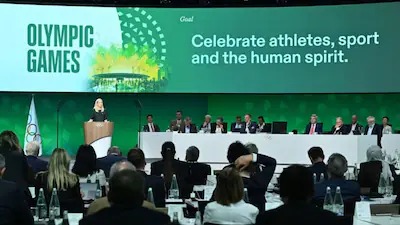
LAUSANNE, Switzerland — The International Olympic Committee (IOC) has formally restructured the selection protocol for future Olympic Games, creating a defined timeline that marks out the exact path for India’s ambitious multi-billion dollar sporting dream. At the global body’s 146th Session in Lausanne on Wednesday, June 24, 2026, member nations approved a comprehensive set of reforms that introduce a mandatory transitional evaluation phase for all future bids.
According to the newly ratified framework, the final vote to elect the host city for the 2036 Summer Olympic Games is officially locked in for mid-2029. For India, which is actively pursuing the 2036 edition through an ongoing proposal centered around Ahmedabad, the revamped roadmap establishes an immediate, high-stakes qualification gate in the first quarter of 2027. This rule change replaces the previous quiet selection system, restoring a transparent, tiered competitive bidding structure that requires candidate nations to clear strict financial and governance hurdles to stay in contention.
"Fit for the Future" Agenda Introduces Strategic Shortlisting Phase
The newly approved reforms, spearheaded by the IOC's Future Host Commission, add a specialized "Strategic Dialogue" phase into the evaluation cycle. This transitional step sits directly between the initial informal "Continuous Dialogue" pool and the final high-scrutiny "Targeted Dialogue" phase. The structural change follows explicit feedback from Olympic stakeholders and IOC members who requested greater clarity, objective evaluation metrics, and a larger collective role in narrowing down candidate projects.
Under the approved timeline, the first decisive cut will take place in March 2027. At that time, the IOC Executive Board will evaluate the continuous dialogue pool and select a shortlist of "Interested Parties" permitted to enter the Strategic Dialogue stage. Bidders who clear this hurdle will be required to provide initial responses to the comprehensive Future Host Questionnaire and formally submit "core financial guarantees" from their respective national governments to back their operational blueprints.
The Three-Phase Selection Roadmap
The restructured evaluation timeline details a clear, multi-year progression leading up to the final selection:
Phase 1: Continuous Dialogue (Current): A feasibility and informal consulting period during which interested National Olympic Committees engage with the Future Host Commission. India entered this phase following the submission of its official Letter of Intent in late 2024.
Phase 2: Strategic Dialogue (March 2027): The newly added transitional stage. Shortlisted candidates receive enhanced technical support from the IOC while the Future Host Commission conducts extensive on-site inspections of existing and proposed physical infrastructure.
Phase 3: Targeted Dialogue (Late 2028): The final evaluation runway. Preferred hosts must submit full legal commitments, legally binding financial guarantees, and clear project completion milestones before a final report is distributed to the full IOC voting body.
Practical Impact on India's Ahmedabad-Centered Infrastructure Plans
The codification of these international guidelines carries heavy practical implications for the Indian Olympic Association (IOA) and the Union Ministry of Youth Affairs and Sports. India’s initial hosting architecture, estimated at a projected layout of ₹64,000 crore ($7.5 billion), is heavily anchored within the city of Ahmedabad, which recently secured the rights to host the 2030 Commonwealth Games and has filed expressions of interest for the 2038 Asian Games.
However, staying in the running past March 2027 requires the Indian government to provide explicit, ironclad central financial guarantees to absorb potential operational cost overruns. Furthermore, international sports watchdogs have consistently flagged three recurring domestic challenges that India must address to survive the strategic cut: cleaning up governance structures across national sporting federations, putting in place strict, world-class anti-doping controls, and demonstrating a clear upward trend in athlete performance across frontline global events.
Competitive Landscape and Revived Voting System
The decision to choose the 2036 host in 2029 marks a major shift away from the direct, exclusive negotiations that previously awarded the 2028 Los Angeles and 2032 Brisbane Games more than a decade in advance. Led by IOC President Kirsty Coventry, the organization is planning to revive a multi-candidate voting format, allowing members to cast ballots from a final pool of vetted cities during the 2029 IOC Session.
This return to a competitive format sets up a high-stakes race for India. Ahmedabad faces serious, well-funded competition from an array of global economic and sporting hubs that have formally expressed hosting intent, including Doha (Qatar), Riyadh (Saudi Arabia), Istanbul (Turkey), and Budapest (Hungary). Qatar, for instance, enters the dialogue stage highlighting that 95 percent of its required sports infrastructure is already built and fully operational following its hosting of the 2022 FIFA World Cup.
Official Sources Section
The official administrative amendments, evaluation structures, and selection timelines outlined in this report have been corroborated through regulatory announcements and publications released by the following international and national bodies:
International Olympic Committee (IOC): Media releases, framework circulars, and executive statements finalized during the 146th IOC Session in Lausanne.
Future Host Commission: Strategic timelines and evaluation criteria presented by Commission Chair Kolinda Grabar-Kitarovic.
Ministry of Youth Affairs and Sports: Written compliance updates and bilateral communication briefs logged under parliamentary records via the Press Information Bureau (PIB).
Quote Section
"Potential hosts wanted greater clarity, and all stakeholders demanded greater structural transparency," stated Kolinda Grabar-Kitarovic, Chair of the IOC's Future Host Commission, during the proposal presentation. "Choosing an Olympic host is a powerful decision that comes with great responsibility. These reforms establish a clear timetable for sovereign governments, reducing systemic financial risks and managing public expectations through careful reflection."
Why It Matters
Establishing a definitive mid-2029 timeline shifts India's Olympic bid from a vague political goal into a time-bound engineering and financial project. For urban planning authorities in Gujarat and domestic infrastructure corporations, the March 2027 shortlisting checkpoint sets a strict deadline to complete land acquisitions, draft environmental impact files, and build advanced stadium facilities. Knowing the exact dates forces the state and central governments to align public expenditure maps, ensuring that tax revenues allocated for the Games directly support long-term civic utility, regional transit loops, and sustainable housing rather than ending up lost to hasty, last-minute construction scrambles.
Key Facts at a Glance
Decision Milestone Set: The final host city for the 2036 Summer Olympic Games will be elected by a vote of IOC members in mid-2029.
New Strategic Cut: A newly introduced "Strategic Dialogue" phase will shortlist candidate nations in March 2027, serving as India's first major evaluation gate.
Guarantees Required: Shortlisted nations must complete the Future Host Questionnaire and provide legally binding national financial guarantees.
Ahmedabad Anchor: India’s bid is structurally centered around the city of Ahmedabad, supported by a projected investment blueprint of ₹64,000 crore ($7.5 billion).
Stiff Global Competition: India faces a highly competitive field, with Doha, Riyadh, Istanbul, and Budapest all vying for the 2036 hosting rights.
FAQ Section
Q1: When will India officially find out if its 2036 Olympic bid moves past the first round?
India's first major milestone arrives in March 2027, when the IOC Executive Board will formally shortlist candidate nations to advance from the continuous dialogue phase into the strategic dialogue phase.
Q2: What is the main difference between the old Olympic bidding process and the new 2026 rules?
The new rules add a "Strategic Dialogue" phase that brings back a structured timeline and a competitive multi-candidate voting system, moving away from the single-candidate "rubber-stamping" process used for recent Games.
Q3: Why must India provide "core financial guarantees" by early 2027?
Under the updated IOC rules, any nation advancing to the strategic shortlisting phase must submit binding commitments from its central government to prove it has the fiscal capacity to cover construction and operational costs.
Q4: Which sports has India proposed including if it wins the 2036 hosting rights?
The Mission Olympic Cell has proposed including popular regional disciplines, such as yoga, kabaddi, and kho-kho, alongside sports like chess, T20 cricket, and squash.
Source: Official Session Reports from the International Olympic Committee (IOC), Future Host Commission regulatory briefs, and athletic compliance registries filed with the Indian Olympic Association (IOA).