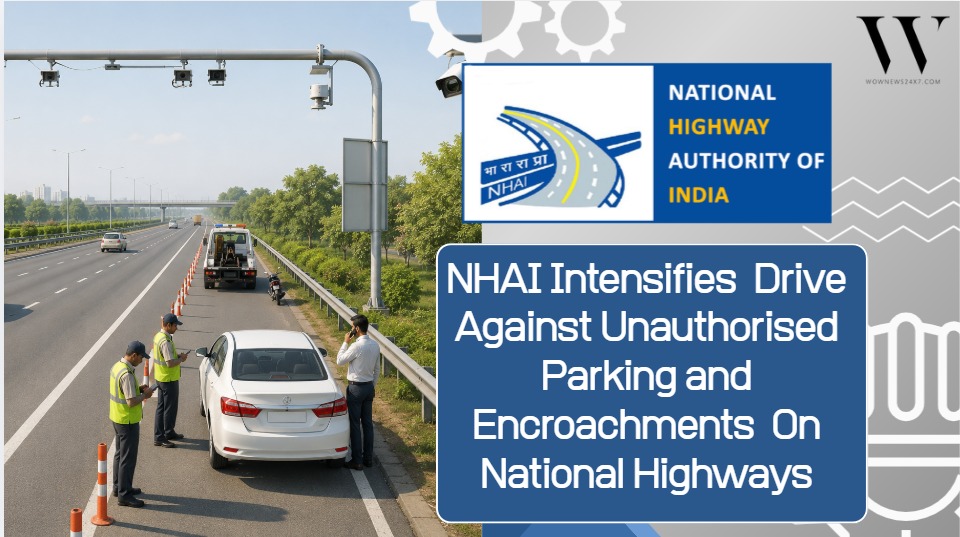
The NHAI has initiated a nationwide cleanup identifying 595 unauthorized parking sites along national highways. By enforcing the Control of National Highways (Land and Traffic) Act, the authority aims to mitigate traffic congestion, improve road safety, and ensure long-term efficiency for India's logistics and transport infrastructure corridors.
NEW DELHI — The National Highways Authority of India (NHAI) has intensified its enforcement efforts against roadside encroachments, identifying 595 unauthorized parking sites across its national highway network. This initiative is part of a broader mandate to enhance road safety and ensure the seamless movement of freight and passenger traffic, according to recent updates from the Ministry of Road Transport and Highways (MoRTH).
The identification of these 595 unauthorized parking sites follows a nationwide audit conducted by regional offices of the NHAI. The survey found that these spots, often operating without valid permits, frequently cause severe bottlenecks, increase accident risks, and disrupt drainage systems along major transport corridors. The removal process, which began earlier this month, involves coordinated efforts between highway authorities, local police departments, and district administration offices.
Operational Strategy and Enforcement
The NHAI’s crackdown focuses on major arterial roads where illegal parking has become a chronic issue. By occupying shoulders and emergency lanes, these sites prevent heavy vehicles from stopping safely in breakdowns and obstruct the clear line of sight for motorists.
According to data released by the Ministry of Road Transport and Highways, the authority has issued notices to operators of the identified sites, demanding immediate vacation of the land. In instances where compliance is not met within the stipulated window, the NHAI has initiated demolition and site restoration activities.
The enforcement strategy utilizes drone surveillance and real-time inputs from the NHAI highway patrol units to monitor these corridors continuously. The agency intends to convert several of these reclaimed spaces into designated utility bays or green belts to discourage future encroachment.
Impact on Logistics and Road Safety
For commercial logistics and long-haul transport, the presence of illegal roadside structures has been a persistent hurdle. The unauthorized parking of heavy vehicles near junctions and narrow stretches often leads to congestion, resulting in increased fuel consumption and delayed delivery timelines.
Road safety advocates note that removing these obstructions is vital for lowering the nation’s accident statistics. By clearing the highway margins, the NHAI aims to restore the intended design speed of the roads and provide sufficient space for emergency medical services to navigate traffic during peak hours. Furthermore, the initiative is expected to reduce the incidence of "side-swipe" accidents, which are common near haphazardly parked vehicles.
Official Sources and Regulatory Framework
The drive is governed by the Control of National Highways (Land and Traffic) Act, 2002. Under this legal framework, the highway authority is empowered to clear encroachments that fall within the Right of Way (RoW) of any national highway.
"The NHAI has documented the locations and is working in tandem with the respective state governments to ensure that these sites remain clear of future obstructions," the agency noted in a recent bulletin.
Regulatory filings indicate that the NHAI is also working to integrate "Smart Parking" solutions at legitimate service plazas, providing drivers with safe, authorized alternatives to the illegal sites being cleared. This dual approach—enforcement combined with infrastructure provision—is designed to create a sustainable solution for the long-haul trucking community.
Why It Matters
The practical implications of this drive are twofold. First, commuters and transporters can expect a reduction in unpredictable congestion points, which contributes to more predictable travel times. Second, the cleanup is essential for the government’s effort to modernize India’s logistics sector, as road infrastructure capacity is currently hampered by the misuse of highway margins. The removal of 595 unauthorized parking sites represents a significant step toward reclaiming highway land for its primary intended use: safe, high-speed transit.
Key Facts at a Glance
Scope of Action: The NHAI has identified 595 unauthorized parking sites across the national highway network.
Legal Basis: The enforcement is conducted under the provisions of the Control of National Highways (Land and Traffic) Act, 2002.
Objective: To improve road safety, reduce congestion, and reclaim land for authorized highway usage.
Methods: The cleanup involves coordinated site restoration using drone monitoring and local administrative support.
FAQ
What happens to the land after the parking sites are cleared?
The NHAI plans to restore the land to its original state, potentially using areas for utility bays or vegetation to prevent future encroachment.
Are there alternative parking options for drivers?
The NHAI is currently accelerating the development of designated wayside amenities and authorized truck lay-bys to provide safe parking alternatives.
Who is responsible for the removal of these sites?
The removal is led by the NHAI’s regional offices in collaboration with local law enforcement and district administration officials.
How can citizens report new encroachments?
Citizens are encouraged to report illegal roadside parking or encroachments via the NHAI 1033 helpline or the official ministry mobile application.
Source: Ministry of Road Transport and Highways (MoRTH), National Highways Authority of India (NHAI)