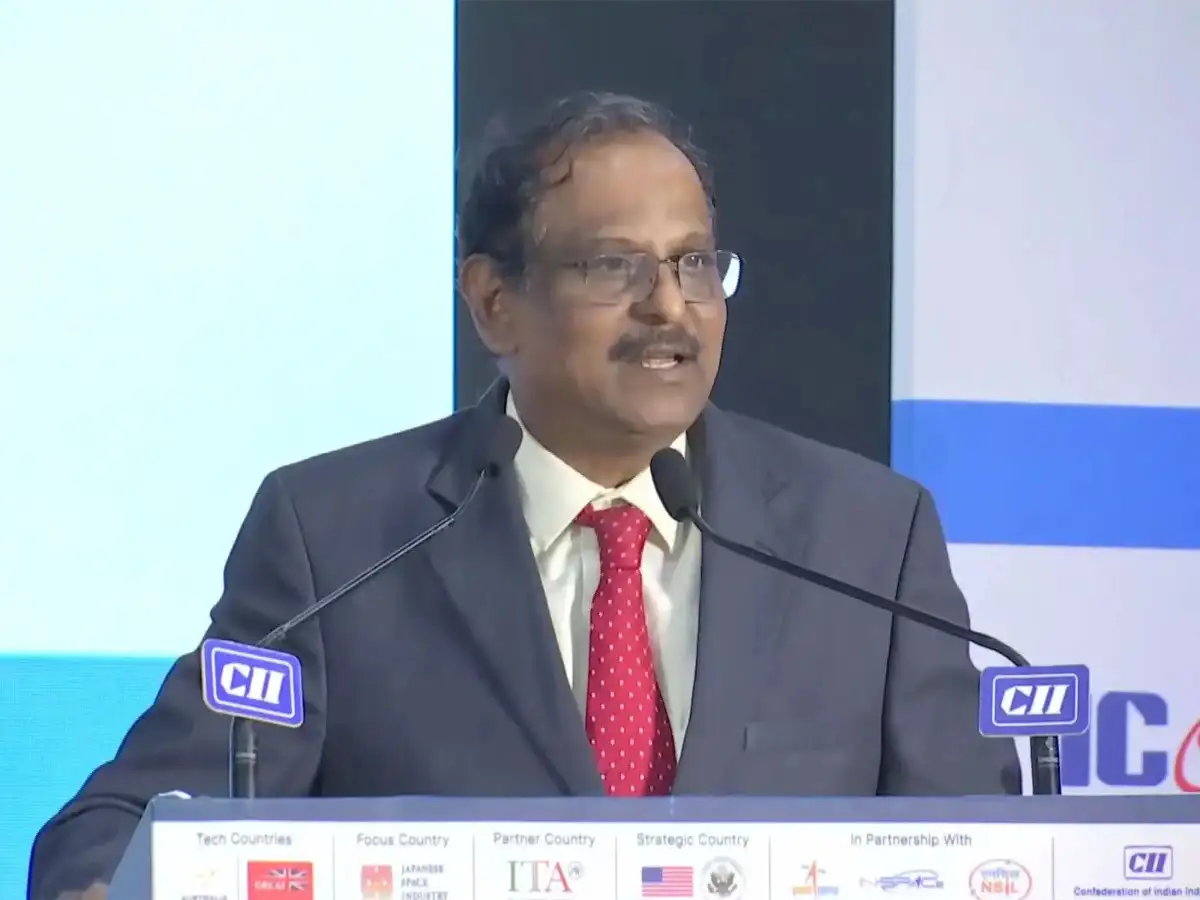
ISRO Chairman Dr. V. Narayanan has urged greater private industry participation in India's space sector, emphasizing that the state agency alone cannot satisfy escalating national satellite demands. The transition aims to shift routine manufacturing to commercial enterprises while enabling ISRO to concentrate on deep-space exploration and space station infrastructure.
NEW DELHI — Indian Space Research Organisation (ISRO) Chairman Dr. V. Narayanan has called for an expanded role for private industry to scale India’s space sector, emphasizing that the state-run agency alone cannot meet the country's surging technological and operational demands. Addressing industry stakeholders and aerospace executives, Narayanan defended national privatization initiatives, asserting that building a robust, commercially viable space ecosystem requires private enterprises to undertake core manufacturing and satellite operations. The strategic push comes as India targets expanding its footprint in the global commercial space economy from approximately 2 percent to 10 percent.
Shifting From Agency Dependence to Industry Execution
For decades, ISRO functioned as the primary architect, manufacturer, integrator, and operator of India’s space infrastructure. However, growing domestic requirements—spanning telecommunications, broadband connectivity, earth observation, disaster management, and defence surveillance—have outpaced what a single national agency can deliver on its own.
Dr. Narayanan highlighted that sustaining high launch cadences and operating massive satellite constellations necessitates structural decentralization. Under this framework, ISRO’s institutional mission is shifting toward cutting-edge research, deep-space exploration, and advanced technology development, while private aerospace enterprises assume production workloads for proven launch vehicles, satellite platforms, and downstream data applications.
The national space sector reforms introduced through the Indian Space Policy, alongside the operationalization of the Indian National Space Promotion and Authorization Centre (IN-SPACe) and NewSpace India Limited (NSIL), were specifically designed to enable non-governmental entities (NGEs) to access ISRO test facilities, acquire transferred technology, and bid for commercial satellite launches.
Ambitious Mission Pipeline Accelerates Resource Constraints
The call for broader private participation comes as ISRO manages one of the most demanding mission schedules in its history. The agency is concurrently developing the crewed Gaganyaan human spaceflight mission, the Chandrayaan-4 lunar sample-return initiative, the Bharatiya Antariksh Station (BAS), and the Next Generation Launch Vehicle (NGLV).
Fulfilling these national initiatives requires specialized resources, high-precision engineering facilities, and dedicated workforce hours. According to space policy planners, dedicating internal agency assets to routine operational satellite assembly or commercial launch missions risks creating production bottlenecks across core strategic programs. By transitioning routine launch systems—such as the Polar Satellite Launch Vehicle (PSLV) and Small Satellite Launch Vehicle (SSLV)—into private consortiums, the nation can preserve ISRO’s engineering talent for complex scientific milestones.
Impact on Startups, Investors, and Downstream Businesses
A broader private role within India's space architecture carries direct commercial implications across various segments of the domestic economy:
Commercial Startups and Launchers: Non-governmental aerospace firms gain formal access to launch infrastructure at the Satish Dhawan Space Centre (SDSC) in Sriharikota, alongside operational technology transfers for liquid and solid propulsion systems.
Institutional Investors: Clarifying the operational boundaries between state agency research and private commercialization de-risks venture capital and private equity deployments into Indian spacetech startups.
Downstream Enterprise Consumers: Accelerated satellite deployments expand data availability for precision agriculture, logistics tracking, maritime surveillance, and telecommunications infrastructure.
Official Sources
Policy roadmaps and regulatory mechanisms are administered under statutory guidelines by the Department of Space and implemented through the single-window clearing portal of the Indian National Space Promotion and Authorization Centre. Strategic program authorizations align with official cabinet clearances published via the Press Information Bureau.
Quote Section
Addressing questions surrounding the expanding commercialization of domestic aerospace operations, Dr. V. Narayanan stated:
"ISRO alone cannot meet the expanding needs of the country. Scaling the space sector requires private industry to step forward, build industrial capacity, and share the operational burden so India can expand its rightful share in the global space economy."
Why It Matters
Global space commerce is transitioning from government-funded prestige programs into an industrial market driven by private satellite mega-constellations and commercial launchers. If India relies exclusively on public funding and agency manpower, it risks falling behind international competitors who leverage private capital to scale production. Empowering domestic aerospace manufacturers allows India to secure supply chain sovereignty, lower satellite launch costs, and build high-value manufacturing employment domestically.
Key Facts at a Glance
Executive Call: ISRO Chairman Dr. V. Narayanan states ISRO alone cannot fulfill India’s expanding satellite and launch demands.
Economic Objective: Drive India's share of the global commercial space economy from roughly 2 percent to 10 percent.
Institutional Role Shift: ISRO prioritizes deep-space exploration, space station assembly, and advanced propulsion, while private players handle commercial manufacturing.
Regulatory Facilitators: IN-SPACe facilitates private integration, while NSIL commercializes agency research and proven launch vehicles.
Frequently Asked Questions
Why did ISRO Chief Dr. V. Narayanan call for greater industry participation?
Dr. Narayanan emphasized that the volume of satellites, launch vehicles, and communication infrastructure required across defense, agriculture, and industry exceeds what ISRO can produce independently.
What is India's target in the global space market?
India is working toward expanding its commercial market share from approximately 2 percent to 10 percent of the worldwide space economy.
How will ISRO's role change as private companies expand?
ISRO will focus primarily on core scientific research, human space exploration (Gaganyaan), lunar missions, the Bharatiya Antariksh Station, and frontier propulsion engineering, rather than serial assembly and commercial payload logistics.
Source: Official statements from the Indian Space Research Organisation, regulatory updates from the Indian National Space Promotion and Authorization Centre, and national space directives via the Department of Space.