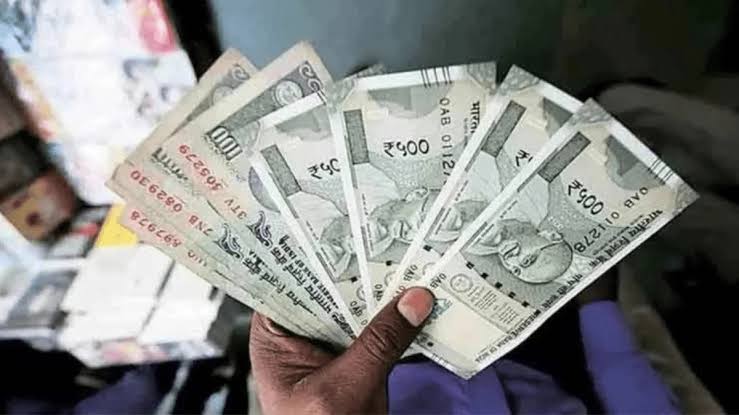
The Indian rupee traded nearly flat, closing at 94.48 per U.S. dollar as of 3:30 p.m. IST, compared to 94.4850 previously. Concurrently, Indian equity benchmarks closed 0.5% lower, with the Nifty 50 and BSE Sensex paring deeper pre-auction losses of 0.57% and 0.61% amid late-session domestic institutional support.
MUMBAI — The Indian rupee settled virtually unchanged against the greenback on Monday, finishing at 94.48 per U.S. dollar, while benchmark equity gauges declined about half a percent following a late-session recovery. Foreign exchange data recorded at 3:30 p.m. IST showed the local currency holding firm against its prior close of 94.4850, navigating steady domestic dollar demand from commercial importers alongside measured interventions by state-run banks. At the same time, the National Stock Exchange’s blue-chip Nifty 50 and the BSE Sensex closed 0.5% lower, trimming deeper pre-auction deficits. The dual financial market outcome is critical today as investors, foreign institutional participants, and domestic enterprises assess underlying economic resilience amid volatile global trade dynamics and sustained emerging market currency pressures.
Rupee Balances Import Demand Against Central Bank Buffers
The Indian rupee opened the session with marginal deviations before trading within a tight intraday range and settling at 94.48 against the greenback. The performance marks a modest appreciation from the previous close of 94.4850. Currency dealers attributed the equilibrium to offsetting transactional flows: steady greenback bidding by state-run refiners and electronics importers was countered by routine liquidity operations conducted by the Reserve Bank of India to prevent sharp intraday slippages.
Foreign exchange reserves have continued to serve as an anchor for the domestic unit. Market participants noted that commercial banks witnessed balanced export proceeds and remittance flows throughout early afternoon trading, neutralizing speculative swings. As cross-border borrowing yields fluctuate worldwide, the stability of the Indian rupee has emerged as an essential ballast for corporate treasuries managing short-term debt servicing and foreign-denominated liabilities.
Benchmark Indices Pare Pre-Auction Losses
Equities in Mumbai experienced broad-based selling pressure across capital goods, banking, and metal counters before institutional buying in the final minutes helped limit the decline.
The Nifty 50 index (.NSEI) dropped 0.5%, bouncing back from a steeper pre-auction deficit of 0.57%.
The BSE Sensex (.BSESN) settled 0.5% lower on the day, paring pre-auction losses of 0.61%.
The recovery in the pre-closing auction window reflected selective domestic institutional buying in defensive segments such as fast-moving consumer goods (FMCG) and pharmaceuticals. Traders reported that despite negative cues across Asian bourses and elevated U.S. Treasury yields weighing on market breadth, domestic institutional investors (DIIs) provided vital liquidity, checking a sharper descent across large-cap holdings.
Macroeconomic Context and Cross-Asset Impact
The divergence between an immobilized foreign exchange rate and a softening equity market highlights the complex variables facing India's macro landscape.
Impact on Importers and Consumers: The steady performance of the Indian rupee at 94.48 limits runaway landed costs for key input commodities, including crude oil, industrial chemicals, and semiconductors. For domestic consumers, an anchor on the currency prevents immediate imported inflationary shocks from filtering into consumer retail baskets.
Impact on Exporters and IT Firms: Software service providers and textile exporters face margin pressures due to currency stabilization alongside slowing overseas enterprise tech spending, reducing foreign-currency windfall gains.
Impact on Retail and Institutional Investors: While short-term equity swings reflect broader global portfolio realignments, the lack of currency volatility reassures foreign portfolio investors (FPIs) against sudden balance-sheet translation losses.
Official Sources Section
Market data and regulatory disclosures were monitored through verified exchange and banking platforms. Trading records for equities and settlement indices were provided by the National Stock Exchange of India and BSE Limited. Foreign exchange reference valuations, clearing flows, and monetary policy guidelines were tracked via the Reserve Bank of India, in coordination with macro updates and fiscal reviews from the Ministry of Finance.
Quote Section
"According to officials familiar with treasury operations at state-run banks, the foreign exchange market experienced balanced two-way liquidity throughout the day, with foreign institutional outflows in secondary equities being offset by steady foreign direct inflows and domestic dollar supply, allowing the Indian rupee to remain resilient near recent baselines."
Why It Matters
Sustained stability in the Indian rupee provides operational certainty for commercial businesses navigating international trade corridors. For corporate planners, a predictable exchange rate minimizes costly hedging requirements for external commercial borrowings. Simultaneously, the capacity of domestic indices like the Nifty and Sensex to absorb intra-day selling pressure and pare steeper drops demonstrates the structural depth of local institutional capital in cushioning Indian financial markets against global shocks.
Key Facts at a Glance
Currency Level: The Indian rupee closed nearly flat at 94.48 per U.S. dollar at 3:30 p.m. IST, up slightly from its previous close of 94.4850.
Nifty Performance: The Nifty 50 ended 0.5% lower, recovering from an intraday pre-auction decline of 0.57%.
Sensex Performance: The BSE Sensex settled down 0.5%, paring pre-auction losses that had reached 0.61%.
Market Drivers: Import dollar bidding and institutional portfolio adjustments were countered by domestic fund support and central bank liquidity management.
Frequently Asked Questions (FAQ)
Where did the Indian rupee close against the U.S. dollar today?
The Indian rupee finished nearly flat at 94.48 per U.S. dollar at 3:30 p.m. IST, compared to its previous closing figure of 94.4850.
How did the Nifty 50 and Sensex perform during the trading session?
Both major benchmark indices ended 0.5% lower. However, both trimmed deeper pre-closing declines; the Nifty 50 pared losses from 0.57%, while the Sensex recovered from a 0.61% deficit.
Why did the equity benchmarks recover late in the session?
Institutional buying during the pre-close auction period, led primarily by domestic mutual funds and pension managers, helped offset heavy foreign portfolio selling across primary large-cap counters.
Source: Official market closing disclosures from the National Stock Exchange of India, the BSE Limited, and the foreign exchange desk at the Reserve Bank of India.