SpiceJet flights from Pune to Dubai faced severe rolling delays of up to 14 hours, sparking passenger outrage over baggage-drop bottlenecks and communication gaps. The airline blamed destination ATC congestion and slot constraints for the chaos, while aviation authorities continue reviewing carrier operational reliability and passenger support protocols.
Pune — Passengers traveling from Pune to Dubai faced severe disruptions this week as SpiceJet flight SG-51 experienced rolling delays of up to 14 hours, compounding traveler frustration with major baggage-drop bottlenecks. According to social media accounts and passenger reports from Pune International Airport, the service—originally slated for a routine evening departure—suffered from cascading schedule shifts. The incident has reignited concerns regarding schedule reliability and ground handling efficiency for budget carriers operating high-density international routes.
Cascading Flight Schedule Disruptions
Flight SG-51 is regularly scheduled to depart Pune at 9:00 PM and touch down in Dubai late evening. However, flight-tracking data and passenger testimonies reveal that the service has run heavily off-schedule over successive rotations, with multiple cancellations and departure postponements stretching up to 14 hours.
Travelers reported arriving at the terminal only to discover that departures had been pushed deep into the early morning hours. Beyond the primary Dubai sector, related aircraft rotations triggered subsequent delays on domestic routes, such as Pune to Delhi services, stranding passengers across multiple domestic hubs.
Ground Congestion and Baggage Chaos
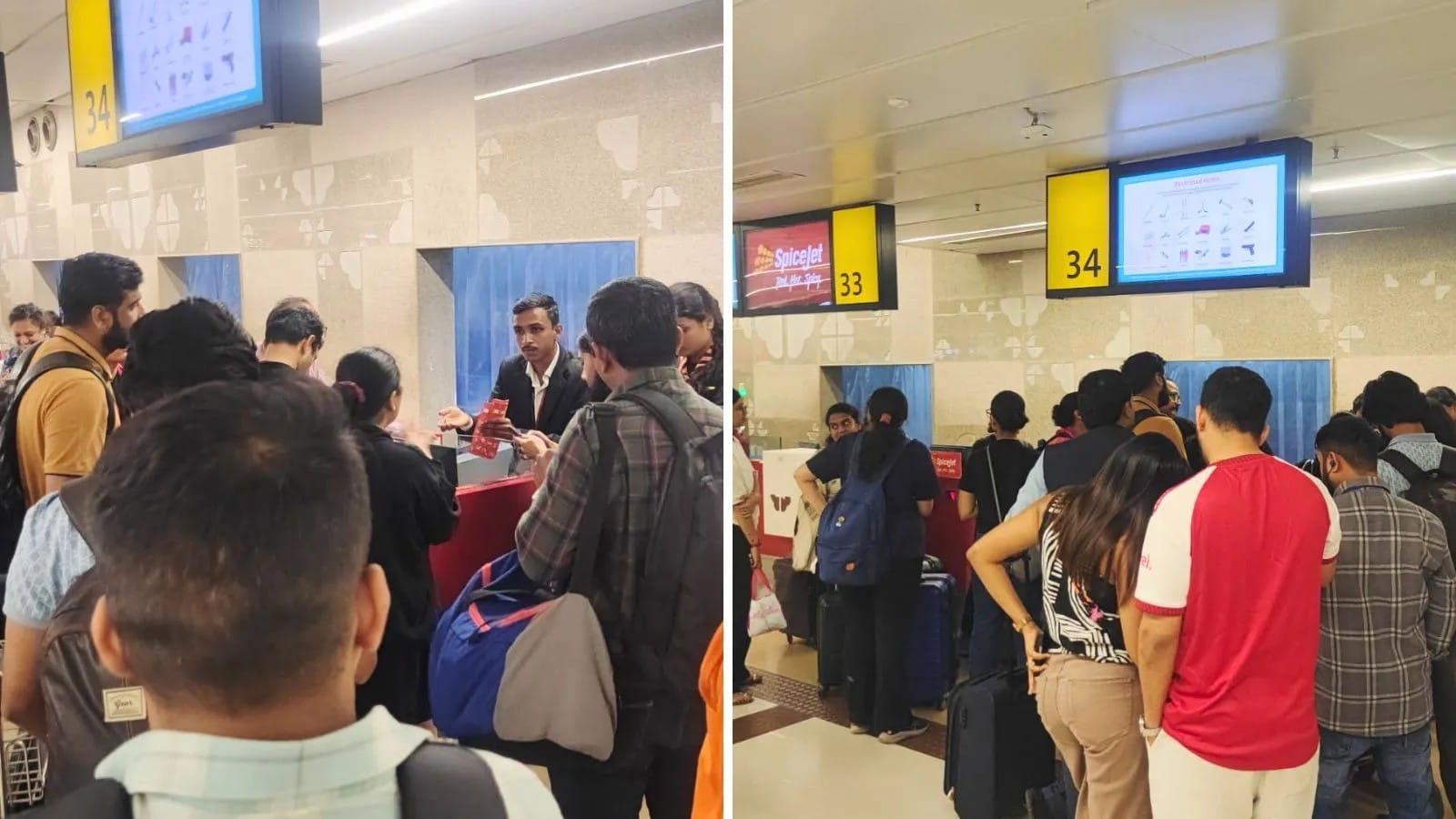
The extended delays triggered severe congestion inside the terminal. Flyers voiced sharp criticism over ground logistics, pointing out that limited staffing at check-in counters created massive queues during baggage drop.
"It is extremely disappointing that SpiceJet flight SG-51 from Pune to Dubai got delayed by 6 hours. To make matters worse, there was only one person handling baggage drop, resulting in a huge queue and severe congestion at Pune Airport," an affected passenger posted online. Commuters noted that inadequate deployment of ground crew during irregular operations intensified physical stress for families, elderly individuals, and professionals with tight schedules.
Operational Explanations and Airline Response
Addressing the operational crisis, airline representatives attributed the erratic schedule to severe air traffic control (ATC) congestion and airspace sequencing constraints at destination hubs.
"It is happening because of air traffic control (ATC) congestion in Dubai and en-route congestion, which resulted in departure-slot constraints and flight sequencing by Dubai airport authorities," a SpiceJet spokesperson explained, adding that subsequent turnarounds created a cascading effect on downstream schedules. The airline maintained that text notifications were dispatched to passengers ahead of time regarding specific revisions. Meanwhile, civil aviation authorities have continued routine evaluations with domestic carriers to address financial and operational stabilization.
Impact on Travelers and Business Commitments
The prolonged uncertainty carries heavy practical consequences for passengers:
For Overseas Workers: Migrant workers and contract employees face severe risks to employment status and visa entry windows due to unexpected multi-hour absence from destination duties.
For Corporate Flyers: Business travelers report missed critical meetings, forcing last-minute ticket cancellations and expensive re-routings via alternative airports like Mumbai.
For Airport Management: Terminal operators face intense passenger crowding when delayed travelers accumulate landside before check-in counters open for rescheduled slots.
Official Sources Section
Operational clarifications, regulatory contexts, and schedule explanations are sourced from official statements released by SpiceJet airline representatives, flight-tracking logs from Flightradar24, and briefings provided by the Ministry of Civil Aviation.
"Organizers stated that the ministry remains in regular engagement with all scheduled domestic carriers to monitor operational bottlenecks, resolve structural challenges, and minimize passenger distress," according to official ministry updates.
Why It Matters
Persistent scheduling irregularities on international budget corridors highlight systemic vulnerabilities in airline fleet utilization and ground-handling bandwidth. For everyday consumers relying on affordable air transit, unpredictable delays translate into financial loss, severe fatigue, and professional jeopardy, underscoring the urgent need for tighter regulatory enforcement of passenger compensation and operational transparency.
Key Facts at a Glance
Affected Route: SpiceJet Flight SG-51 (Pune to Dubai).
Extent of Delay: Cumulative rolling disruptions and postponements stretching up to 14 hours over consecutive rotations.
Primary Causes Cited: Destination air traffic control (ATC) congestion, en-route sequencing limits, and subsequent aircraft rotation constraints.
Ground Issues: Severe terminal congestion and long queues stemming from limited baggage-drop staffing.
FAQ Section
Why was SpiceJet flight SG-51 delayed for hours?
The airline attributed the disruption to severe air traffic control (ATC) congestion in Dubai, departure-slot constraints, and cascading delays affecting the aircraft's prior rotational flights.
Did passengers receive prior notice about the schedule changes?
While SpiceJet stated that text notifications were sent to flyers regarding revised departure timelines, many passengers reported discovering the extended delays only after reaching the airport.
How did the delays affect airport operations at Pune?
The prolonged schedule changes caused heavy terminal crowding, exacerbated by limited staffing at check-in and baggage-drop counters.
What are travelers advised to do during major flight disruptions?
Passengers should monitor live flight-tracking apps, verify status updates directly with the airline before leaving for the airport, and check their entitlements for refreshments and alternative accommodations under civil aviation rules.
Source: SpiceJet corporate communications, Flightradar24 data logs, Ministry of Civil Aviation, and passenger reports via social channels.