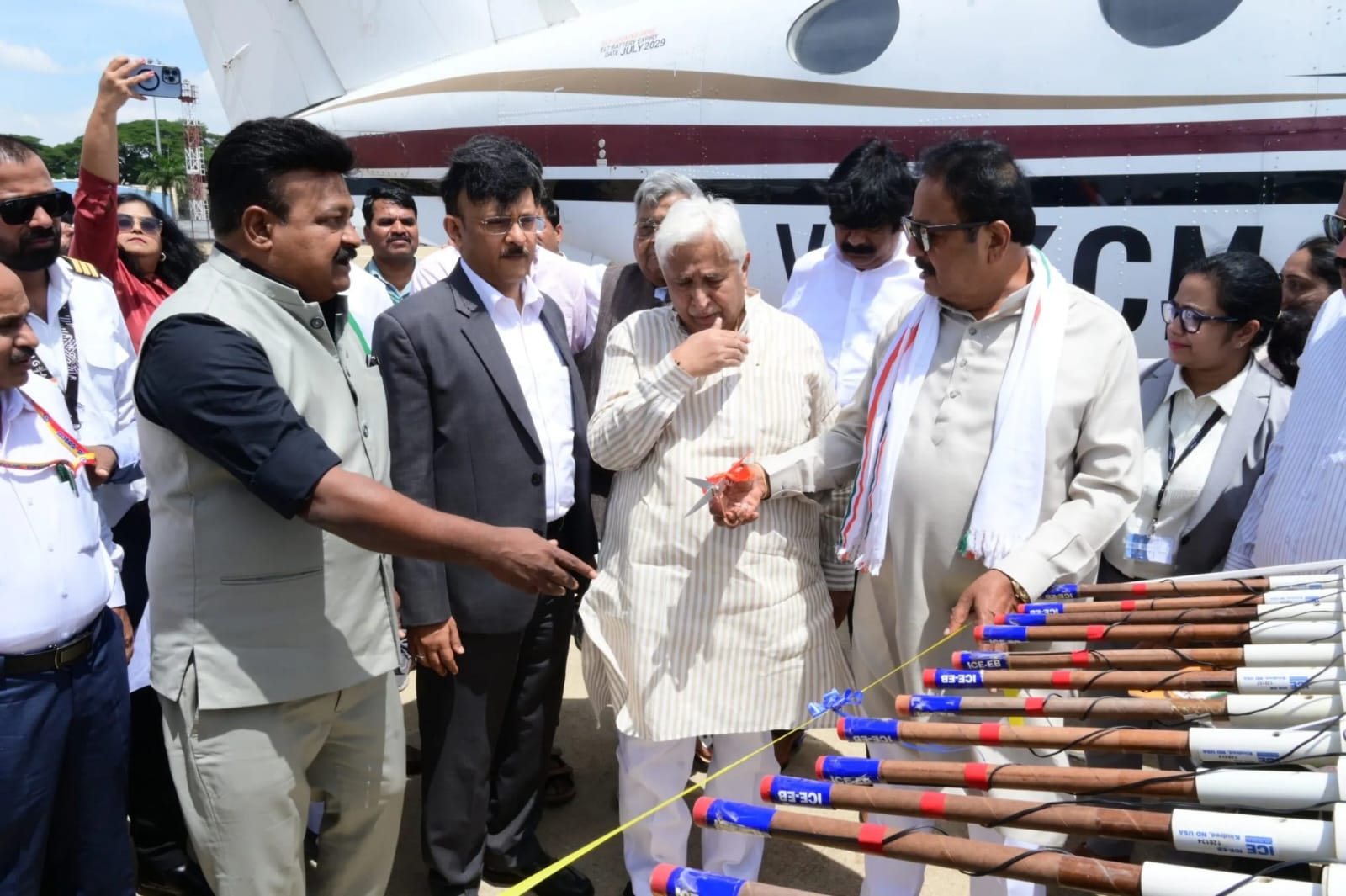
Karnataka has launched a ₹28.52 crore cloud-seeding initiative to counter a severe monsoon rainfall deficit and stave off a potential drinking water crisis. Jointly executed by KNNL and KSNDMC,the dynamic weather-modification project uses real-time radar data to target rain-bearing clouds,aiming to provide vital relief to distressed farmers and municipal reservoirs.
Bengaluru — Facing a worsening dry spell and widespread agricultural distress, the Karnataka government officially launched an ambitious cloud-seeding initiative valued at ₹28.52 crore. Water Resources Minister N. Chaluvarayaswamy flagged off a specially equipped light aircraft at HAL Airport in Bengaluru to operationalize the weather-modification project. With the monsoon season drawing to a close and numerous taluks declared drought-affected, the state administration is turning to atmospheric intervention to replenish depleted reservoirs and safeguard drinking water supplies through the coming months.
Mobilizing Weather Modification and Technical Frameworks
The comprehensive initiative is a joint effort executed by the Karnataka Neeravari Nigam Limited (KNNL) under the Water Resources Department and the Karnataka State Natural Disaster Monitoring Centre (KSNDMC) under the Revenue Department. The execution contract was awarded to M/s Kyathi Climate Modification Consultants LLP, with administrative approval clearing a budget of ₹28.52 crore, excluding Goods and Services Tax (GST).
Rather than pre-selecting specific target zones, technical teams rely on continuous real-time atmospheric data. Specially outfitted aircraft equipped with weather radars and chemical flare burners are deployed dynamically whenever meteorological instruments identify suitable moisture-bearing cumulonimbus formations over rain-deficient regions or reservoir catchments. Dispersing agents such as silver iodide, potassium iodide, or sodium chloride help condense microscopic water droplets into precipitation, with localized showers typically manifesting within 30 to 60 minutes after seeding.
Oversight Committees and Scientific Monitoring
To guarantee operational transparency and scientific rigor, the state government established two distinct administrative bodies:
The Monitoring Committee: Headed by the Additional Chief Secretary and Development Commissioner, this panel oversees overall project execution, administrative compliance, and strategic reviews.
The Technical Advisory and Evaluation Committee: Led by the Director of the KSNDMC, this eight-member expert team evaluates atmospheric metrics and updates project impact evaluations every two hours.
Officials acknowledged that previous cloud-seeding iterations yielded a historical success rate of approximately 35 percent. However, administrators emphasized that mitigating potential drinking water shortages and protecting standing crops override fiscal considerations.
Impact on Citizens, Agriculture, and Water Security
The emergency intervention holds critical practical implications across the state:
For Farmers: Timely artificial precipitation offers a lifeline to wilting agricultural yields across districts grappling with deficient monsoon spells.
For Urban Consumers and Planners: Augmenting reservoir storage levels before the monsoon concludes is vital to preventing acute municipal water rationing in major urban centers like Bengaluru through next summer.
For State Finances: Deploying substantial capital funds into weather mitigation underlines the rising economic cost of climate unpredictability on regional infrastructure.
Official Sources Section
Operational guidelines, budgetary allocations, and implementation frameworks are drawn from official announcements and releases issued by the Water Resources Department, the Karnataka State Natural Disaster Monitoring Centre (KSNDMC), and statements from state ministerial offices.
"Organizers stated that the project's core objective is to harness advanced meteorological tracking to maximize precipitation over water-stressed zones, protecting the socio-economic welfare of the state's agrarian population," according to official government communications.
Why It Matters
As shifting climate patterns trigger erratic monsoon behaviors across the Indian subcontinent, traditional water management strategies face unprecedented pressure. Karnataka's aggressive deployment of cloud seeding represents a shift toward active technological intervention in disaster management, serving as a critical test case for drought-prone regions attempting to engineer immediate relief from prolonged dry spells.
Key Facts at a Glance
Project Budget: ₹28.52 crore allocated for administrative and operational execution, excluding GST.
Implementing Agencies: Jointly managed by Karnataka Neeravari Nigam Limited (KNNL) and the Karnataka State Natural Disaster Monitoring Centre (KSNDMC).
Operational Mechanism: Dynamic deployment of aircraft to disperse seeding agents into suitable cumulonimbus clouds based on live weather radar updates.
Oversight Structure: Dual-committee framework providing continuous technical evaluation and administrative monitoring.
FAQ Section
Why has Karnataka initiated a cloud-seeding program now?
The state government launched the initiative to counter a severe rainfall deficit during the ongoing monsoon season, aiming to replenish drying reservoirs and mitigate impending drought conditions.
How are target locations chosen for cloud seeding operations?
No districts are earmarked in advance. Instead, specialized aircraft are dispatched dynamically based on real-time atmospheric data, Doppler radar tracking, and cloud density evaluations updated every two hours.
What chemicals are utilized during the cloud-seeding process?
Operations involve dispersing substances like silver iodide, potassium iodide, and sodium chloride through specialized flare burners to accelerate the condensation of water droplets into rain.
Who is overseeing the execution and success of the project?
The project is supervised by a high-level Monitoring Committee headed by the Additional Chief Secretary, alongside an eight-member Technical Advisory and Evaluation Committee that reviews progress bi-hourly.
Source: Water Resources Department, Karnataka State Natural Disaster Monitoring Centre (KSNDMC), Karnataka Neeravari Nigam Limited (KNNL), and official ministerial press briefings.