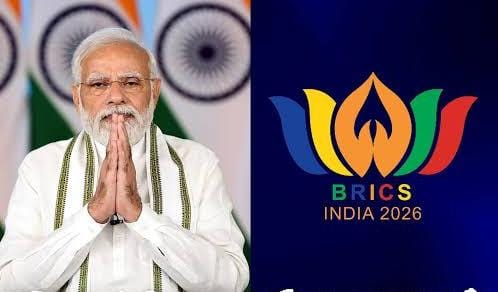
As India hosts the expanded BRICS bloc, its economic weight—surpassing the G7 in purchasing power parity—presents a historic opportunity to reshape global governance. Driven by surging energy trade with Russia and robust domestic growth, New Delhi aims to institutionalize alternative financial systems while balancing strategic autonomy.
New Delhi - As New Delhi prepares to host leaders of the expanded BRICS bloc at the Bharat Mandapam, policymakers face a defining geopolitical crossroads: converting the coalition's collective economic output—which surpasses the G7 in purchasing power parity (PPP) terms—into tangible global governance reform. According to data released in the International Monetary Fund’s World Economic Outlook and figures outlined by the Indian government during its 2026 chairship, the 11-member bloc accounts for roughly 44 percent of global GDP on a PPP basis and about 26 percent of global trade. With India recording a robust national GDP growth rate while major Western economies experience subdued trajectories, the summit tests whether New Delhi can successfully steer the Global South toward strategic financial independence without alienating traditional Western partners.
Shifting Economic Balances and Bloc Expansion
The structural makeup of the international economy has shifted notably over the past decade. Originally formalized in 2006 as Brazil, Russia, India, and China (BRIC), the bloc expanded incrementally, integrating South Africa, followed by Egypt, Ethiopia, Iran, and the United Arab Emirates in 2024, and subsequently welcoming Indonesia.
According to official statistics from the International Monetary Fund, combined BRICS output measured in purchasing power parity stands at approximately $88 trillion, compared to the G7's $62 trillion. However, economic analysts and government trade filings emphasize a critical distinction: while PPP metrics adjust for domestic purchasing power, nominal GDP measurements in current U.S. dollars still favor the G7 by a substantial margin.
Despite this nominal gap, the expanded coalition exerts profound control over critical global commodities. Government releases indicate that BRICS nations control roughly 43.6 percent of global oil production and significant shares of worldwide rare earth minerals and natural gas reserves. For India, which maintains high economic growth projections outpacing most of its G7 and BRICS peers, this resource concentration offers a strategic buffer against commodity volatility, even as trade deficits with major partners like China and Russia persist.
The Energy Shift and De-Dollarization Debates
A central pillar of New Delhi's current diplomatic strategy involves redefining energy procurement and payment architectures. Trade data published by the Directorate General of Commercial Intelligence and Statistics (DGCIS) highlights a historic transformation in India's import dependencies: Russian crude oil imports surged significantly, scaling up to account for roughly 40 percent of India's total petroleum import bill by mid-2026.
According to official briefings from Ministry of Finance representatives, discussions at upcoming ministerial meetings focus heavily on two structural mechanisms: establishing a transparent price ceiling for member-to-member crude trades to insulate importers like India and China from spot-market shocks, and expanding local-currency settlement frameworks—such as rupee-denominated payments for bilateral commerce. While these initiatives aim to reduce systemic exposure to Western financial messaging networks like SWIFT, implementation has progressed unevenly due to trade imbalances and capital account controls.
Strategic Impact on Global Stakeholders
The ongoing evolution of BRICS carries wide-ranging implications across multiple sectors:
For Policymakers and Diplomats: The bloc provides a unified platform to lobby for long-delayed governance reforms within institutions like the United Nations Security Council, the World Bank, and the IMF.
For Businesses and Investors: Intra-bloc trade agreements and alternative financing options through the New Development Bank (NDB) offer emerging market ventures new capital channels, though divergent regulatory standards continue to pose compliance challenges.
For Energy Consumers: Diversified crude sourcing patterns help cushion domestic retail markets against sudden supply disruptions originating in traditional Middle Eastern corridors.
Official Sources Section
Official policy direction, economic metrics, and strategic agendas are drawn directly from announcements by the Ministry of External Affairs, the International Monetary Fund World Economic Outlook reports, trade tracking data from the Ministry of Commerce and Industry, and proceedings coordinated during India's 2026 BRICS chairship.
"Organizers stated that the summit serves as a vital forum for aligning the economic interests of emerging markets, fostering resilient supply chains, and addressing structural imbalances in global financial architecture," according to official statements released ahead of the New Delhi meetings.
Why It Matters
As Western economies grapple with aging demographics and sluggish growth forecasts hovering near one percent, the economic center of gravity is visibly shifting toward Asia and the Global South. For India, translating its numerical economic weight into genuine global power means exercising diplomatic dexterity—bridging the demands of resource-rich autocracies and democratic developing nations while preserving its strategic autonomy on the world stage.
Key Facts at a Glance
Economic Scale: BRICS output stands at $88 trillion in purchasing power parity terms, outpacing the G7's $62 trillion.
Demographic and Territorial Share: The 11-member coalition represents nearly half of the global population and encompasses roughly 36 percent of the world's land area.
Energy Dominance: Member states control over 43 percent of global oil production and dominant shares of natural gas and critical mineral reserves.
Trade Volume: BRICS economies collectively account for approximately 26 percent of total global trade exchanges.
FAQ Section
What defines the economic size difference between BRICS and the G7?
The comparison depends heavily on the metric used. While BRICS exceeds the G7 in Purchasing Power Parity (PPP)—which accounts for local cost-of-living and domestic purchasing capabilities—the G7 maintains a lead in nominal U.S. dollar-denominated GDP.
How is India reducing its reliance on traditional Western payment systems?
India is gradually advancing local-currency settlement mechanisms, notably utilizing rupee-denominated channels for bilateral trade, particularly concerning discounted crude oil imports from Russia.
What role does the New Development Bank play in BRICS expansion?
Headquartered in Shanghai with regional centers, the New Development Bank provides infrastructure and sustainable development funding to emerging economies, offering an alternative to traditional Western-led lending institutions.
Why are energy imports critical to India's BRICS strategy?
With major energy exporters like Russia, Saudi Arabia, the UAE, and Iran integrated into the bloc, India secures diversified fuel supplies that help stabilize its domestic economy against international market shocks.
Source: International Monetary Fund (IMF), Ministry of Finance, Ministry of Commerce and Industry, Directorate General of Commercial Intelligence and Statistics (DGCIS), and official BRICS 2026 chairship releases.