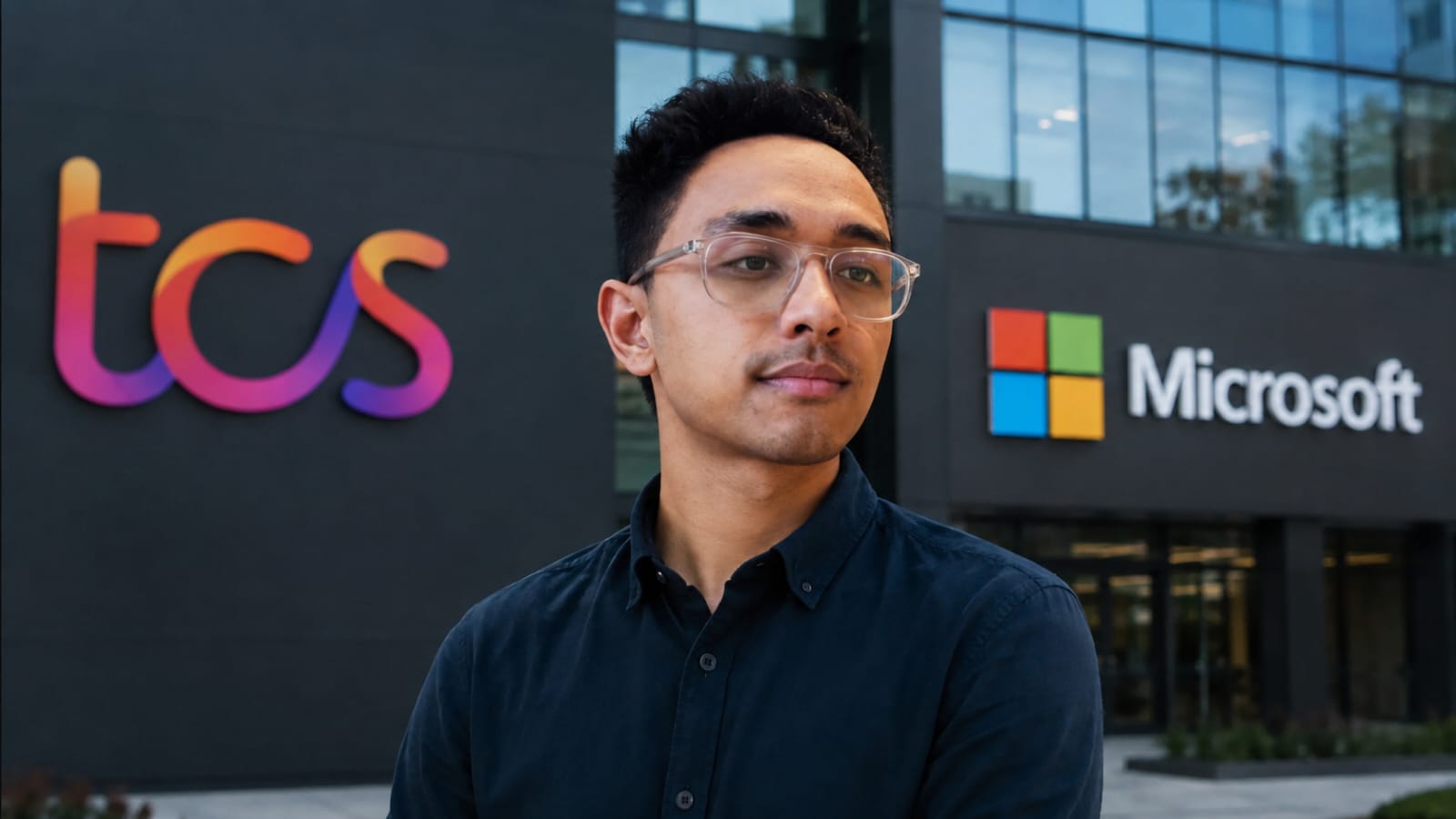
Software engineer Sailesh Gurung highlighted six key workplace differences after moving from TCS to Microsoft. He detailed contrasts in organizational hierarchy, dress codes, end-to-end project ownership, campus amenities, family visitor policies, and overall workplace flexibility, offering a viral perspective on transitions from service-based to product-driven IT cultures.
BENGALURU — A career transition from an Indian IT services company to a global technology product firm has sparked widespread discussion online after a software professional detailed his personal experience. Sailesh Gurung, a tech professional who began his corporate career at Tata Consultancy Services (TCS) before taking up a role at Microsoft, shared six distinct workplace differences that surprised him during the transition from a service-based model to a product-driven environment.
The viral observations, shared on social media, have drawn attention from technology workers across India, shedding light on contrasting management hierarchies, employee autonomy, office amenities, and operational cultures.
The 6 Key Workplace Differences Detailed by the Techie
According to details shared by Sailesh Gurung, the shift from TCS to Microsoft involved structural and daily routine changes across six specific areas:
Hierarchy and Operational Structure: Gurung noted that while service-based firms like TCS often operate with clear, multi-layered hierarchies requiring formal approvals, product giants like Microsoft utilize a flatter organizational model that encourages direct collaboration across teams regardless of rank.
Dress Code Policies: While formal business attire was a daily requirement at his previous workplace, Microsoft maintains a flexible approach without a rigid dress code, allowing employees to wear casual attire.
End-to-End Project Ownership: In service-based corporate environments, tasks are frequently segmented, where employees handle designated portions before handing them off. Gurung emphasized that Microsoft expects end-to-end project ownership, placing greater individual responsibility and growth potential on the developer.
Office Campus Engagement: The workplace experience at product companies extends beyond desk work to include internal hackathons, gaming areas, cross-functional events, and designated relaxation zones.
Visitor and Family Policy: Unlike strict security boundaries typical of IT service facilities, Microsoft permits employees to bring family members and friends to campus to visit, dine, or spend time on weekends.
Infrastructure and Employee Amenities: Everyday campus infrastructure—ranging from upgraded dining facilities and coffee options to spaces designed for resting—creates an environment aimed at holistic employee well-being.
Context Behind India's Service vs. Product Tech Culture
India's technology landscape has long been dominated by IT service providers such as Tata Consultancy Services, Infosys, and Wipro, which employ millions of software engineers. These firms traditionally rely on structured operational processes, clear chain-of-command protocols, and client-centric billable hours.
In contrast, global product development centers operated by companies such as Microsoft, Google, and Amazon prioritize rapid feature iteration, flat team structures, and high individual ownership to drive intellectual property creation. Industry analysts note that both operating models serve distinct economic purposes, with service firms excelling at large-scale global execution and product firms focusing on software innovation.
Official Sources Section
Information regarding this career transition update was curated from official public posts and media statements:
Personal Statement: Public social media post published by Sailesh Gurung detailing his career journey.
Corporate Framework Context: Public workplace guidelines and career framework documentation from Tata Consultancy Services and Microsoft Corporation
Quote Section
Reflecting on his transition between the two corporate systems, Sailesh Gurung stated:
"In a service-based setup, hierarchy was very visible. Seniors, approvals, layers. At Microsoft, it feels flat. You can reach out to anyone, collaborate across teams, and actually be heard."
He further remarked on task execution:
"Earlier, work felt shift-based. You do your part, the next person takes over. Here, it's yours. End to end. The responsibility is heavier, but so is the growth."
Why It Matters
The widespread interest in this comparison reflects broader workforce trends within India's IT sector. As thousands of tech professionals seek to move from IT service roles to product development engineering, understanding variations in workplace culture, accountability, and organizational hierarchy helps job seekers align their skills and expectations.
Key Facts at a Glance
Professional Transition: Software engineer Sailesh Gurung transitioned from IT service major TCS to global tech giant Microsoft.
Core Cultural Difference: Shift from visible hierarchy and layered approvals to a flat organizational structure.
Work Responsibility: Shift from task-based handoffs to complete end-to-end project ownership.
Workplace Amenities: Inclusion of relaxed dress codes, campus visitor privileges, and dedicated wellness facilities.
FAQ Section
Who is Sailesh Gurung?
Sailesh Gurung is a software engineering professional who began his tech career at Tata Consultancy Services (TCS) before transitioning to Microsoft.
What is the main difference between TCS and Microsoft work cultures?
According to Gurung, the main difference lies in corporate structure and project ownership. TCS follows a structured, process-oriented hierarchy, while Microsoft operates with a flatter structure emphasizing end-to-end project ownership.
Does Microsoft have a dress code compared to Indian IT service companies?
While service firms often require formal business attire on working days, Microsoft maintains a casual attire policy where presentability is preferred over formal dress codes.
Source: Tata Consultancy Services, Microsoft Corporation, Ministry of Electronics and Information Technology.