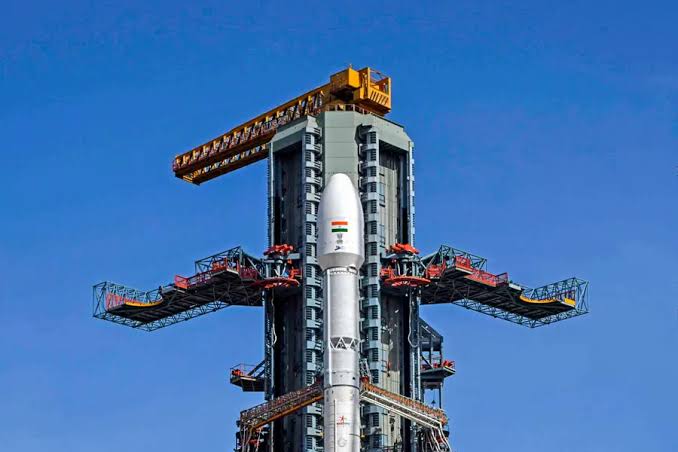
ISRO has successfully launched India's first geo-imaging satellite, EOS-05, aboard the GSLV-F17 rocket from Sriharikota. Reaching a sub-GTO orbit with optimal health status, the mission paves the way for advanced disaster tracking and clears the launch path for upcoming Gaganyaan human spaceflight milestones.
SRIHARIKOTA — The Indian Space Research Organisation (ISRO) successfully executed the GSLV-F17 mission, launching India's first-ever geo-imaging Earth observation satellite, EOS-05, from the Satish Dhawan Space Centre in Sriharikota.
Lifting off at 2:55 AM IST from the Second Launch Pad, the 19th flight of the Geosynchronous Satellite Launch Vehicle (GSLV) cleanly injected the 2,367 kg spacecraft into its designated Sub-Geosynchronous Transfer Orbit (Sub-GTO). ISRO Chairman V Narayanan confirmed that telemetry data indicates the satellite is in perfect health with its solar panels successfully deployed, marking a triumphant return to flight following prior mission hiatuses.
Orbital Architecture and Strategic Applications
Unlike traditional Earth observation satellites positioned in Low Earth Orbit (LEO), EOS-05 operates from a high-altitude geosynchronous framework. This orbital vantage point enables continuous, real-time regional monitoring of the Indian subcontinent and surrounding oceans from approximately 36,000 kilometers above the surface.
Equipped with advanced multi-spectral and hyperspectral imaging payloads across visible, short-wave infrared, and long-wave infrared bands, the satellite provides high-frequency scans vital for weather forecasting, cyclone tracking, and agricultural assessment. Following this successful deployment, ISRO leadership confirmed that attention is shifting toward upcoming operational pipelines, including the NVS-03 navigation mission and the much-anticipated uncrewed Gaganyaan-G1 flight slated later in the calendar year.
According to official mission disclosures, agency briefs, and launch statements:
Launch Vehicle & Site: GSLV-F17 from the Second Launch Pad at SDSC-SHAR, Sriharikota.
Payload Specification: EOS-05 (GISAT-1A replacement) weighing 2,367 kg.
Orbital Insertion: Sub-Geosynchronous Transfer Orbit (Sub-GTO), with subsequent orbit-raising maneuvers leading to final geostationary synchronization.
Future Pipeline: Six additional launches planned for the current financial year, anchored by upcoming human spaceflight pathfinders.
Official Sources Section
Quote Section
"According to ISRO Chairman V Narayanan, the GSLV-F17 vehicle precisely injected the advanced Earth observation satellite into the required orbit, and telemetry confirms that the spacecraft's health parameters are completely normal."
Why It Matters
For meteorological agencies, disaster management teams, and strategic planners, EOS-05 delivers uninterrupted, high-frequency imaging capabilities that bridge critical gaps in real-time environmental monitoring. Furthermore, the flawless execution of the GSLV-F17 vehicle restores institutional momentum to India's heavy-lift launch manifest as the nation prepares for complex human spaceflight missions under the Gaganyaan program.
Key Facts at a Glance
Mission Name: GSLV-F17 / EOS-05
Launch Date: September 4, 2026
Significance: India's first geo-imaging Earth observation satellite
Next Major Milestone: Gaganyaan-G1 pathfinder mission
FAQ Section
What makes the EOS-05 satellite unique for India?
EOS-05 is India's first Earth observation satellite placed into a high-altitude geosynchronous orbit, enabling continuous, real-time monitoring rather than periodic low-earth passes.
What role does the GSLV-F17 play in the mission?
GSLV-F17 served as the heavy-lift launch vehicle, successfully carrying the 2,367 kg payload from Sriharikota into a Sub-GTO.
What are the primary applications of the EOS-05 satellite?
The satellite supports rapid weather tracking, disaster warning, cyclone monitoring, and agricultural resource evaluation.
When is ISRO's human spaceflight program expected to advance?
ISRO has targeted the uncrewed Gaganyaan-G1 flight for later within the current calendar year.
Source: ISRO Portal, Press Information Bureau, The Indian Express, India Today