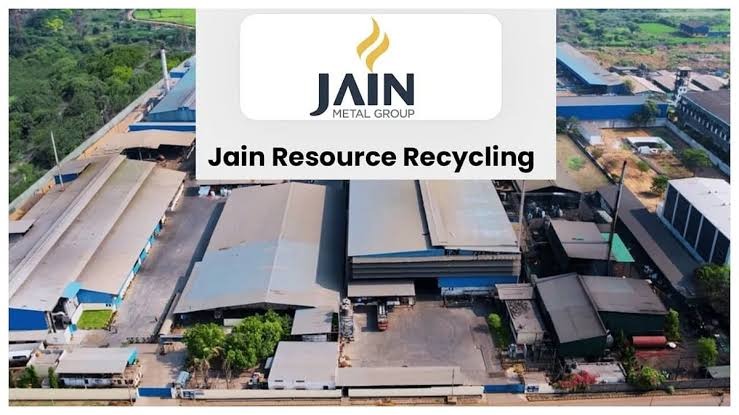
Jain Resource Recycling Limited has formally commenced commercial copper anode production at its Gummidipoondi facility in Tamil Nadu. Operating under an initial capacity of 800 metric tons per month, the forward integration project transforms recycled copper scrap into 99.9% pure anodes tailored for heavy electronic and electrical applications.
GUMMIDIPOONDI — Non-ferrous metal recycling major Jain Resource Recycling Limited has officially commenced commercial production of high-purity copper anodes at its specialized manufacturing hub in Gummidipoondi, Tamil Nadu.
The structural rollout, confirmed via exchange disclosures on Wednesday, marks the completion of the first phase of the company's multi-million rupee forward integration campaign. By transforming recycled copper scrap into value-added industrial anodes at its State Industries Promotion Corporation of Tamil Nadu (SIPCOT) facility, the firm is positioning itself to directly supply the domestic semiconductor, electronics, and electroforming industries, significantly reducing India's dependence on primary mined metal imports.
Expanding the Value Chain for Circular Metal Economics
The operational launch at Gummidipoondi represents a calculated shift for Jain Resource Recycling as it moves up the industrial value chain. Previously focused on processing secondary scrap into basic copper blocks and alloy ingots, the new installation uses recycled copper feedstock to manufacture 99.9% pure copper anodes under its subsidiary wing, Jain Green Technologies.
According to technical specifications published by the enterprise, the first operational furnace brings an immediate output capacity of 800 metric tons per month. A second specialized furnace is currently tracking an advanced installation timeline and is slated to double the total facility output to 1,600 metric tons per month by the end of the next fiscal quarter, establishing a reliable, zero-waste eco-recycling source for heavy manufacturers.
Mitigating Global Smelting Bottlenecks for Domestic OEM Infrastructure
The localized availability of refined copper anodes arrives at a critical juncture for domestic original equipment manufacturers (OEMs) and power infrastructure suppliers. Recent global supply tightening at primary copper mines has restricted international raw material channels, driving up raw copper pricing indexes.
By scaling up an integrated scrap-to-anode production flow within the Chennai industrial corridor, the recycling firm provides a localized cushion against volatile global logistics and high third-party processing costs. The forward integration strategy is structurally engineered to shield the company's baseline earnings from typical commodity price cycles while boosting its consolidated operating margins.
Official Sources Section
According to official earnings call transcripts, project execution filings, and statutory notifications:
Jain Resource Recycling Limited finalized the phase-one commissioning of the copper anode infrastructure in the early part of the year, tracking continuous output parameters into July 2026.
The technical design and volume specifications comply fully with the industrial standards monitored by the National Stock Exchange of India (NSE) and the Bombay Stock Exchange (BSE), where the firm is actively listed.
Environmental and zoning permissions for the expanded smelting arrays are cleared under the statutory oversight of the Tamil Nadu Pollution Control Board (TNPCB) for operation inside the SIPCOT Industrial Complex.
Quote Section
"According to officials familiar with the facility's ramp-up schedule, the immediate launch of the copper anode line marks our structural transition into a highly integrated, margin-accretive circular economy platform."
"Organizers stated that the internal supply of recycled feedstock from our existing units ensures high raw material security, helping us deepen relationships with Tier-1 automotive and electronic component clients."
Why It Matters
The commencement of localized copper anode production yields immediate practical advantages across several layers of the industrial economy:
Electronics & Electrical Businesses: Industrial manufacturers utilizing electroforming or printing circuit boards (PCBs) gain priority access to low-impurity copper inputs, bypassing international freight blockades.
Industrial Asset Investors: Equity stakeholders stand to benefit from a structural lift in corporate EBITDA per ton, driven by higher market realizations on finished value-added goods compared to low-margin raw ingot trading.
Environmental Sustainability: Utilizing recycled scrap as direct feedstock requires a fraction of the energy consumption compared to primary metal mining, aligning downstream industrial buyers with mandatory national green sourcing thresholds.
Key Facts at a Glance
Project Site: The value-added copper anode unit has commenced commercial production at the SIPCOT complex in Gummidipoondi, Tamil Nadu.
Capacity Scaling: Initial capacity sits at 800 metric tons per month, with a second furnace currently tracking to expand total output to 1,600 metric tons per month.
Purity Matrix: The advanced processing sequence yields high-purity smelted copper anodes exceeding a 99.9% metallic content threshold.
Downstream Alignment: The project forms part of a wider Rs 95-crore forward integration expansion that will eventually encompass cathodes, wire rods, and structural busbars.
FAQ Section
What are copper anodes used for in manufacturing?
Copper anodes provide high-purity copper ions during electrolytic refining and electroforming processes, which are critical for coating electrical components, manufacturing printed circuit boards (PCBs), and preparing raw copper cathodes.
Where is Jain Resource Recycling’s new production line located?
The newly commissioned copper anode manufacturing infrastructure is situated within the company's integrated multi-acre facility at the SIPCOT Industrial Estate in Gummidipoondi, near Chennai, Tamil Nadu.
How does this impact the company's financial profile?
Transitioning from standard recycled ingots to value-added copper anodes allows the firm to capture premium pricing layers, drive margin expansion, and lower overall earnings cyclicality.
Source: