External Affairs Minister S. Jaishankar has officially launched India's campaign for a non-permanent seat on the UN Security Council for the 2028–29 term. The campaign, titled "SHANTI," focuses on institutional reform, Global South representation, and effective multilateralism, with elections set for June 2027 against competitor Tajikistan.
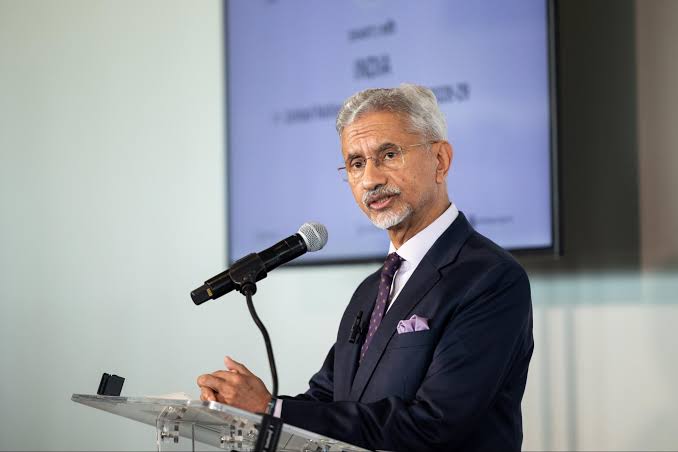
NEW YORK — External Affairs Minister S. Jaishankar formally launched India’s campaign for a non-permanent seat on the United Nations Security Council (UNSC) for the 2028–29 term on July 13, 2026. The launch, held at UN headquarters, marks the beginning of a diplomatic effort to secure one of the most influential roles in international governance.
This bid arrives at a time of "profound paradox," according to Jaishankar, where the world possesses unprecedented capacity for human advancement but is simultaneously hindered by escalating conflicts and instability. As India seeks to return to the Council—having previously served eight times—the campaign emphasizes a commitment to "SHANTI," an acronym for "Securing Holistic Advancement through Norms, Trust, and Integrity."
A Six-Point Vision for Global Governance
During the launch, attended by various UN envoys and diplomats, Jaishankar articulated a clear vision for India's presence on the Security Council. He highlighted that India’s approach is fundamentally rooted in ensuring that multilateral institutions reflect contemporary geopolitical realities rather than the power structures of 1945.
The key priorities for India’s candidature include:
Empowering the Global South: Ensuring that developing nations have a greater role in shaping global decision-making.
Future-Ready Peacekeeping: Moving beyond traditional mandates toward technologically enabled and realistically focused peacekeeping operations.
Maritime Security: Strengthening cooperative networks to protect vital sea lanes and maritime lifelines.
Multilateral Reform: Advocating for the expansion of both permanent and non-permanent seats to create a more democratic UN.
Technological Responsibility: Realizing the potential of new technologies while safeguarding against their misuse.
Climate Action and Counter-Terrorism: Prioritizing sustained international cooperation on these critical global challenges.
Diplomatic Challenges and Competition
The road to the 2028–29 term involves a formal election process scheduled for June 2027. India faces a direct contest for the sole Asia-Pacific Group seat against Tajikistan. Diplomatic analysts suggest that India’s campaign will test its extensive outreach efforts, particularly its ability to build consensus across the Global South, Africa, and island nations.
India’s bid is widely seen as part of its broader ambition to secure a permanent seat on a reformed Security Council. During his visit to New York, Jaishankar also held discussions with UN Secretary-General António Guterres, covering urgent global issues including the ongoing conflicts in West Asia and Ukraine.
Official Sources
According to the Ministry of External Affairs, India’s approach is designed to provide "effective solutions" rather than standing by as a bystander in global crises. Officials emphasized that India’s peacekeeping record—which includes extensive training and capacity building for 98 nations—serves as a primary pillar of its credibility.
"Organizers stated that the focus remains on working for a secure, peaceful, and equitable world where the voice of the Global South is heard in equal measure," as noted in official campaign documentation.
Why It Matters
For India, securing a non-permanent seat is a strategic opportunity to influence international law and security policy. By positioning itself as a "bridge-builder" between established powers and the Global South, New Delhi aims to demonstrate that its leadership can provide stability in an increasingly fragmented world. For international stakeholders, India’s candidacy represents a push for a more representative and transparent Security Council that can address 21st-century threats.
Key Facts at a Glance
Candidature Term: 2028–29.
Campaign Theme: SHANTI (Securing Holistic Advancement through Norms, Trust, Integrity).
Key Contest: India will compete against Tajikistan for the Asia-Pacific seat.
Election Date: Scheduled for June 2027.
Previous Tenure: India last served on the UNSC during the 2021–22 term.
FAQ
Why is India seeking a non-permanent seat again?
India views the UNSC as a critical platform to advocate for its national interests, push for comprehensive institutional reform, and act as a voice for the Global South.
How does this bid relate to permanent membership?
India, as part of the G4 grouping, continues to lobby for permanent membership. Serving as an elected member is a strategic step toward demonstrating India's capability and credibility as a permanent stakeholder.
What is the significance of the competition with Tajikistan?
Tajikistan is the only other candidate for the Asia-Pacific seat, making it the primary diplomatic focus for India's outreach efforts in the coming year.
Source: Ministry of External Affairs (MEA), The Hindu, The Statesman