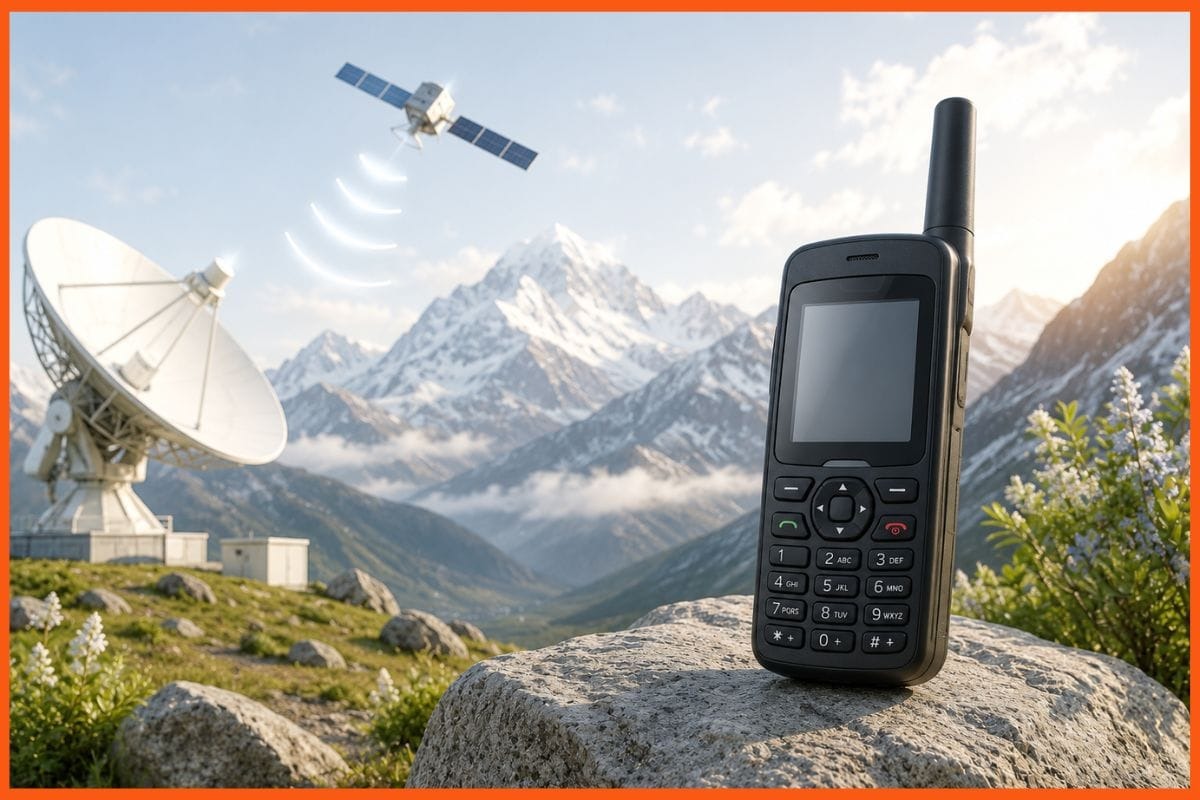
State-owned operator BSNL has commercially launched a rugged satellite handset priced at ₹1,34,166, utilizing Inmarsat's secure network. According to GlobalData, this rollout complements terrestrial 4G/5G infrastructure, ensuring an always-connected future by providing resilient, encrypted emergency communications across India’s most remote and disaster-prone zones.
NEW DELHI — State-run telecom operator Bharat Sanchar Nigam Limited (BSNL) has significantly boosted India’s defense, disaster-response, and enterprise infrastructure with the commercial launch of its specialized satellite handset. According to an analytical assessment by global technology research firm GlobalData, this initiative marks a pivotal milestone in securing the country's long-term vision of an "always-connected future." By providing high-security encrypted communication lines beyond the reach of conventional mobile networks, the deployment ensures uninterrupted strategic operations in high-altitude borders, deep forests, and offshore territories where traditional mobile towers cannot be built.
Strategic Shift Towards a Hybrid Telecom Network
Market intelligence firm GlobalData notes that the BSNL satellite handset rollout represents a foundational shift in how national connectivity is architected. Rather than attempting to replace standard mobile networks, satellite communication technology is increasingly serving as an indispensable, resilient overlay that complements existing terrestrial 4G and 5G frameworks.
Terrestrial networks will continue to power the vast majority of urban and rural consumer data. However, when natural disasters like floods, earthquakes, or cyclones damage physical cell towers, satellite connectivity becomes a vital communications lifeline.
This hybrid ecosystem approach allows government entities and essential industries to keep their vital lines open, even if local land infrastructure is completely wiped out.
Built for Extreme Performance and Mission-Critical Tasks
Priced at ₹1,34,166 ($1,406) inclusive of all statutory taxes, the device is built entirely for specialized enterprise and tactical applications rather than the everyday mass consumer market. Developed in structural collaboration with global satellite network operators like Inmarsat, the handset connects directly to space-based L-band satellite constellations rather than cellular base stations.
The hardware features an IP65 industrial protection rating against water and dust intrusion, a sunlight-readable scratch-resistant display, and an integrated electronic compass. It runs on a 3,180mAh lithium-ion battery that delivers up to 160 hours of standby operation.
Crucially for emergency responders, the handset features a dedicated, programmable physical SOS assistance button that immediately transmits live GPS coordinates to pre-selected command interfaces during emergency extractions.
Strict Security Frameworks and Commercial Tariffs
Because of strict national security guidelines, the distribution and usage of the BSNL satellite handset are tightly restricted. The Department of Telecommunications (DoT) requires all individual and corporate subscribers to secure a formal No Objection Certificate (NOC) or explicit usage authorization before device activation. Furthermore, buyers must log detailed records specifying the geographical perimeter, duration, and objective of the device's deployment.
According to official pricing schedules, commercial organizations can access dedicated service plans starting at a fixed monthly charge of ₹5,835, which includes 30 minutes of voice calls or SMS units. Outgoing minutes beyond this baseline pool are billed at a flat rate of ₹25 per minute. Government agencies receive a subsidized rate starting at ₹3,500 per month, with out-of-bundle call volumes priced at ₹18 per minute.
Official Sources Section
The technical specifications, network partnership data, regulatory rules, and commercial subscription frameworks detailed in this article are pulled directly from corporate statements issued through the BSNL Corporate Portal, statutory administrative releases from the Department of Telecommunications (DoT), and telecom industry ecosystem reports published by GlobalData Technology Insights.
Executive Commentary
Detailing the broader industry impact of this launch on the domestic economy, Pradeepthi Kantipudi, Telecom Analyst at GlobalData, emphasized the complementary nature of the system:
"The relatively high cost of satellite communication devices and service plans means satellite connectivity is unlikely to disrupt India's mainstream SIM-based mobile market. Instead of replacing existing mobile networks, satellite services are expected to complement 4G and 5G by providing connectivity when terrestrial infrastructure is unavailable. The technology represents an important step toward integrating satellite and terrestrial mobile networks into a unified communications ecosystem capable of maintaining connectivity during emergencies."
Why It Matters
For heavy industries, shipping fleets, defense logistics, and adventure travelers, this commercial availability translates directly into minimized operational blind spots. Large mining companies and logistics firms can now reliably track assets and safeguard field workers in deep hinterlands without waiting for regional cellular tower rollouts. The deployment firmly cements India's position as a digitally secure nation prepared for climate-driven infrastructure disruptions.
Key Facts at a Glance
Asset Cost Structure: The rugged satellite handset is commercially priced at ₹1,34,166, inclusive of all regulatory taxes.
Network Infrastructure: Relies on direct space-based links via Inmarsat's global satellite network rather than terrestrial cell towers.
Mandatory Security Approvals: Requires mandatory customer verification and user verification clearance from the Department of Telecommunications (DoT) prior to acquisition.
Operational Endurance: Equipped with an industrial IP65-rated body, a 3,180mAh battery providing 160 hours of standby time, and a physical GPS SOS tracker.
FAQ Section
Can anyone buy the new BSNL satellite handset?
No. The device is heavily regulated due to national security policies. Prospective buyers must secure a formal No Objection Certificate (NOC) and explicit clearance from the Department of Telecommunications (DoT) detailing their intended usage area and operational purpose.
Which target industries benefit most from this satellite launch?
The system is tailored for defense organizations, border security forces, maritime shipping operators, mining firms, remote scientific expeditions, and emergency disaster management agencies.
How do billing rates function once the monthly plan minutes are exhausted?
For commercial accounts, once the standard monthly tariff allowances are utilized, subsequent outgoing voice calls and SMS dispatches are billed at a flat rate of ₹25 per unit. Government organizations are billed at a subsidized rate of ₹18 per minute.
Source: Press briefings and technical declarations published via the BSNL Media Center, regulatory compliance frameworks from the Department of Telecommunications (DoT), and the telecommunications market study from GlobalData Intelligence.