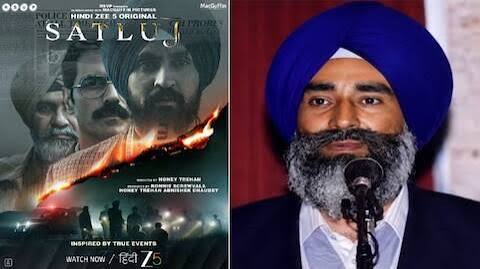
Satluj, a biographical film starring Diljit Dosanjh, portrays the life of activist Jaswant Singh Khalra, who investigated thousands of enforced disappearances in Punjab. The film's recent release and immediate digital removal have triggered a significant debate about artistic freedom and the documentation of human rights history in India.
MUMBAI — Jaswant Singh Khalra (1952–1995) was a prominent Indian human rights activist whose life and work form the basis of the recently released biographical drama Satluj, starring Diljit Dosanjh. Khalra gained international recognition for his meticulous documentation of thousands of enforced disappearances and extrajudicial killings in Punjab during the state's insurgency period in the 1980s and 1990s.
A banker by profession in Amritsar, Khalra began his activism after colleagues went missing. His investigations led him to discover municipal and cremation ground records that detailed the secret disposal of thousands of bodies by security forces. Khalra’s research identified that over 2,000 secret cremations had taken place in the Amritsar district alone, with estimates suggesting that as many as 25,000 individuals may have been killed and cremated across Punjab without record or family notification.
The Struggle for Truth
Throughout his life, Khalra advocated for international awareness regarding these human rights abuses. Despite facing threats and being offered political asylum abroad, he chose to remain in India to continue his work. In September 1995, he was abducted from outside his home. Investigations by the Central Bureau of Investigation (CBI) later confirmed that he was held at a police station in Tarn Taran, where he was tortured and killed.
His wife, Paramjit Kaur Khalra, has since spearheaded the decades-long legal battle for justice. In 2007, a division bench of the Punjab and Haryana High Court upheld the life imprisonment sentences of several former Punjab Police officials involved in his abduction and murder.
Bringing the Story to Screen
The film Satluj (originally titled Punjab '95) depicts this period of Khalra's life and the challenges he faced while uncovering state-sanctioned abuses. The project, directed by Honey Trehan, encountered significant delays due to protracted battles with the Central Board of Film Certification (CBFC) regarding its content.
The film's recent release and subsequent removal from the streaming platform ZEE5 within 48 hours has ignited a fresh political controversy. Major political parties and civil society groups have criticized the platform's decision to "pause" or remove the film, labeling it an infringement on creative expression and historical transparency. Diljit Dosanjh has publicly expressed his commitment to the project, emphasizing that the film remains in its original, uncut form.
Official Sources
Information regarding the life and activism of Jaswant Singh Khalra is documented through reports from international human rights organizations, such as Amnesty International and Human Rights Watch, and official court records from the Supreme Court of India. Details concerning the film’s release and controversy were verified through ZEE5 statements and public updates from the film’s production team.
Quote Section
"According to officials," the film’s narrative is a direct exploration of the historical reality surrounding the disappearances in Punjab. Following the film's brief digital debut, actor Diljit Dosanjh stated, "Khalra Saab’s voice was suppressed back in 1995, and even today, his voice is being stifled."
Why It Matters
The story of Jaswant Singh Khalra remains a pivotal chapter in modern Indian history, highlighting the struggle for human rights and accountability in conflict zones. For the public, the controversy surrounding Satluj underscores ongoing debates regarding freedom of speech, historical memory, and the role of cinema in challenging established narratives about state actions.
Key Facts at a Glance
Activist Identity: Jaswant Singh Khalra was a human rights defender who exposed mass cremations in Punjab.
Core Evidence: He used municipal and firewood registers to identify thousands of unclaimed bodies.
Legal Legacy: The Supreme Court of India eventually convicted Punjab Police officials for his 1995 kidnapping and murder.
Film Controversy: Satluj (formerly Punjab '95) was removed from ZEE5 shortly after its premiere, sparking national debate.
FAQ
Who was Jaswant Singh Khalra?
Jaswant Singh Khalra was a Sikh human rights activist from Amritsar who uncovered and documented the extrajudicial killings and illegal cremations of thousands of individuals during the Punjab insurgency.
Why is 'Satluj' considered controversial?
The film covers sensitive topics regarding state actions in Punjab during the 1990s. Its sudden removal from a streaming platform shortly after release led to allegations of censorship.
Is 'Satluj' based on a true story?
Yes, the film is a biographical drama based on the real-life investigations and death of Jaswant Singh Khalra.
Source: Wikipedia, Sikh Coalition, NDTV, The Times of India