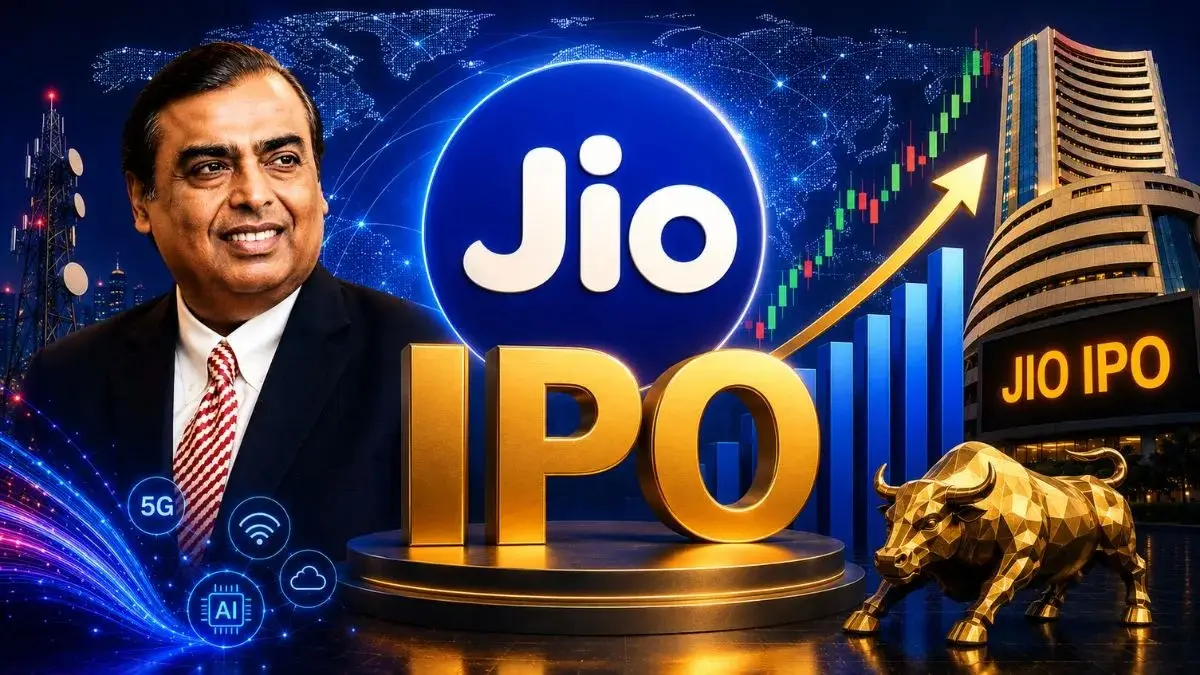
At its 49th AGM, Reliance Jio announced a strategic target to migrate all its subscribers to 5G networks by 2030, phasing out legacy 4G infrastructure. Despite the massive technological vision, worries over ongoing capital expenditure cycles caused an immediate market reaction, sending Reliance Industries shares down 1.3% in afternoon trade.
MUMBAI, INDIA — Reliance Jio Infocomm Limited on Friday officially announced an aggressive national connectivity mandate during the 49th Annual General Meeting (AGM) of its parent conglomerate, Reliance Industries Limited (RIL). Addressing millions of virtual shareholders, the leadership team declared a corporate target to migrate all Jio subscribers to 5G networks by 2030. The policy effectively outlines the structured phased retirement of legacy 4G cellular infrastructure across India over the next four years. Despite the forward-looking technological map, short-term fiscal anxieties regarding extended capital expenditure cycles caused market reactions, pushing Reliance Industries shares down 1.3% during afternoon trade on the National Stock Exchange.
Technical Transformation and Phased 4G Sunset
The core directive of the connectivity roadmap is to shift the company's massive user base onto standalone 5G protocols. According to corporate performance metrics reviewed at the high-stakes annual meeting, the telecom unit currently commands an active user foundation exceeding 524 million consumers across the Indian subcontinent. While over 130 million users have naturally transitioned to the high-speed network, a significant portion of rural and tier-3 market segments still rely on basic 4G bandwidth.
To achieve the 2030 migration target, the corporate board confirmed a strategic partnership roadmap with local handset manufacturers to lower the baseline retail cost of entry-level 5G smartphones. Concurrently, technical engineering teams will systematically reallocate legacy 4G spectrum frequencies into active 5G carrier bands. This spectrum refarming process is designed to optimize overall network capacity and lower localized data distribution costs across dense metro networks.
Market Reaction and Capital Expenditure Headwinds
While the technology mandate establishes clear operational direction, institutional investors responded to the presentation with immediate capital caution. Shares of Reliance Industries Limited (RELI.NS) fell 1.3% to trade at ₹1,310.85 on the National Stock Exchange of India (NSE) shortly after the broadcast commenced, pulling down the benchmark Nifty 50 index.
Financial analysts from leading domestic brokerages noted that the market's reaction reflects anxiety over near-term returns on equity. The capital expenditure required to update network density, build edge-computing nodes, and sustain the 2030 milestone comes immediately on the heels of the group's intensive $25 billion digital rollout over the past three fiscal years.
Furthermore, the pressure on the parent entity's stock was compounded by macro-economic volatility in the global energy space, which has directly compressed refining margins within Reliance's traditional oil-to-chemicals (O2C) segment.
Integration with Sovereign AI Frameworks
The 2030 migration target forms a vital foundational layer for Reliance's broader deep-tech monetization strategy. During the operational review, the executive desk explained that high-density 5G coverage is essential to support its upcoming consumer artificial intelligence applications. These include "RIYA," a voice-activated assistant tailored for regional Indian languages, and virtualized cloud computing tools designed to operate on low-cost connected devices.
The accelerated 5G timeline is also expected to enhance valuation models ahead of the upcoming Jio Platforms public market debut. RIL Chairman Mukesh Ambani confirmed during the session that the company's board has officially approved the Draft Red Herring Prospectus (DRHP) for a multi-billion-dollar initial public offering, with documentation scheduled to reach the market regulator before the close of business.
Official Sources Section
The corporate milestones, stock data, and technical specifications outlined in this financial news report are compiled directly from verified institutional platforms, including:
Quote Section
"According to officials at the telecom desk, the decision to migrate all Jio subscribers to 5G by 2030 is driven by a need for long-term operational efficiency. Organizers stated that maintaining duplicate networks across both legacy 4G and modern 5G platforms increases structural energy consumption and maintenance overheads, whereas a singular network model optimizes corporate profit margins."
Why It Matters
For everyday consumers, this mandate ensures that high-speed, low-latency connectivity will become the baseline national standard, bridging the digital divide between rural villages and urban technology hubs. For retail and institutional investors, the intra-day stock dip represents a classic tension between near-term cash preservation and long-term asset valuation. While the heavy investments required for this migration strain near-term margins, a full transition to 5G positions the enterprise to secure a dominant share of the high-margin enterprise data and cloud-computing industries.
Key Facts at a Glance
Migration Milestone: Official corporate objective set to fully migrate all Jio subscribers to 5G network architecture by 2030.
Stock Performance: Reliance Industries shares down 1.3% on the NSE as investors digest long-term capital expenditure commitments.
Spectrum Refarming: Operational plans include sunsetting legacy 4G systems and shifting bands to active 5G infrastructure.
IPO Progression: The technological transition directly aligns with the formal board clearance of Jio Platforms' DRHP paperwork.
FAQ Section
What is the new deadline for Jio's full 5G transition?
The company has established a definitive target of 2030 to migrate its entire subscriber base over to the advanced 5G network framework.
Will Jio users be forced to purchase expensive new smartphones?
No. Jio is actively collaborating with global and domestic hardware manufacturers to introduce highly subsidized, entry-level 5G smartphones to make the transition affordable for lower-income consumer groups.
Why did Reliance Industries shares fall during the AGM announcements?
RIL shares dropped 1.3% primarily because institutional investors are cautious about the extended capital expenditure and investment timelines required to execute these massive nationwide 5G and AI data infrastructure upgrades.
Source: Reliance Industries Limited, National Stock Exchange of India, Securities and Exchange Board of India.