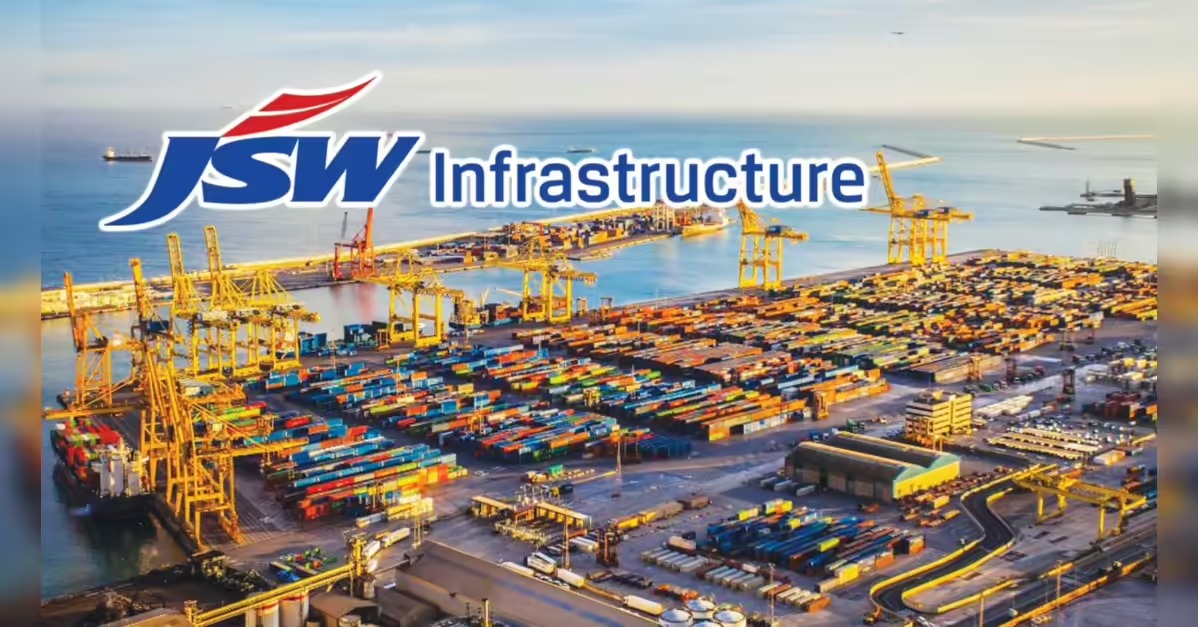
JSW Infrastructure Limited has approved a comprehensive fundraising initiative featuring a fresh institutional placement of up to 230 million equity shares alongside an Offer for Sale of up to 33.3 million shares by the Sajjan Jindal Family Trust. The dual-track strategy secures vital growth capital for port expansions while steadily progressing toward SEBI's public float mandates.
MUMBAI, INDIA — JSW Infrastructure Limited (NSE: JSWINFRA) has formally cleared a major capital restructuring program designed to back its multi-billion dollar domestic maritime development agenda. According to corporate disclosures submitted to domestic bourses on Monday, June 22, 2026, the company’s board of directors has approved a combined fundraising blueprint consisting of a fresh institutional equity issue alongside a parallel secondary Offer for Sale (OFS).
The primary structural window features a fresh issue of up to 230 million newly minted equity shares, which will be routed directly via a Qualified Institutions Placement (QIP) mechanism to anchor banks, mutual funds, and international asset managers. Simultaneously, the company's chief promoter group, the Sajjan Jindal Family Trust, will execute an Offer for Sale of up to 33.3 million existing equity shares, paving the way for broader public float compliance.
Combined Offering Aims to Support Stated ₹30,000 Crore Expansion Blueprint
According to detailed regulatory filings submitted to both BSE Limited and the National Stock Exchange (NSE), the final pricing and pricing parameters for the fresh 230 million share pool will be calculated in subsequent weeks using the institutional book-building method. Market indicators from Mumbai advisory firms value the total combined equity transaction at roughly ₹6,000 crore, depending on the final discount structures applied under standard SEBI pricing formulas.
The cash raised from the fresh issue portion will be funneled directly into expanding the group's logistics footprint. JSW Infrastructure recently outlined a massive capital deployment target of ₹30,000 crore spanning the fiscal years 2025 through 2030, with roughly ₹16,500 crore earmarked for intense deep-water expansion projects over the next 24 months. Key projects include constructing automated greenfield ports at Nangaon and Keni, alongside mechanical modernizations at its newly acquired Netaji Subhas Dock berths under the Port of Kolkata framework.
Promoter Trust Sale Addresses SEBI Public Floating Mandates
Beyond the company's immediate need for growth capital, the secondary block of 33.3 million shares offloaded by the Sajjan Jindal Family Trust serves an important regulatory purpose. Following its successful 2023 initial public offering, the promoter group retained a commanding 78.72% equity stake in the company. Under regulations enforced by the Securities and Exchange Board of India (SEBI), all publicly traded entities must establish and maintain a minimum public shareholding (MPS) of 25% within three years of listing.
This systematic dilution by the promoter trust helps align the port operator with domestic compliance timelines. Institutional analysts highlight that routing the secondary divestment alongside a fresh QIP allows the company to minimize market disruption, stabilizing share pricing by matching the promoter supply with steady institutional demand.
Official Sources Section
The underlying equity issuance parameters, corporate resolutions, and compliance paths have been validated across standard financial industry registries.
Quote Section
"According to officials familiar with the capital committee's decision, the fresh equity capital will be strictly deployed to fund infrastructure development and optimize balance sheet debt profiles. Organizers stated that the QIP placement window will open immediately upon securing necessary final shareholder clearances."
Why It Matters
For public market investors and fund managers, this dual capital move improves the stock's daily trading liquidity while removing the overhang of future promoter share offloads. For the broader logistics and manufacturing supply chains, JSW Infrastructure's enhanced cash buffers ensure timely project rollouts, directly expanding India's overall container handling capability and lowering maritime turnaround times.
Key Facts at a Glance
Primary Share Pool: Includes a fresh issue of up to 230 million newly minted equity shares.
Secondary Block: Features an Offer for Sale (OFS) of up to 33.3 million shares by the promoter trust.
Divesting Promoter: Handled via the Sajjan Jindal Family Trust.
Primary Objective: Intended to finance clean energy ports, support automated terminal construction, and meet mandatory public shareholding laws.
FAQ Section
What is a Qualified Institutions Placement (QIP)?
A QIP is a regulated capital-raising tool that allows publicly traded companies in India to issue equity shares or convertible securities to accredited institutional buyers without the lengthy regulatory timelines associated with standard public follow-on offers.
Will this capital move dilute the holdings of current retail investors?
The fresh issuance of 230 million shares will result in a minor proportional equity dilution for existing public holders, though this is traditionally balanced by the long-term asset value generated by the incoming funds.
Where does JSW Infrastructure currently operate its core port networks?
The firm operates a network of major non-major ports and specialized terminals across the coastal belts of Maharashtra, Goa, Karnataka, Odisha, and Tamil Nadu, alongside cargo installations in the UAE.
Source: