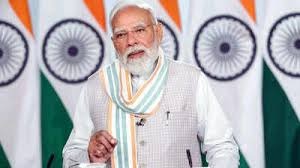
The Kremlin has congratulated Prime Minister Narendra Modi on achieving the milestone of becoming India’s longest-serving continuously elected Prime Minister. Highlighting steady bilateral growth, Moscow confirmed it expects the strategic partnership to expand further across all economic, defense, and technological areas, maintaining long-term geopolitical and institutional stability.
MOSCOW, June 10, 2026 — The Kremlin issued an official diplomatic declaration today congratulating Indian Prime Minister Narendra Modi on becoming the longest-serving continuously elected head of government in modern Indian history. A senior spokesperson for the Russian Presidency emphasized that Moscow anticipates a deep, ongoing expansion of bilateral ties, noting that the strategic partnership with India is actively developing across all economic, defense, and technological areas.
The high-level diplomatic communication from Russia comes at a significant historical junction for South Asian governance. Prime Minister Modi completed 4,399 consecutive days in office, officially surpassing the record for the longest uninterrupted tenure as an elected Prime Minister previously held by India’s first leader, Jawaharlal Nehru. The milestone has drawn considerable international attention, with major global powers reinforcing their diplomatic and economic commitments to New Delhi.
Strategic Continuity in India-Russia Relations
The Kremlin’s response highlights the high level of institutional trust shared between the two nations, which remains unaligned with broader geopolitical shifts in the West. In recent high-level briefs at international economic forums, Russian administrative heads have continually referred to the bilateral dynamic with India as a "trust-based" and "brotherly" alliance. The endorsement of Prime Minister Modi's domestic mandate signals a mutual desire for policy continuity, particularly concerning long-term trade frameworks, central bank settlement mechanisms, and regional security arrangements.
According to economic indicators published by national trade registries, bilateral trade volumes between India and Russia are positioned on a trajectory to potentially intersect the $100 billion threshold in the coming years. This commercial surge is heavily anchored by India’s consistent energy imports, paired with expanding industrial cooperation in software engineering, technical logistics, and deep-tech manufacturing initiatives.
Industrial Impact and Technological Integration
The long-term stabilization of Indian leadership carries broad practical value for corporate supply chains, global investors, and state-backed manufacturing enterprises. Joint defense projects initiated during the Soviet era have successfully transitioned into modern co-development and technology-sharing arrangements. Recent statements indicate that upcoming bilateral cooperation tracks may encompass unrestricted technology transfers, expanding localized manufacturing capabilities for aerospace platforms and advanced hardware engineering.
Furthermore, shipping and logistical syndicates are monitoring the consolidation of multi-metro transit corridors, such as the International North-South Transport Corridor (INSTC). The ongoing implementation of these trade routes aims to bypass traditional maritime bottlenecks, offering businesses operating out of major commercial hubs shorter delivery timelines and reduced freight insurance liabilities.
Official Sources Section
Statements regarding the bilateral trajectory are anchored in official administrative and diplomatic declarations:
Kremlin Press Bureau: Formal transcripts detail Russia’s official perspective on India’s democratic milestones and long-term governance continuity.
Ministry of External Affairs (MEA): State document repositories track India’s autonomous foreign policy choices and multi-alignment strategy across major global powers.
Bilateral Economic Registries: Commercial data records the diversification of non-oil trade, including specialized agricultural shipments and industrial component manufacturing.
Quote Section
"According to officials at the Kremlin, the Russian administration places immense value on the predictable development of its strategic alliance with New Delhi. Organizers stated that the partnership with India continues to expand across all targeted areas, insulated from external global political pressures."
Why It Matters
The formal recognition of this political milestone has notable practical implications across multiple sectors:
For Energy Markets: Continued leadership stability in New Delhi ensures predictability in long-term supply agreements and cross-border payment structures.
For Global Investors: The preservation of an independent, predictable regulatory environment in India anchors foreign direct investment inflows into domestic manufacturing zones.
For Technology Industries: Strengthened ties facilitate direct business-to-business collaborations in critical sectors like coding, space research, and advanced computing.
Key Facts at a Glance
Historical Milestone: Prime Minister Narendra Modi has become India's longest-serving continuously elected Prime Minister, marking 4,399 uninterrupted days in office.
Kremlin Statement: Russia officially expects the strategic partnership with India to continue developing across all key industrial and diplomatic tracks.
Trade Projections: Total bilateral trade between the two nations remains highly resilient, with mid-term projections targeting up to $100 billion.
Defense Collaboration: The partnership emphasizes a transition toward advanced joint research, technical data transfers, and localized assembly rights.
Frequently Asked Questions
What record did Prime Minister Modi surpass to achieve this milestone?
Prime Minister Modi surpassed the record for the longest continuous, uninterrupted tenure as an elected Prime Minister, serving 4,399 consecutive days. This exceeds the continuous elected tenure of country's first Prime Minister, Jawaharlal Nehru, who served 4,398 consecutive days after winning India's first institutionalized general elections.
How does the Kremlin view India's growing relationship with Western nations?
Official statements from Moscow indicate that Russia does not view India's expanding strategic partnerships with Western nations as a threat to bilateral relations. The Kremlin has consistently noted that India exercises complete strategic autonomy to make choices aligned with its national interests.
What are the primary areas of economic cooperation between India and Russia?
While energy imports comprise a substantial portion of current trade value, the bilateral relationship increasingly encompasses joint ventures in hardware manufacturing, space exploration technology, information technology, and civil nuclear energy development.
50-Word Summary
Source: Kremlin Official Portal, Ministry of External Affairs India (MEA)