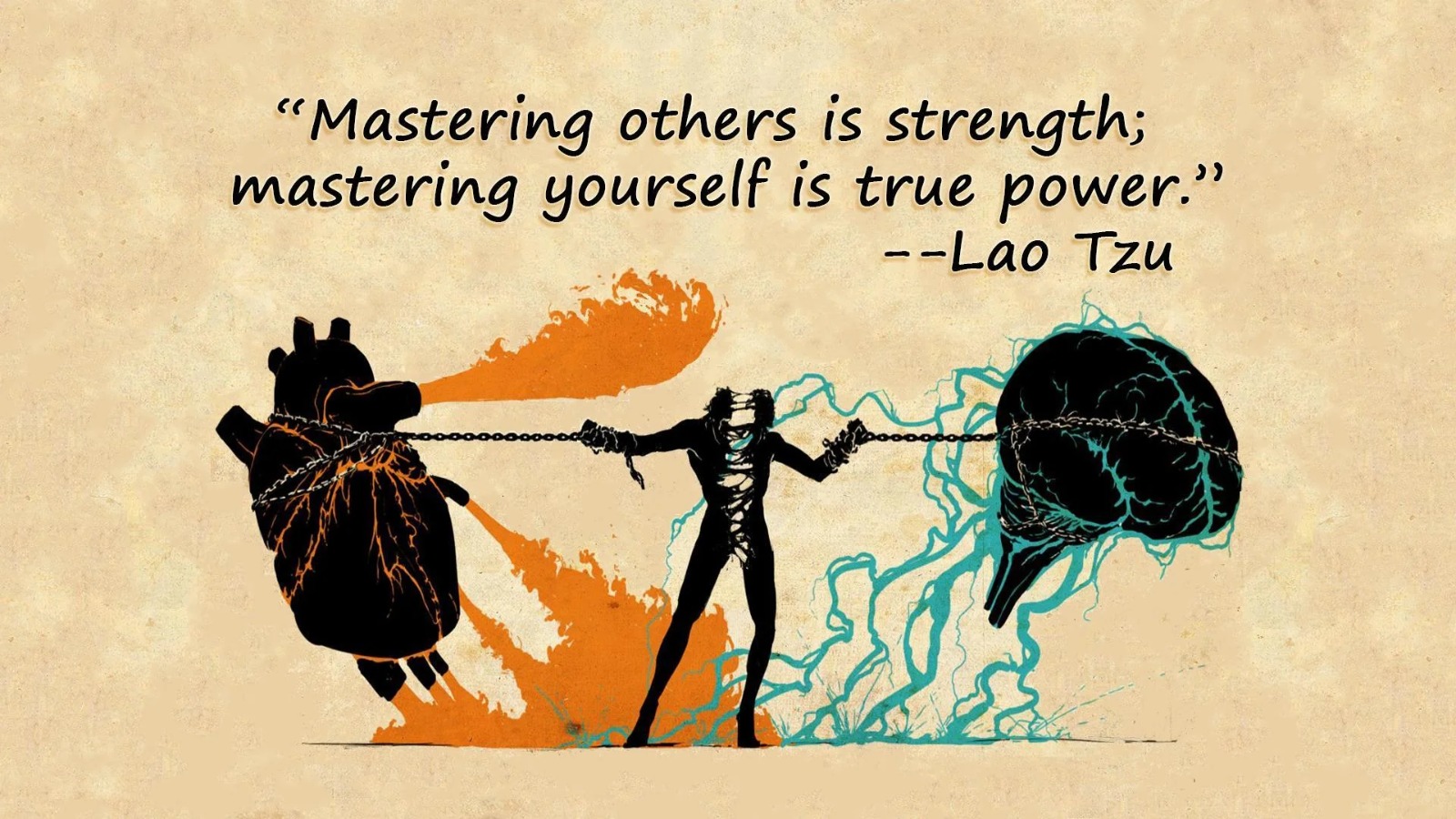
Lao Tzu’s classic teaching, "He who conquers others is strong; he who conquers himself is mighty," emphasizes that true power comes from internal self-mastery rather than external dominance. By overcoming one's own impulses and limitations, an individual achieves a form of lasting strength and wisdom that cannot be externally stripped away.
BEIJING — "He who conquers others is strong; he who conquers himself is mighty." This profound observation, attributed to the ancient Chinese philosopher Lao Tzu, has served as a cornerstone of Eastern thought for over two millennia. Found in Chapter 33 of the Tao Te Ching, the statement challenges the modern obsession with external status, wealth, and power, suggesting instead that the ultimate victory lies within the individual.
While contemporary society frequently measures success through career benchmarks, social influence, or dominance in competitive fields, Lao Tzu’s philosophy shifts the focus to the internal landscape. According to the text, the capacity to master one’s own emotions, impulses, and limitations is a far greater achievement than the ability to control or defeat others in the external world.
Defining the Internal Battlefield
The distinction between "strength" and "might" in Lao Tzu’s teaching provides a roadmap for personal development. In this context, "strength" refers to the capacity to influence or overcome external obstacles, which is often transient and dependent on circumstances. "Might," by contrast, represents an enduring, internal force—the power of self-mastery.
The battle within, as described by various scholars of Taoism, is defined by the struggle to govern one’s reactions to fear, anger, pride, and greed. To conquer oneself is not to suppress these human traits, but to steer one’s inner world with such discipline that external stressors no longer dictate one's choices. This philosophy of self-governance serves as a foundational element for anyone seeking resilience in a volatile environment.
The Philosophical Context of Chapter 33
The Tao Te Ching, or Dao De Jing, is widely considered one of the most influential works in history. In Chapter 33, Lao Tzu contrasts the fleeting nature of external victory with the permanent nature of inner wisdom. Philosophers note that true empowerment is not found in dominating arguments or competitions, but in the quiet discipline of maintaining balance, humility, and self-awareness in the face of chaos.
For professionals and leaders, this wisdom suggests that a stable foundation of character is a prerequisite for effective action. Without self-mastery, external successes—whether in business, politics, or personal relationships—often crumble because they lack the anchor of a disciplined mind.
Official Perspectives on Self-Mastery
Scholars and historians note that Lao Tzu’s teachings—emphasizing harmony, simplicity, and compassion—were designed to guide individuals toward balanced living. While historical records regarding Lao Tzu as a single figure remain a subject of academic debate, the influence of his philosophy has been documented by the World History Encyclopedia and various academic departments focusing on Chinese philosophy.
"According to officials and scholars of Taoist literature, the core message of Chapter 33 is that the most significant battles an individual faces are internal, and winning these battles leads to a more profound and lasting form of confidence."
Why It Matters
In a high-pressure modern landscape, the implications of this teaching are practical. Stress, professional burnout, and the constant demand for external validation are often the result of an ungoverned internal state. By applying Lao Tzu’s principle of self-mastery, individuals can cultivate a form of resilience that is independent of external circumstances. This shift from competition to introspection is increasingly relevant in mental health, leadership training, and personal development.
Key Facts at a Glance
Source: The quote originates from Chapter 33 of the Tao Te Ching.
Core Philosophy: True power is defined by the ability to master one’s thoughts, emotions, and desires.
The Difference: "Strength" is the power to conquer others; "might" is the power to conquer oneself.
Historical Legacy: Lao Tzu is traditionally regarded as the founder of Taoism, dating back to the 6th century BCE.
Frequently Asked Questions (FAQ)
1. Is this quote definitively from the Tao Te Ching?
Yes, the sentiment is found in Chapter 33 of the Tao Te Ching, though various translations (such as those by Stephen Mitchell or Victor Mair) use slightly different wording, such as "mastering yourself is true power."
2. Why does Lao Tzu distinguish between "strength" and "might"?
Lao Tzu distinguishes between the two to highlight that external dominance (strength) is finite and fragile, whereas self-mastery (might) is an internal state that provides long-term stability and wisdom.
3. How can someone apply this to their daily life?
Applying this involves practicing self-awareness during stressful situations—choosing discipline over impulse, patience over frustration, and humility over pride, rather than focusing solely on defeating an opponent.
4. Is this teaching relevant in the modern professional world?
Yes, modern leadership development increasingly emphasizes "emotional intelligence" and "self-regulation," which are modern terms for the self-mastery Lao Tzu promoted centuries ago.
Source: Tao Te Ching (Chapter 33), Goodreads Philosophy Collection, LiveMint Cultural Commentary