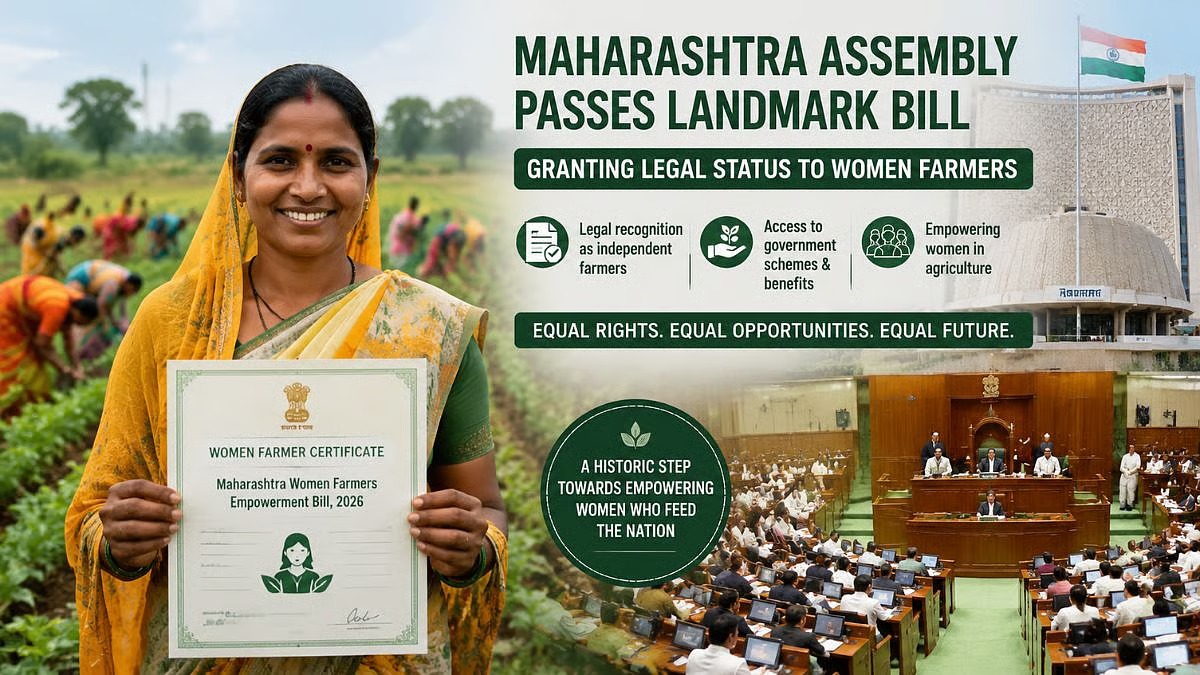
The Maharashtra Assembly unanimously passed the Women Farmers Empowerment Bill, 2026, a country-first law providing women cultivators with legal identity cards. Welcomed by Minister Pankaja Munde, the legislation enables women across farming and allied sectors to access government subsidies and institutional bank credit directly.
MUMBAI, India — The Maharashtra Legislative Assembly on Thursday, July 2, 2026, unanimously passed the historic Maharashtra Women Farmers Empowerment Bill, 2026. The pioneering legislation, introduced by state Agriculture Minister Dattatray Bharane, marks a country-first structural intervention designed to legally recognize the millions of women driving the state's rural economy. State Environment Minister Pankaja Munde welcomed the development on Friday, July 3, confirming that the cross-party consensus establishes an independent identity and targeted welfare tracking for women cultivators who have historically remained marginalized from formal land ownership benefits.
Legal Identity Beyond Traditional Land Extraction Records
The core objective of the newly cleared statutory framework is to bridge the long-standing operational disconnect in public sector resource distribution. In institutional presentations delivered to the Lower House, Agriculture Minister Bharane emphasized that while rural women participate heavily in crop cycles from sowing to post-harvest management, they have been historically excluded from financial aid portfolios because multi-generational family land titles (the 7/12 land extract documents) remain registered primarily under male heads of households.
To override this bottleneck, the new law adopts a comprehensive legal definition of an agrarian worker. Under its provisions, the state will issue official "Women Farmer Identity Cards" and independent qualification certificates to all female contributors engaged in crop cultivation. Crucially, the recognition expands beyond traditional crop fields to cover vital allied agricultural segments, including animal husbandry, dairy farming, commercial poultry, inland fisheries, and regional beekeeping.
Governance Integration and Dedicated Agricultural Funds
To ensure systematic implementation, monitoring, and regular tracking of the welfare outputs, the bill creates a multi-tier governance model. The apex coordinating body will be the Women Farmers Empowerment Council, which is legally mandated to be chaired directly by the Chief Minister of Maharashtra. This apex body will be actively supported by a state-level executive committee and a specialized administrative unit known as the Women Farmers Empowerment Cell.
Financially, the law establishes a dedicated state fund specifically earmarked to support women engaged in agriculture, featuring focused provisions and targeted direct benefit transfers (DBT) for single women cultivators and widows managing independent farm operations. The integrated framework acts as a critical institutional channel, allowing cardholders to directly secure state-subsidized high-yield seeds, fertilizers, electronic inputs via e-Kisan portals, localized direct market linkages, and institutional credit from state cooperative banks without needing to present separate land extracts as collateral.
Cross-Party Consensus and Broader Social Demands
The floor debate witnessed strong cross-party alignment, signaling broad political support ahead of the upcoming legislative council review. Supporting the bill, Deputy Chief Minister Sunetra Pawar described the statutory update as an essential tribute to the rural workforce that sustains the regional economy. From the opposition benches, Shiv Sena (UBT) lawmaker Aaditya Thackeray backed the bill as a vital step in transforming women from invisible agricultural laborers into legally recognized farmers. However, Thackeray actively urged the administration to address chronic systemic health challenges among rural women, including malnutrition and localized anemia, while pushing for a comprehensive farm loan waiver before the next legislative session.
Concurrently, Nationalist Congress Party (Sharadchandra Pawar) leader Jayant Patil pressed the state to explore deeper structural ownership changes, suggesting that the government introduce legal mandates to make women co-owners of family farmlands to secure true parity. While these secondary land-reforms remain a point of discussion for future sessions, the unanimous passage of the immediate certification framework sets a clear precedent for agricultural policy design across other states.
Official Sources Section
The statutory provisions, programmatic parameters, and legislative records highlighted in this policy brief are drawn directly from:
The official proceedings and media updates portal of the Maharashtra Legislative Assembly.
Statutory press statements released by the Department of Agriculture, Government of Maharashtra.
Media briefings distributed by the Press Trust of India (PTI) and Asian News International (ANI).
Quote Section
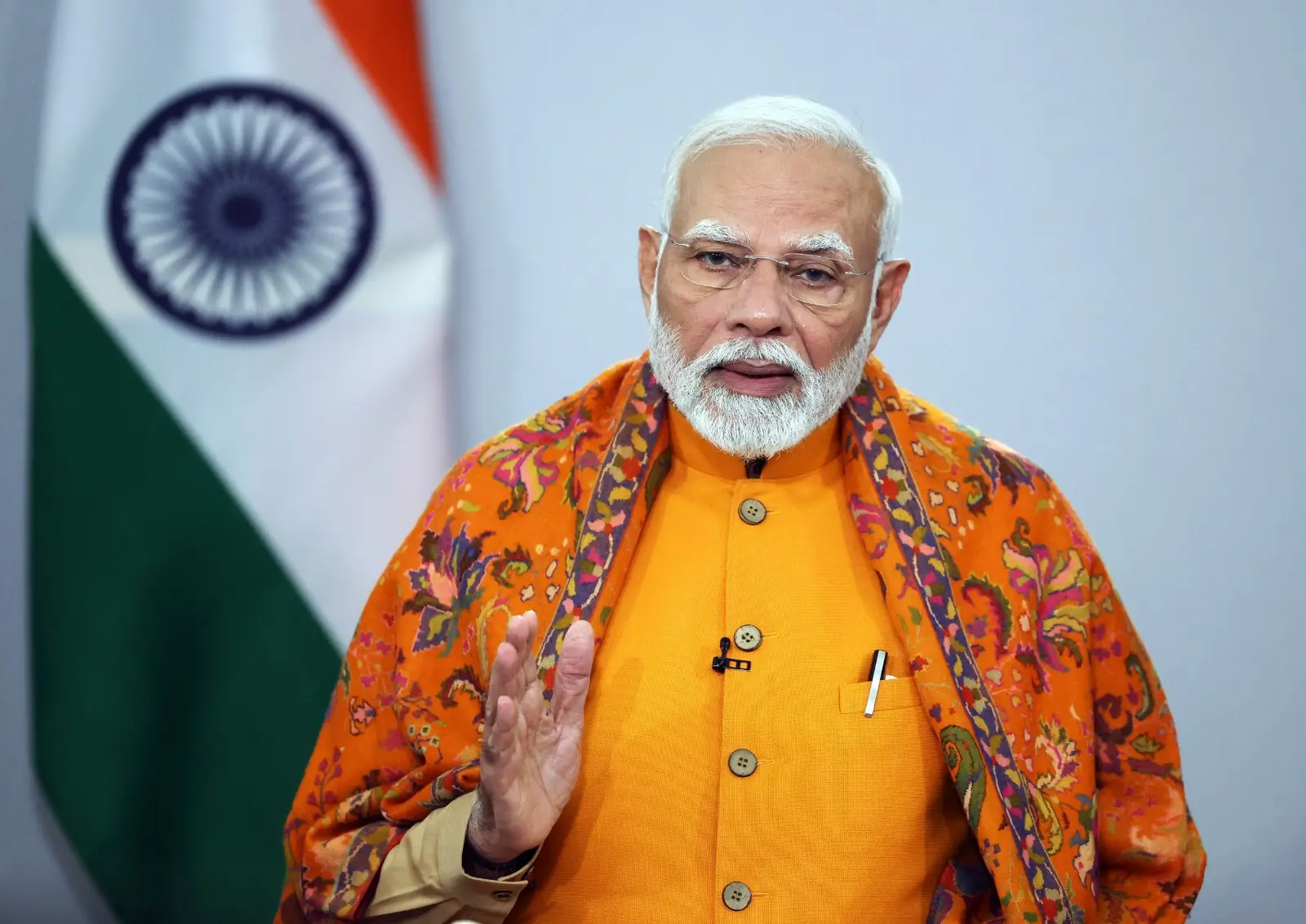
"Today, through the Maharashtra government, our Agriculture Minister has presented a very good Bill in the Legislative Assembly. This is a Bill for the empowerment of women farmers, in which women will receive a certificate recognising them as farmers, and they will also receive the benefits of all the schemes that are available to farmers. This has been unanimously approved in the Legislative Assembly. I welcome this Bill."
— Pankaja Gopinath Munde, Minister, Government of Maharashtra
"The objective is not limited to those whose names appear on the 7/12 land extract. We want to recognise every woman contributing to agriculture and allied sectors and provide her with an independent identity as a farmer, ensuring they become self-reliant."
— Dattatray Bharane, Agriculture Minister, Maharashtra
Why It Matters
The structural implementation of the new legislative act introduces major practical implications:
For Rural Women: A formal, certified identity removes historical blockades to credit access, allowing women to secure independent bank financing for their farming operations.
For Allied Industries: Granting identity cards to dairy and livestock workers accelerates financial inclusion across the rural manufacturing and processing sectors.
For Governance Infrastructure: The creation of a dedicated cell headed by the Chief Minister guarantees long-term budgetary oversight and smooth program execution.
Key Facts at a Glance
Unanimous Approval: The Maharashtra Legislative Assembly passed the Women Farmers Empowerment Bill, 2026, without a single dissenting vote.
National Precedent: The legislation marks the first dedicated framework in India to provide legal identity cards to women in agriculture.
Broad Coverage: The law covers traditional crop cultivation alongside allied work like poultry, fisheries, and dairy farming.
Direct Access: Verified cardholders can bypass traditional 7/12 land extract requirements to access government subsidies and bank loans directly.
FAQ Section
How does the new bill change the legal status of women farmers in Maharashtra?
The bill provides women farmers with an official identity card and certificate from the state government, recognizing them as independent cultivators regardless of whether their names are registered on family land documents.
What specific government benefits will cardholders be able to access?
Eligible women farmers will gain direct access to agricultural credit lines, subsidized seeds, fertilizers, modern farm tools, direct financial aid portfolios, and localized market linkages.
Does the bill apply to women who do not grow traditional field crops?
Yes. The bill adopts a wide operational definition that explicitly includes women working in allied sectors, such as livestock rearing, dairy farming, commercial poultry, aquaculture, and beekeeping.
Source: Maharashtra Legislative Assembly Proceeding Logs, ANI National Politics Feed, State Department of Information and Public Relations (DGIPR).