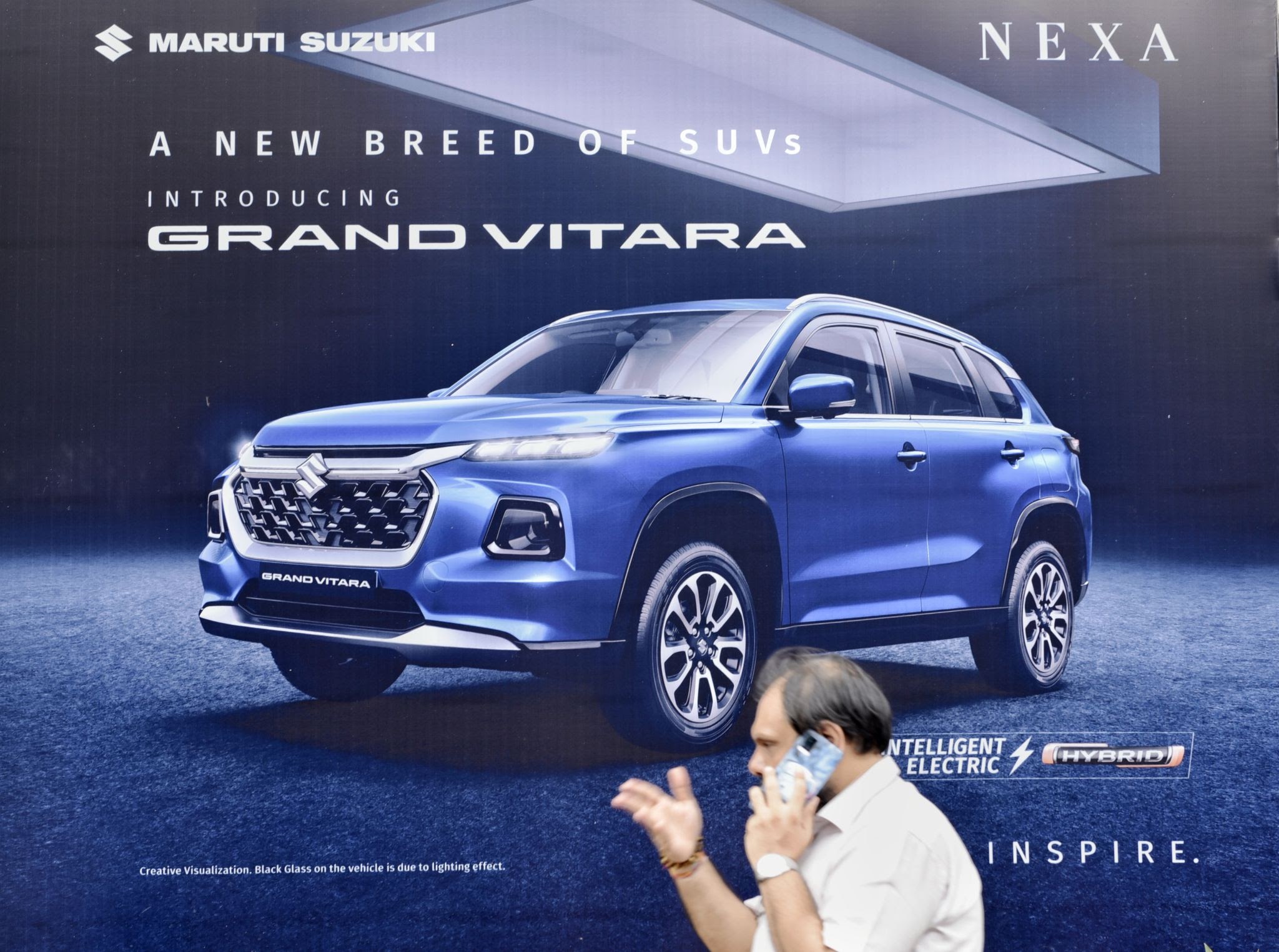
The Raipur District Consumer Disputes Redressal Commission has ordered Maruti Suzuki to replace a customer's Grand Vitara Strong Hybrid or refund over ₹21.6 lakh due to E20 fuel compatibility issues. Maruti Suzuki is challenging the order, asserting that laboratory tests proved the vehicle's engine failed due to heavily contaminated retail fuel, not a manufacturing defect.
RAIPUR, INDIA — Maruti Suzuki India Limited has officially confirmed its intention to challenge a milestone ruling issued by the District Consumer Disputes Redressal Commission in Raipur, Chhattisgarh. The regulatory commission directed the nation's largest carmaker and its local dealership to replace a customer's premium hybrid SUV with a brand new, E20 fuel-compatible model. Responding to the ruling on July 16, 2026, Maruti Suzuki stated that it will take all necessary legal steps to challenge the impugned order before a higher judicial forum, arguing that key facts including laboratory evidence of external fuel contamination were not reflected in the commission's final decision.
The Raipur Consumer Commission's Landmark Ruling
The dispute originated from a complaint filed by Dr. Premraj Devta, a Raipur-based kidney specialist, who purchased a Maruti Grand Vitara Strong Hybrid Zeta Plus in 2023. According to court records, the hybrid vehicle suffered recurring engine stalling and warning light issues after covering approximately 21,913 kilometers. Despite repeated visits to the authorized workshop, draining of the fuel system, and fuel tank cleanings, the vehicle continued to fail in traffic.
The Additional Bench of the Raipur District Consumer Disputes Redressal Commission, presided over by Prashant Kundu and Member Dr. Anand Varghese, ruled in favor of the consumer. The commission held that selling a vehicle that could not reliably handle E20 petrol (petrol blended with 20% ethanol) which has become the default fuel at retail outlets across India without clearly informing the buyer constituted a "deficiency in service" and an "unfair trade practice".
The Raipur panel ordered Maruti Suzuki and its dealer to:
Replace the vehicle with a new, E20-compatible model of the same variant within 45 days.
Alternatively, if replacement is not completed, issue a full refund of ₹20,50,494 (comprising the vehicle price of ₹18,29,000, registration charges of ₹1,86,850, and insurance premium of ₹34,644).
Pay an additional ₹1,00,000 in compensation for mental harassment, alongside ₹10,000 in litigation expenses.
Maruti Suzuki Contests Findings, Points to Fuel Adulteration
Maruti Suzuki and its legal representatives have strongly contested the commission's findings, highlighting that critical evidence was omitted from the ruling. The automaker maintains that independent, government-recognized laboratory testing performed on fuel samples collected from the complainant’s vehicle revealed clear signs of heavy fuel contamination.
According to Maruti Suzuki's defense, the lab reports showed that the fuel in the tank contained only 6% to 7% ethanol despite being sold to the consumer as E20, alongside other unidentified contaminants and a "white, curd-like substance". The company argues that the engine issues were entirely caused by external fuel adulteration rather than an inherent manufacturing or engineering defect. Under standard industry practice, damage arising from adulterated or contaminated fuel falls outside the scope of manufacturer warranties.
Furthermore, Maruti Suzuki's legal team expressed surprise at the focus on E20, stating that ethanol-blended fuel compatibility was never part of the complainant’s original written grievance or the primary courtroom arguments, yet became the central pivot of the commission's final order.
Industry Implications of the E20 Fuel Transition
The Raipur commission's ruling represents India's first major consumer court decision linking mechanical vehicle failure to the government's E20 ethanol-blending program. Under the national biofuel policy, India has rapidly transitioned to E20 fuel as the standard option at public petrol pumps, leaving motorists with virtually no alternative choice of fuel.
While the central government and major automakers have assured buyers that newer vehicles are fully engineered to handle ethanol-blended fuels, this case has intensified public debate over real-world compatibility, component corrosion, and manufacturer disclosure policies. The outcome of Maruti Suzuki’s appeal before the State Consumer Disputes Redressal Commission will likely set a crucial legal precedent for both automobile manufacturers and retail fuel consumers across India.
Official Sources Section
The judicial details, financial penalties, and directives are documented under Case Title: Dr. Premraj Devta v. Nexa Magneto (Sky Automobiles) & Maruti Suzuki India Ltd., issued by the Raipur District Consumer Disputes Redressal Commission. Official corporate stances and intentions to appeal were verified via regulatory updates and legal representative statements from Maruti Suzuki India Limited.
Quote Section
Advocate Bhupendra Jain, representing Maruti Suzuki, addressed the media regarding the legal challenge:
"We maintain that the problem resulted from an unidentified contaminant in the fuel system rather than the E20 petrol itself. Issues concerning the use of E20 fuel in vehicles remain under judicial consideration, and the company intends to challenge this order before a higher forum."
Why It Matters
This dispute is critical for car buyers and the automotive industry. As India transitions exclusively to E20 ethanol-blended petrol, consumers face potential engine repair disputes if their vehicles experience fuel-system damage. If consumer courts hold manufacturers responsible for breakdowns regardless of retail fuel quality, it may force carmakers to adjust warranty policies or more explicitly disclose fuel compatibility ratings at the point of sale.
Key Facts at a Glance
Replacement Order: The Raipur consumer court ordered Maruti Suzuki to replace a doctor's Grand Vitara Strong Hybrid with an E20-compatible vehicle within 45 days.
Alternative Penalty: If the replacement is not provided, the automaker faces a combined refund and penalty of over ₹21.6 lakh.
Contamination Defense: Maruti Suzuki states laboratory results proved the vehicle contained heavily contaminated fuel with only 6-7% ethanol, causing the engine damage.
Imminent Appeal: The carmaker has declared it is taking all necessary legal steps to challenge the Raipur court's order before the State Commission.
FAQ Section
Why did the consumer court rule against Maruti Suzuki?
The Raipur District Consumer Commission found that the vehicle stalled repeatedly despite multiple repairs. It ruled that the manufacturer committed a "deficiency in service" by failing to clearly disclose whether the January 2023-manufactured vehicle was fully compatible with E20 fuel, which has become India's standard retail fuel.
What is Maruti Suzuki's primary defense in this case?
Maruti Suzuki maintains that the vehicle's issues were not caused by a manufacturing defect or E20 compatibility issues. Instead, the company presents laboratory reports showing that the fuel tank contained highly contaminated, adulterated petrol that falls outside of normal warranty coverage.
Is my car safe to use with E20 fuel?
Automakers certify that modern vehicles manufactured after April 2023 are designed to be E20-material compliant. However, this court case highlights growing consumer concerns regarding the actual fuel quality served at retail pumps and how manufacturers handle warranty claims when fuel system issues arise.
Source: Official certified copy of the judgment in Dr. Premraj Devta v. Nexa Magneto (Sky Automobiles) & Maruti Suzuki India Ltd., official statements from Maruti Suzuki legal representatives, and regulatory guidelines of the Ministry of Consumer Affairs, Food and Public Distribution.