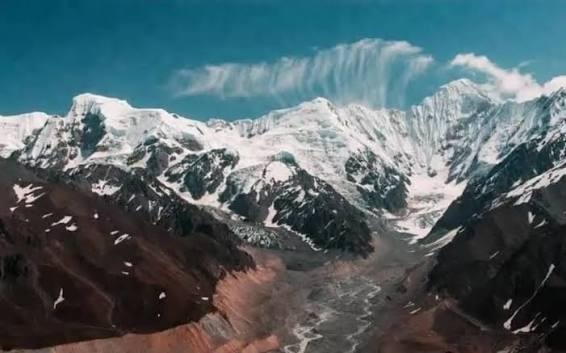
A comprehensive scientific study by researchers from IIT Kharagpur has revealed that high-altitude regions of Jammu and Kashmir are warming significantly faster than nearby plains. Analyzing four decades of meteorological data, the findings highlight elevation-dependent warming trends, raising serious concerns for Himalayan glaciers, regional hydrology, and long-term water security.
NEW DELHI / SRINAGAR — High-altitude mountainous regions across Jammu and Kashmir are experiencing pronounced climate warming at a rate significantly higher than surrounding low-altitude plains, according to a landmark study conducted by researchers at the Indian Institute of Technology (IIT) Kharagpur.
Published in the peer-reviewed journal Scientific Reports, the research—titled "Warming of the High-Mountainous Climate Sensitive Jammu and Kashmir During the Period 1980–2024"—analyzed ground-based observations from ten India Meteorological Department (IMD) stations alongside comprehensive reanalysis datasets spanning four decades. The findings demonstrate that popular alpine destinations such as Pahalgam and Gulmarg have witnessed temperature increases of nearly 1°C over the past twenty years alone.
Elevation-Dependent Warming and Regional Disparities
The study provides robust empirical evidence of Elevation-Dependent Warming (EDW), a meteorological phenomenon wherein higher-elevation environments warm at an accelerated pace relative to lowlands. While mid- and high-altitude stations registered steady upward temperature trends, lower-elevation areas like Jammu recorded relatively minimal or statistically insignificant long-term warming.
| Climate Parameter / Metric | Research Observations & Findings |
| Study Duration | 1980 to 2024 (45-year observational analysis) |
| High-Altitude Hotspots | Gulmarg, Pahalgam, and Bhaderwah showing accelerated temperature gains |
| Temperature Gradients | Annual mean temperatures increased by up to 0.3°C per decade at select mid-elevation sites |
| Night-Time vs Day Trends | Minimum temperatures showing sharp surges, driven by atmospheric moisture and longwave radiation |
Furthermore, the research highlights that winter and pre-monsoon seasons experience the most pronounced thermal shifts. Scientists attribute daytime warming at high altitudes primarily to snow-albedo feedbacks—where shrinking snow cover exposes darker underlying terrain that absorbs greater solar radiation.
Implications for Hydrology and Ecosystems
The accelerated warming trends carry profound implications for the Western Himalayas' delicate cryosphere and hydrological balance.
Glacial Retreat: Faster temperature increases exacerbate the melting of prominent glaciers, including Kolahoi and Thajwas, reducing long-term freshwater storage.
Water Security: Downstream river basins dependent on snow and glacier melt—such as the Jhelum, Chenab, and Indus—face altered seasonal flow regimes affecting agriculture and hydropower.
Socio-Economic Impact: Rural livelihoods, regional horticulture, and tourism infrastructure face mounting vulnerabilities from erratic weather patterns and extreme climate events.
Official Sources Section
Data, analytical frameworks, and scientific conclusions cited in this report are based on research publications from the Centre for Ocean, River, Atmosphere and Land Sciences (CORAL) at the Indian Institute of Technology (IIT) Kharagpur, archival records from the India Meteorological Department (IMD), and environmental assessments published in Scientific Reports.
Quote Section
"According to researchers and climate scientists at IIT Kharagpur, the accelerated warming observed in mountain regions threatens glaciers, seasonal snow cover, freshwater availability, and ecosystem stability, with consequences extending far beyond the Himalayas."
Why It Matters
The documented warming asymmetry across Jammu and Kashmir presents critical practical considerations:
For Policymakers & Planners: Underscores the urgency of formulating localized climate adaptation frameworks and disaster-mitigation strategies for vulnerable mountain communities.
For Agricultural and Hydel Sectors: Signals potential disruptions in water availability, necessitating advanced reservoir management and water-conservation techniques.
For Environmental Researchers: Emphasizes the necessity for a denser network of high-altitude weather monitoring stations above 3,000 meters.
Key Facts at a Glance
Scope: 45-year historical temperature dataset (1980–2024).
Core Phenomenon: Elevation-Dependent Warming (EDW) driving faster heating at higher altitudes.
Notable Locations: Tourist and high-altitude hubs like Gulmarg and Pahalgam warmed by nearly 1°C in two decades.
Primary Drivers: Snow-albedo feedback loops and trapped longwave radiation during winter and pre-monsoon periods.
Frequently Asked Questions (FAQ)
What did the IIT Kharagpur study discover about Jammu and Kashmir's climate?
The study found that high-altitude mountainous regions in J&K are warming significantly faster than lower-elevation plains, with several locations recording a temperature rise of nearly 1°C over the last twenty years.
What is Elevation-Dependent Warming (EDW)?
EDW is a meteorological process where higher-altitude regions experience more rapid warming than adjacent lower-elevation lowlands.
Which key areas experienced the highest temperature increases?
Popular high-altitude destinations and stations, including Gulmarg, Pahalgam, and Bhaderwah, showed some of the most pronounced warming trends.
Why is faster warming in the Himalayas a major concern?
Accelerated warming threatens regional glaciers, reduces seasonal snowpack, alters river flow dynamics, and poses long-term risks to drinking water, agriculture, and hydropower generation.
Source: Research publications from IIT Kharagpur, observational datasets via the India Meteorological Department (IMD), and scientific disclosures published in Scientific Reports.