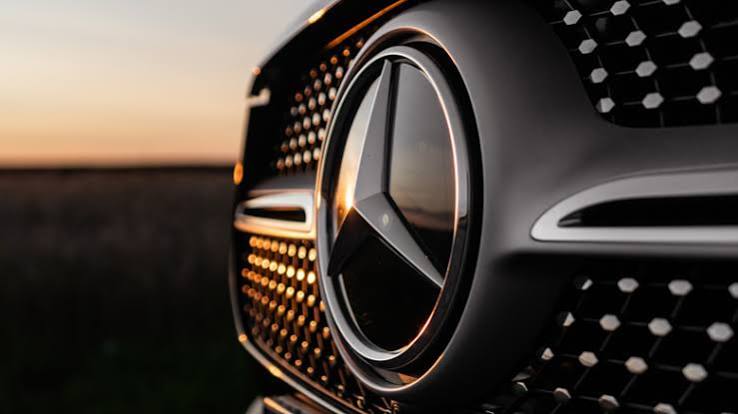
Mercedes-Benz India reported a 20% growth in its Top-End Vehicle segment (priced above ₹1.4 crore) for H1 2026, with flagship models now driving over 50% of total sales revenue. CEO Santosh Iyer affirmed that resilient demand from affluent buyers continues to fuel India's luxury car boom.
PUNE — German luxury automaker Mercedes-Benz India announced on Friday, July 24, 2026, that sales of its flagship Top-End Vehicles (TEV) grew by 20 percent during the first half of 2026. The company attributed the surge to resilient demand among ultra-high-net-worth individuals, projecting that top-tier buyers will sustain India's luxury car boom despite broader economic caution and capital market volatility affecting the mass-market automotive sector.
The development highlights a growing divergence in the Indian automotive industry, where premiumization and value-over-volume strategies yield record revenues even as entry-level passenger vehicle sales experience slowing momentum.
Resilient Growth in the Top-End Segment
According to business updates released by Mercedes-Benz India, vehicles priced above ₹1.4 crore now account for nearly 28 percent of the company's total sales volume in the country. When considering models priced above ₹1 crore—such as the popular Mercedes-Benz GLE, S-Class, and Maybach portfolios—the segment represents more than half of the brand's total Indian sales.
During the launch of the new Mercedes-AMG E 53 HYBRID 4MATIC+ in July 2026, the company confirmed that its overall unit deliveries achieved double-digit growth in the first six months of the year. Performance-focused AMG models saw a 50 percent surge in volume during the same period, driven by demand for high-performance sedans and SUVs.
Managing Director and Chief Executive Officer Santosh Iyer stated that purchasing decisions in the top-tier luxury bracket remain largely insulated from macro-level economic fluctuations because customers view these purchases as lifestyle statements rather than purely transactional transport.
Expansion of Electrified and Hybrid Portfolios
Mercedes-Benz is executing a "powertrain agnostic" product strategy in India, offering customers choices across petrol, diesel, battery electric vehicles (BEVs), and plug-in hybrid electric vehicles (PHEVs).
Electrified vehicles now account for 25 percent of the carmaker's top-end portfolio. The launch of the AMG E 53 HYBRID 4MATIC+ introduces a 3.0-liter turbocharged engine coupled with an electric motor, producing 585 horsepower and an electric-only range exceeding 100 kilometers under WLTP standards.
Company officials noted that improving highway infrastructure—such as the Samruddhi Mahamarg and the Delhi-Dehradun Expressway—alongside the emergence of private racing tracks across India has encouraged buyers to invest in high-performance hybrid models capable of daily urban electric commuting and high-speed touring.
Value Over Volume Strategy Reshapes Industry Dynamics
The luxury carmaker's focus on top-end models reflects a deliberate operational pivot toward profitability and brand equity over sheer unit volumes. A single top-end vehicle generates approximately three times the revenue of an entry-level premium model, boosting average selling prices across dealer networks.
While entry-level luxury segments under ₹50 lakh face stiff competition from premium mass-market SUVs, the high-end luxury category above ₹1 crore continues to record steady order banks. The company plans to roll out multiple new models and localized assembly initiatives over the next 18 to 24 months as part of its global product expansion.
Official Sources
According to official press disclosures and corporate announcements:
Complete sales metrics and product strategy updates are detailed directly on the Mercedes-Benz India Media Portal.
Industry data regarding passenger vehicle registrations and segment performance is compiled by the Society of Indian Automobile Manufacturers (SIAM).
Official Statements
Addressing media representatives at the performance vehicle showcase in July 2026, Santosh Iyer, Managing Director and CEO of Mercedes-Benz India, emphasized the structural shift in luxury consumption:
"Over the past three years, the share of our top-end vehicles in total sales has steadily increased from around 20 percent to nearly 28 percent. Well over 50 percent of our total sales now come from cars priced above ₹1 crore. We are not on the same treadmill as everyone else; what matters to us is the structure of our business, product mix, revenues, and profitability."
He added regarding customer sentiment:
"Despite weaker broader market sentiment and uncertainty linked to capital markets, we have not seen any slowdown in demand for our most expensive models. Buying decisions in the ₹1.4 crore-plus space are increasingly emotional and experience-driven."
Why It Matters
The sustained growth of India's luxury car boom demonstrates the expanding purchasing power of the country's ultra-wealthy demographic. For automakers, component suppliers, and investors, Mercedes-Benz's financial performance signals that premiumization remains one of the most profitable growth engines in East and South Asian automotive markets. For consumers, the shift accelerates the introduction of advanced automotive technologies, including plug-in hybrids, advanced driver-assistance systems (ADAS), and digital cabin software.
Key Facts at a Glance
Top-End Growth: Sales of Mercedes-Benz vehicles priced above ₹1.4 crore grew 20 percent in H1 2026, contributing 28 percent of total sales volume.
High-Value Dominance: Over 50 percent of total revenue is generated by models priced above ₹1 crore.
Performance Surge: Sales across the Mercedes-AMG performance range increased by 50 percent in the first half of 2026.
Hybrid Push: Launched the Mercedes-AMG E 53 HYBRID 4MATIC+ with 585 hp and over 100 km of electric range.
Frequently Asked Questions
What defines a Top-End Vehicle (TEV) at Mercedes-Benz India?
Mercedes-Benz India defines Top-End Vehicles as models priced above ₹1.4 crore ex-showroom. This category includes flagship models such as the S-Class, Maybach line, G-Class, and high-performance AMG variants.
Why is demand for top-end luxury cars growing faster than entry-level models?
Affluent buyers are less impacted by general inflation or interest rate adjustments. Furthermore, rising disposable incomes, expanding highway networks, and a preference for feature-rich, high-performance vehicles have shifted consumer interest toward flagship models.
What is Mercedes-Benz's strategy regarding electric and hybrid vehicles in India?
The company follows a "powertrain agnostic" strategy, allowing buyers to choose between petrol, diesel, battery electric (BEV), and plug-in hybrid (PHEV) options without prioritizing one technology exclusively over others.
Source: Mercedes-Benz India, Society of Indian Automobile Manufacturers (SIAM), The Economic Times