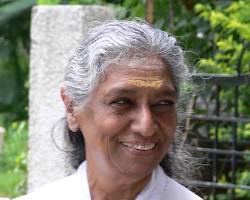
The passing of legendary playback singer S. Janaki has rekindled debates on India's North-South cultural divide. Celebrated for 40,000 songs across 20 languages and four National Awards, her 2013 rejection of the Padma Bhushan remains a focal symbol for critics demanding regional equity in national recognition.
NEW DELHI, July 25, 2026 — Following the recent passing of veteran playback singer S. Janaki at the age of 88 in Mysuru, cultural commentators, industry representatives, and public commentators across India have revisited her extensive career and her seminal decision to decline the Padma Bhushan award. Known as the "Nightingale of South India," Janaki rendered over 40,000 songs across nearly 20 languages over a career spanning seven decades. Today, her lifetime achievements and her historical commentary on state honors have rekindled an active debate surrounding the systemic North-South cultural divide in national art recognition and media commentary.
National Recognition and the 2013 Padma Bhushan Decision
S. Janaki’s legacy came into sharp focus following national tributes celebrating her vast repertoire in Tamil, Telugu, Kannada, Malayalam, and Hindi cinema. Central to the renewed public discourse is her 2013 refusal to accept the Padma Bhushan, the nation's third-highest civilian honor. At the time, Janaki stated that the central government's recognition had arrived too late in her 55-year career and emphasized that non-Hindi regional artists often faced delays or underrepresentation in national honor roll announcements.
According to records from the Ministry of Home Affairs and state archives, Janaki was awarded four National Film Awards and 33 State Film Awards during her active career. Her refusal of the civilian honor in 2013 marked a significant moment in Indian cultural politics, drawing widespread support from southern film bodies, cultural scholars, and fellow musicians who argued that national selection committees lacked equitable regional representation.
Cultural Impact and the North-South Artistic Divide
The broader discussion around S. Janaki's legacy touches on long-standing perceptions of disparity in the coverage, state sponsorship, and national celebration of South Indian performing arts compared to those from the Hindi-speaking belt. Historians and musicologists point out that while playback singers in Hindi cinema frequently received top-tier honors earlier in their careers, pioneering artists from southern industries often waited decades for comparable national visibility.
Cultural analysts note that Janaki's ability to master multiple languages bridged significant linguistic boundaries during the 1970s and 1980s, laying early structural foundations for modern pan-Indian cinema. However, industry groups contend that the institutional mechanisms for conferring national awards, such as the Bharat Ratna and Padma awards, have historically operated with a geographic imbalance favoring northern institutions.
Impact on Citizens, Artists, and Policy Debates
For millions of music lovers, cultural organizations, and aspiring musicians across India, the re-examination of Janaki’s career serves as a focal point for calling for administrative reforms in cultural governance.
Artists and Performers: Regional art guilds continue to advocate for decentralized selection panels for national civilian honors to ensure fair evaluation of non-Hindi works.
Cultural Institutions: Academic bodies and arts academies are increasing documentation of multilingual achievements to preserve regional cinematic heritage.
General Public and Fans: Fans and listeners across states are using public forums to urge government bodies to recognize legendary artists during their active years rather than posthumously or late in life.
Official Sources Section
According to official archives, government releases, and historical statements from the Ministry of Home Affairs and state film authorities:
S. Janaki was officially announced as a recipient of the Padma Bhushan in January 2013 by the Government of India.
Official records document that the singer formally declined the honor, citing that the recognition arrived late in her career after over five decades of service to Indian music.
Government archives confirm her receipt of four National Film Awards for Best Female Playback Singer across multiple decades.
Quote Section
"According to officials at the time and historical public statements, S. Janaki declined the Padma Bhushan honor in 2013, noting that while she harbored no ill will toward the administration, national recognition for regional artists ought to be conferred in a timely manner while performers are actively contributing to the nation's cultural fabric."
Why It Matters
The debate surrounding S. Janaki's legacy carries practical consequences for India's cultural policy and national arts infrastructure:
Selection Transparency: Pushes for broader geographic and linguistic diversity within national award committees.
Equal Representation: Encourages national broadcasting networks and cultural ministries to accord equal prominence to regional arts alongside Hindi cinema.
Policy Awareness: Inspires policy discussions on establishing regional advisory panels to recommend honors for veteran cultural icons.
Key Facts at a Glance
Iconic Career: S. Janaki recorded over 40,000 songs in nearly 20 languages over nearly seven decades.
Major Accolades: Winner of four National Film Awards and 33 State Film Awards.
2013 Decision: Declined the Padma Bhushan award, stating national recognition came too late.
Core Issue: Her legacy has reignited debates regarding regional disparities and North-South cultural representation in national honors.
Frequently Asked Questions (FAQ)
Why is S. Janaki's legacy sparking debate on the North-South cultural divide?
Her decades-long career and her 2013 decision to decline the Padma Bhushan highlighted long-standing concerns among critics that southern artists receive disproportionately late or inadequate national recognition compared to their northern counterparts.
How many National Film Awards did S. Janaki win?
S. Janaki won four National Film Awards for Best Female Playback Singer, in addition to 33 State Film Awards across Tamil, Telugu, Kannada, and Malayalam cinema.
Why did S. Janaki decline the Padma Bhushan in 2013?
She declined the honor stating that it arrived too late in her 55-year career and advocated for recognizing legendary regional artists in a timely manner.
In how many languages did S. Janaki sing?
She rendered songs in nearly 20 languages, including Tamil, Telugu, Kannada, Malayalam, Hindi, Odia, and Bengali.
Source: Ministry of Home Affairs (Padma Awards Directory), National Film Awards Archives, The Hindu Archives, Press Information Bureau (PIB) India.