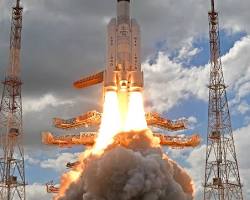
India's space sector has entered an unprecedented growth phase following key policy reforms and private sector participation. With cumulative private funding crossing $618.5 million and IN-SPACe issuing over 105 authorizations, private firms are constructing satellite constellations and launch systems while ISRO advances lunar and human spaceflight missions.
NEW DELHI — India's space sector is accelerating into a new orbital era, backed by landmark regulatory reforms, surging private funding, and ambitious deep-space exploration targets set by the Indian Space Research Organisation (ISRO). Following the opening of the national space domain to commercial enterprises, cumulative private investments in domestic space startups crossed $618.5 million as of March 2026, according to official data presented in Parliament by Union Minister of State for Science and Technology Dr. Jitendra Singh. The rapid expansion reflects a fundamental structural shift from government-led space missions toward a market-driven ecosystem capable of handling satellite manufacturing, launch services, and orbital applications.
Regulatory Reforms Drive Commercial Expansion
The foundation of India's space transformation rests on the Indian Space Policy 2023 and the operationalization of the Indian National Space Promotion and Authorization Centre (IN-SPACe), established as an independent single-window regulatory authority under the Department of Space to facilitate private sector participation. According to disclosures from the Ministry of Science and Technology, liberalized Foreign Direct Investment (FDI) guidelines, alongside specialized government financial incentives—including a ₹1,000 crore Venture Capital Fund and a ₹500 crore Technology Adoption Fund—have significantly lowered structural entry barriers for non-government entities.
Under this regulatory framework, IN-SPACe has granted over 105 authorizations to private space firms, enabling startups and industrial consortia to access ISRO testing facilities, utilize government launch complexes, and establish commercial launch schedules. Official records indicate that cumulative private funding in the sector expanded nearly six-fold in recent years, rising from $100.5 million in 2021–22 to $348.5 million in 2023–24, before passing the $618.5 million mark by March 2026. Government officials emphasized that every non-government application undergoes evaluation under IN-SPACe norms to maintain national security and strategic compliance.
Public-Private Partnerships and Satellite Constellations
A key driver of commercial scale in India's space economy is the Earth Observation Public-Private Partnership (EO-PPP) framework. The initiative has brought together domestic technology and aerospace firms to construct the country's first privately owned Earth observation satellite constellation. Supported by a private investment commitment of approximately ₹1,200 crore, the project aims to deploy low-Earth orbit (LEO) satellite hardware for high-resolution imaging, agricultural assessment, climate monitoring, and urban planning.
Industry analysts note that delegating routine satellite building and low-Earth orbit payload launches to private entities allows ISRO to reallocate its primary engineering capacity toward interplanetary scientific research, deep-space propulsion development, and human spaceflight infrastructure.
Strategic Milestones from Chandrayaan to Gaganyaan
While commercial startups ramp up production of small satellite launch vehicles and electric thrusters, ISRO continues to achieve major scientific milestones. Following the historic Chandrayaan-3 mission, which made India the first nation to soft-land near the lunar south pole, the space agency successfully demonstrated in-orbit autonomous docking technology through its Space Docking Experiment (SpaDeX). The docking capability serves as a building block for a planned modular space station and future sample-return missions.
Simultaneously, preparations for the flagship Gaganyaan human spaceflight program are advancing through a series of uncrewed orbital tests and escape system evaluations. In parallel, joint international initiatives—such as the NASA-ISRO Synthetic Aperture Radar (NISAR) earth observation mission—highlight India's expanding role in bilateral scientific partnerships.
Official Sources
Information regarding regulatory policies, financial disclosures, and sectoral investments is derived from official releases by the Ministry of Science and Technology, parliamentary submissions by Union Minister Dr. Jitendra Singh, regulatory notices published by the Indian National Space Promotion and Authorization Centre (IN-SPACe), and mission documentation provided by the Indian Space Research Organisation (ISRO).
Official Statements
"According to Union Minister Dr. Jitendra Singh, cumulative private funding in India's space sector expanded nearly six-fold over recent years, reaching $618.5 million by March 31, 2026. Government officials confirmed that all non-government space activities undergo thorough evaluation by IN-SPACe regarding safety, strategy, and national security prior to authorization."
Why It Matters
The commercialization of India's space sector delivers practical economic and technological benefits across multiple industries. Domestic satellite manufacturing and private launch operations provide cost-effective solutions for telecommunications, maritime logistics, precision agriculture, and environmental management. For the broader economy, the growth of non-government space entities generates high-skilled engineering jobs, attracts international risk capital, and positions India as a competitive global provider of commercial satellite launch and payloads services.
Key Facts at a Glance
Investment Scale: Cumulative private investment in India's space sector reached $618.5 million as of March 2026.
Regulatory Approvals: IN-SPACe has issued over 105 authorizations to private companies, with 17 startups authorized for operational space missions.
Earth Observation: Private sector firms committed ₹1,200 crore to construct India's first commercial Earth observation satellite constellation.
Support Funds: Dedicated government mechanisms include a ₹1,000 crore Venture Capital Fund and a ₹500 crore Technology Adoption Fund.
Frequently Asked Questions
What is the role of IN-SPACe in India's space industry?
IN-SPACe serves as the autonomous single-window regulatory agency under the Department of Space responsible for authorizing, supporting, and monitoring private space activities and enabling private access to ISRO infrastructure.
How much private investment has entered India's space sector?
Official parliamentary submissions confirm that cumulative private investment in India's space domain passed $618.5 million by March 31, 2026.
What is the primary objective of the Gaganyaan program?
Gaganyaan is India's human spaceflight program, designed to demonstrate the capability to launch a human crew into low-Earth orbit and return them safely to Earth.
How do private space developments benefit commercial consumers?
Private satellite operations increase data availability for weather tracking, broadband connectivity, urban infrastructure mapping, and agricultural forecasting at reduced operational costs.
Source: Ministry of Science and Technology, Indian Space Research Organisation (ISRO), Indian National Space Promotion and Authorization Centre (IN-SPACe), Parliament Disclosures.