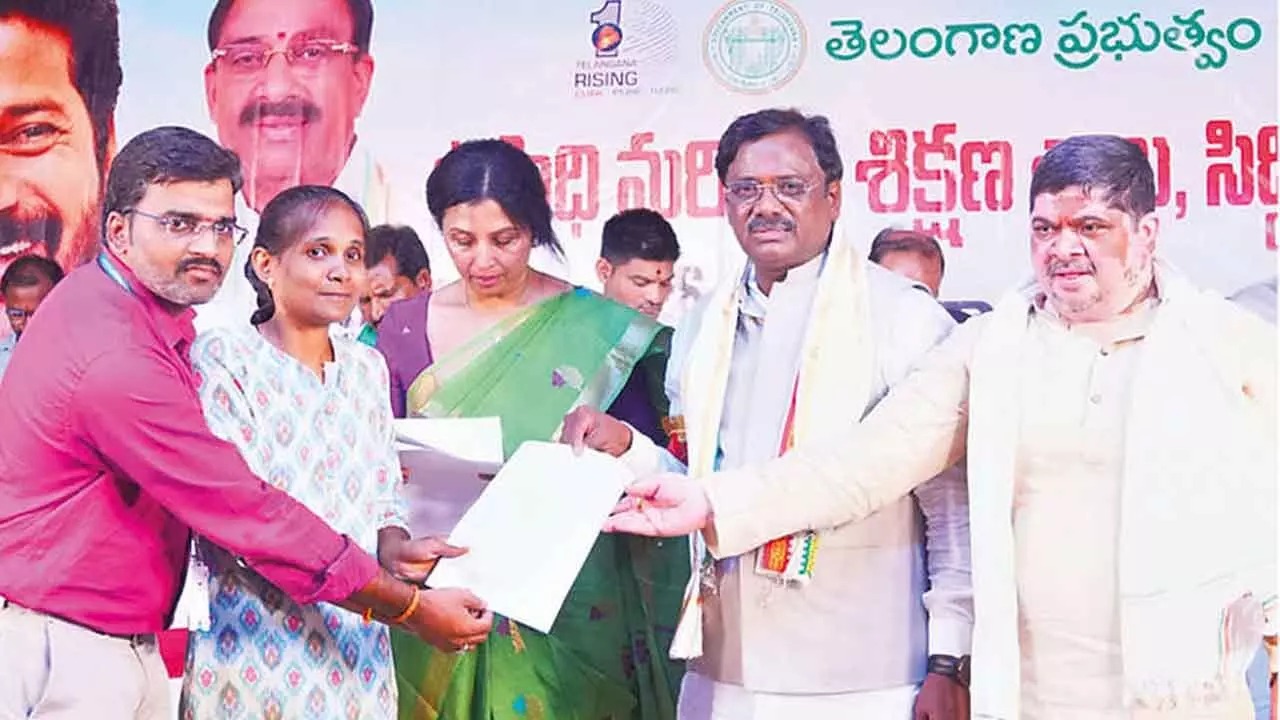
Telangana Minister Dr. G. Vivek Venkataswamy outlined the government's vision for a skilled Telangana, prioritizing the expansion of Advanced Technology Centres (ATCs). The roadmap introduces AI-based vocational courses aligned with current industrial needs, aiming to boost youth employability and support the state's transition toward a $3 trillion economy by 2047.
HYDERABAD — Telangana Minister for Labour, Employment, Training, and Factories, Dr. G. Vivek Venkataswamy, outlined the state government's comprehensive vision for a skilled Telangana during a high-level stakeholder consultation at the MCR HRD Institute. Announced on July 11, 2026, the updated roadmap prioritizes aligning youth training with emerging automation demands to bridge current employment deficits. This shift comes at a critical time as the state addresses rising regional competition for technology investments and attempts to absorb a growing workforce into highly technical corporate environments.
Operationalizing Advanced Technology Centres
Central to the state’s developmental strategy is the rapid expansion of Advanced Technology Centres (ATCs) across multiple districts. The Employment and Training Department of Telangana has initiated structural upgrades to existing industrial training facilities to morph them into modern incubation zones. These centers will specialize in practical coursework covering artificial intelligence, industrial robotics, and advanced manufacturing mechanics.
According to data compiled by the training bureau, a new state-of-the-art facility in Chennur is slated to serve as the initial testing ground for these updated curriculums. The government expects this localized infrastructure to make rural youth industry-ready, directly reducing historical employment imbalances between urban centers like Hyderabad and outlying rural districts.
Aligning Industrial Strategy with Macro Targets
The push for a skilled Telangana forms a key pillar of the administration's broader economic blueprint. Minister Vivek Venkataswamy noted that the specialized curriculum restructuring is calibrated to support Chief Minister A. Revanth Reddy’s target of elevating Telangana into a $3 trillion economy by the year 2047. To ensure the newly created skill sets remain relevant to global markets, state officials have held multi-month consultations with regional manufacturing units and prominent technology firms to capture sector-specific requirements.
| Core Strategic Area | Primary Focus | Targeted Implementation |
| Advanced Technology Centres | Upgrading ITIs with industry-relevant machinery | Phase 1 rollout across priority hubs |
| Technical Frameworks | Artificial intelligence, digital literacy, and automation | Integrated into all major polytechnic tracks |
| Labor Integration | Rebalancing protections for laborers and industry owners | Stakeholder draft reviews currently active |
In tandem with the educational modernization, the ministry is formulating a balanced labor framework to safeguard manufacturing output. This policy aims to protect the fundamental rights of industrial laborers while simultaneously providing businesses with an stable, highly predictable regulatory environment that encourages foreign direct investment.
Official Sources Section
The program metrics and institutional frameworks were distributed through official ministerial briefings from the Telangana State Portal and detailed policy circulars published by the Directorate of Employment and Training. Compliance reviews will be conducted semi-annually to monitor job placement rates resulting from the upgraded curriculum tracks.
Quote Section
The administration emphasizes that long-term industrial viability hinges completely on proactive educational adjustments.
"The state is giving special attention to industry requirements while framing future labor and training policies," Minister Vivek Venkataswamy stated during the consultation process. "Based on industrial inputs, Telangana is designing training programs to systematically improve the overall employability of our young people."
Why It Matters
For young citizens and job seekers, the vision for a skilled Telangana promises access to modern training that translates directly into higher-paying industrial roles. For corporate entities and international tech investors, the establishment of standardized ATCs offers a reliable supply of skilled operators, lowering onboarding overheads and encouraging long-term industrial growth within the region.
Key Facts at a Glance
Strategic Goal: Aligning vocational training with modern automation and artificial intelligence components.
Institutional Shift: Upgrading traditional ITI architectures into modernized Advanced Technology Centres (ATCs).
Macro Linkage: The skill framework acts as an operational foundation for the state's long-term $3 trillion economy goal.
Target Demographics: Initial phase rollouts target rural and semi-urban communities, starting with specialized nodes in Chennur.
FAQ Section
Q1: What are Advanced Technology Centres (ATCs) in Telangana?
A1: ATCs are upgraded training infrastructure centers designed to replace outdated vocational methodologies with industry-aligned training in emerging disciplines like AI, robotics, and advanced manufacturing.
Q2: How does the government plan to measure the success of the skilled Telangana initiative?
A2: The Directorate of Employment and Training will trace post-certification corporate placement rates and industry retention data via semi-annual performance reviews.
Q3: Will the new training modules be accessible to rural youth?
A3: Yes, the state's vision focuses explicitly on decentralized implementation, prioritizing facility upgrades in secondary and tertiary districts to ensure equitable access.
Source: Employment and Training Department of Telangana, Telangana State Portal Official Policy Archives