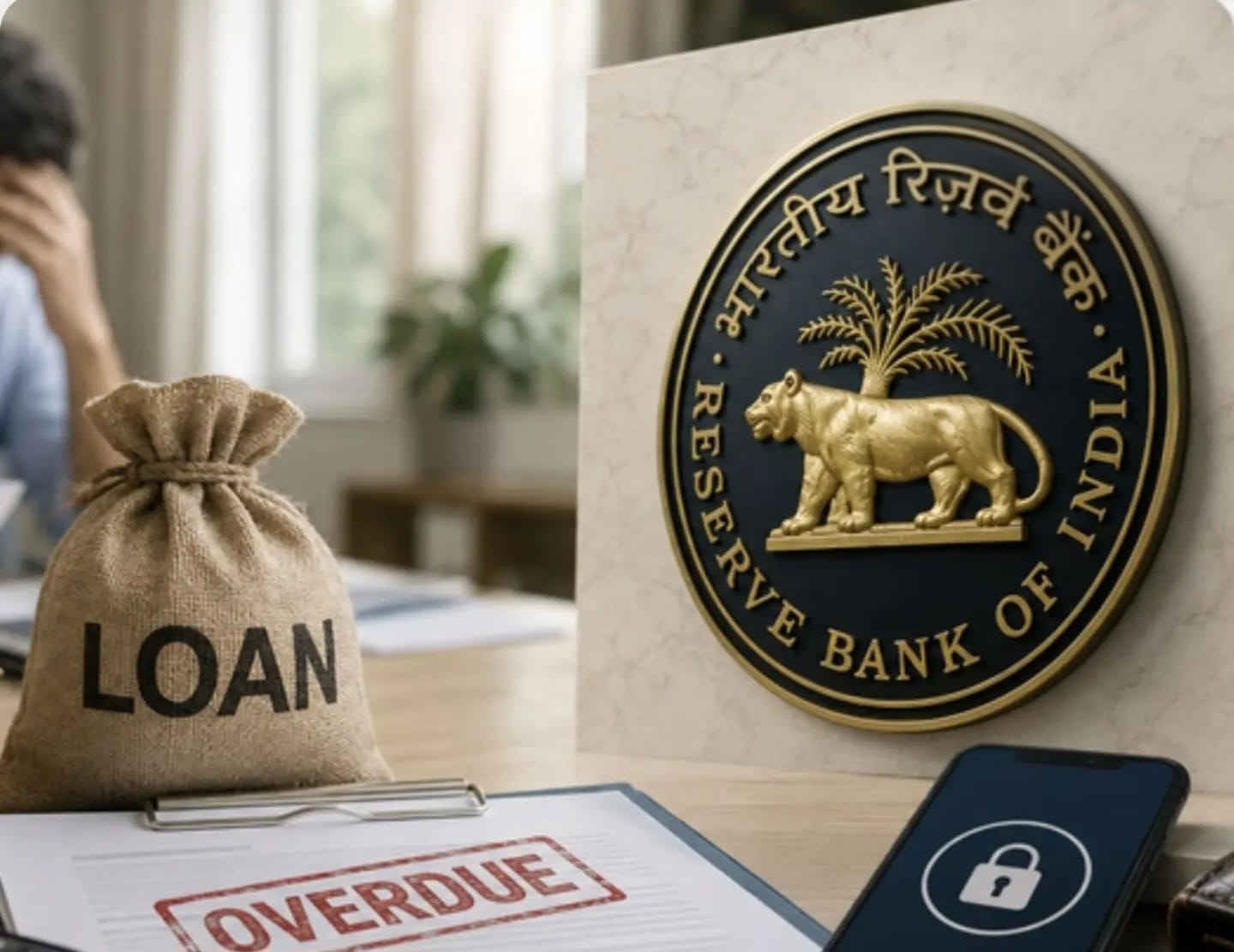
The Reserve Bank of India (RBI) issued updated loan recovery rules prohibiting banks from locking personal devices for general loan defaults. The guidelines ban recovery agent harassment, restrict contact hours to 8 AM–7 PM, prevent access to private phone data, and hold lenders directly accountable for collection practices.
MUMBAI — The Reserve Bank of India (RBI) issued a comprehensive regulatory framework on August 7, 2026, introducing stringent directives that prohibit banking and financial institutions from remotely locking borrowers' personal mobile devices and engaging in invasive recovery practices following missed Equated Monthly Installment (EMI) payments. Released from the RBI headquarters in Mumbai, the updated guidelines establish strict boundaries for commercial banks, non-banking financial companies (NBFCs), and digital lending platforms, protecting millions of retail borrowers across India from harassment, unauthorized data access, and unlawful coercion.
The regulatory intervention arrives amidst rapid expansion in retail credit, Buy Now Pay Later (BNPL) schemes, and digital lending products, which were accompanied by rising consumer complaints regarding aggressive debt collection tactics. By enforcing clear operational limits, the central bank aims to ensure that debt recovery remains fair, transparent, and strictly compliant with legal standards without infringing on fundamental consumer rights.
Remote Device Locking Banned for General Retail Loans
Under the newly issued directives, the RBI explicitly prohibits lenders from deploying technology-based mechanisms to restrict, disable, or lock mobile phones, laptops, or tablets to recover unpaid general loans, such as personal, home, or automobile credit. The regulator stated that remote device restriction is strictly illegal unless the underlying loan was executed specifically to finance the purchase of that exact electronic device.
Even in instances where a smartphone or tablet was explicitly financed through consumer credit, banks cannot lock the device immediately after a missed EMI payment. Lenders are mandated to adopt a phased protocol:
30-Day Threshold: No device restrictions can be activated until a loan account remains overdue for at least 30 consecutive days past due (DPD) despite formal written notices.
60-Day Full Restriction: Complete operational restrictions outlined in the loan agreement can only be triggered if dues remain unpaid past 60 days.
Essential Function Protections: Lenders are permanently forbidden from disabling essential features, including incoming calls, SMS services, and emergency SOS tools.
Reinstatement Compensation: Once overdue amounts are settled, banks must restore full device functionality within one hour. Unreasonable delays mandate a penalty fee of Rs 250 per hour payable by the lender to the borrower, capped at the total loan amount.
Strict Privacy Safeguards and Complete Ban on Personal Data Access
Addressing persistent consumer complaints regarding invasive digital lending practices, the central bank barred financial institutions and their third-party technology vendors from accessing personal data stored on a borrower’s mobile device. Lenders are strictly prohibited from collecting, scanning, or using phone contacts, photographs, text messages, call records, or location history for loan recovery operations.
The RBI clarified that any attempt by recovery agents or software applications to leverage private phone data to pressure defaulting borrowers constitutes a direct regulatory violation subject to enforcement action.
Tightened Conduct Standards for Recovery Agents
The regulatory framework significantly tightens operational standards for outsourced recovery agencies and bank representatives. Banks are held legally accountable for all actions taken by third-party recovery agents operating on their behalf.
Under the updated conduct guidelines:
Restricted Operating Hours: Recovery agents are permitted to contact borrowers via telephone or physical visits only between 8:00 AM and 7:00 PM on working days.
Prohibited Behaviors: Agents are strictly forbidden from using abusive language, issuing physical threats, engaging in social media public shaming, or contacting a borrower's relatives, employers, or colleagues.
Mandatory Call Recording: Lenders must record all recovery-related phone interactions, retain audio files for a minimum of six months, and notify borrowers that calls are being monitored.
Grievance Redressal: Every regulated financial entity must appoint a dedicated Grievance Redressal Officer whose direct contact details must appear on all loan contracts and recovery notices.
Official Sources Section
The details, operational limits, and compliance frameworks cited in this report reflect official regulatory releases and statutory guidelines published by financial regulators:
Reserve Bank of India (RBI)
: Master Directions on Fair Practices Code for Regulated Entities and Digital Lending Guidelines.
Ministry of Finance
: Official releases on consumer protection frameworks in retail banking and digital credit markets.
Indian Banks' Association (IBA)
: Operational codes of conduct for recovery agents and outsourced recovery service providers.
Quote Section
According to officials from the Reserve Bank of India:
"Loan recovery mechanisms must strictly operate within transparent, fair, and legally sound parameters without resorting to intrusive technological locks or threat-driven intimidation tactics. Financial institutions retain the right to pursue lawful recovery of outstanding debt, but under no circumstances will harassment, privacy violations, or unauthorized device tampering be permitted."
Banking representatives and consumer advocacy groups stated that the updated directions eliminate regulatory loopholes by establishing clear corporate liability for outsourced recovery activities.
Why It Matters
The implementation of the RBI's updated recovery rules provides practical legal protections across the consumer finance market:
Consumer Protections: Millions of retail borrowers facing temporary financial hardship are shielded from aggressive collection tactics, intimidation, and sudden loss of personal technology.
Institutional Accountability: Commercial banks and digital lending apps can no longer deflect liability onto third-party recovery firms, forcing banks to overhaul incentive structures that previously encouraged aggressive agent behavior.
Data Security: Strict prohibitions against scraping device logs ensure personal privacy remains intact even during financial default scenarios.
Key Facts at a Glance
Device Locking Restriction: Remote device locking is prohibited for all general loans and permitted only for financed devices after a 30-day default period.
Essential Services Intact: Incoming calls, SMS, and emergency SOS features can never be disabled on financed devices.
Contact Time Limits: Recovery agents can only communicate with borrowers between 8:00 AM and 7:00 PM.
Data Privacy Protection: Lenders are legally barred from accessing contacts, photos, location, or call logs on borrower devices.
Frequently Asked Questions (FAQ)
Q1: Can a bank lock my phone if I miss an EMI on a personal or home loan?
No. The RBI strictly prohibits lenders from using remote device-locking technology to recover dues for general personal, home, or auto loans. Locking is only permitted if the loan was specifically taken to purchase that exact device.
Q2: What should I do if a recovery agent calls me late at night or threatens me?
Calling outside the permitted 8:00 AM to 7:00 PM window or using threats violates RBI guidelines. You can document the interaction, record the call, and file a formal complaint with the bank's Grievance Redressal Officer and the RBI Integrated Ombudsman.
Q3: Does the new RBI rule cancel my loan obligation if I default?
No. The new rules regulate recovery methods but do not erase debt obligations. Borrowers remain legally responsible for paying unpaid EMIs, accrued interest, and applicable late fees.
Source: Reserve Bank of India | Ministry of Finance | Indian Banks' Association