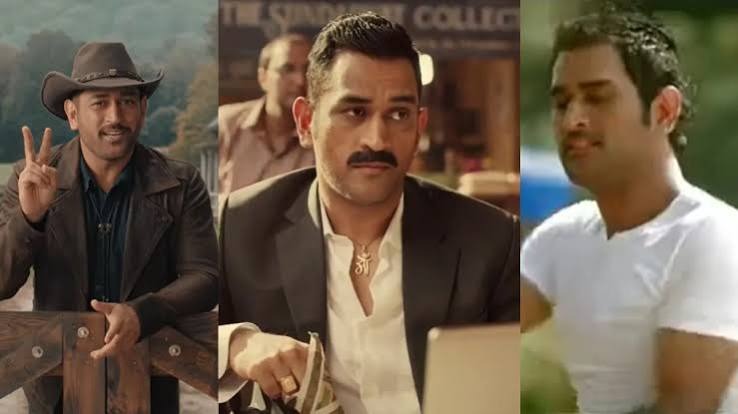
Mahendra Singh Dhoni’s 45th birthday highlights his status as India’s most trusted marketing icon. By shifting from traditional ads to strategic, long-term equity partnerships in sectors like technology and sustainable mobility, Dhoni has built an enduring commercial empire that prioritizes reliability over transient fame.
As Mahendra Singh Dhoni celebrates his 45th birthday, the legendary cricketer continues to redefine the economics of celebrity endorsements through a strategy rooted in trust, longevity, and calculated business integration.
MUMBAI — Mahendra Singh Dhoni, widely known as "Captain Cool," turned 45 on July 7, 2026, marking not just another year of a decorated life, but a milestone in his evolution from a cricketing icon into one of India’s most enduring commercial juggernauts. Years after retiring from international cricket, Dhoni remains the top choice for Indian advertisers, consistently topping celebrity endorsement charts and commanding an estimated brand value of over ₹1,000 crore.
In an advertising landscape often driven by fleeting social media trends and viral popularity, Dhoni’s brand has survived and thrived by prioritizing something increasingly rare: absolute public trust. Data from industry trackers like TAM AdEx consistently positions him as the most sought-after celebrity for brand endorsements, with his portfolio currently spanning more than 50 major companies across diverse sectors.
The Strategy: Trust Over Trend
Dhoni’s marketing appeal is built on a "low-noise, high-impact" philosophy. Unlike many peers who chase visibility through constant social media engagement, Dhoni’s scarcity has ironically amplified his market value. When he does appear in campaigns, it is almost invariably to project values of stability, reliability, and measured judgment.
"For brands, he stands for likeability, dependability, and reliability—without the ups and downs that go with big celebrities," notes Lloyd Mathias, an angel investor and former marketing executive. This is evident in his long-standing associations with brands like Gulf Oil India, where his real-life passion for automobiles adds an authentic dimension to the brand’s promise of performance and durability.
Moving Beyond Traditional Endorsements
Dhoni’s current business model has shifted significantly from simple celebrity appearance fees toward strategic equity-based partnerships. His portfolio now includes significant stakes in high-growth areas such as:
Technology and Mobility: Partnerships and investments in firms like BluSmart, Cars24, and Garuda Aerospace.
Lifestyle and Retail: His own apparel and fitness brand, 'Seven', and associations with premium home-care brands like Indigo Paints.
Emerging Sectors: Early bets on startups in fields like AI-led entertainment, electric bicycles (EMotorad), and fantasy sports (Dream11).
By choosing to be an investor and co-founder in these ventures rather than just a face, Dhoni has integrated himself into the core identity of these companies. This strategy aligns with the "Bharat" narrative—connecting brands to the aspirations of Tier-2 and Tier-3 India, where he remains a hero of immense proportions.
A "Safe" Commercial Asset
Industry analysts observe that Dhoni has become the "safest" bet for corporate India. At a time when brand ambassadors are increasingly susceptible to controversies, Dhoni’s image—characterized by a gracious handling of both success and failure—offers a level of "reputational insurance" that multinational corporations find invaluable.
According to figures from 2025 and early 2026, he continues to command premium rates, reportedly charging between ₹4 crore to ₹6 crore per day for commercial shoots. Despite this, companies across sectors—from finance (Mastercard) to agriculture (Swaraj Tractors) and everyday digital services (GoDaddy)—view him as a shortcut to establishing instant consumer confidence.
Key Facts at a Glance
Endorsement Reach: Associated with 50+ major brands as of mid-2026.
Financial Impact: Estimated personal brand value between ₹1,060 crore and ₹1,200 crore.
Strategic Approach: Preference for long-term equity-based partnerships over short-term campaign deals.
Market Positioning: Viewed as a "bridge" between aspirational, non-metro India and established corporate reliability.
FAQ
Why do brands prefer Dhoni even years after his cricket retirement?
His appeal is not based on current cricketing form, but on his cultivated persona of a stable, wise, and calm leader. Brands view him as a "trust multiplier" in sectors where consumer anxiety is high, such as used cars or fintech.
How has his endorsement strategy changed over time?
Early in his career, he focused on youth-centric mass-market brands like Pepsi or TVS. Today, he focuses on "adoption" brands—companies in tech, mobility, and sustainable energy that need a trusted face to help bridge the gap between innovation and mass-market acceptance.
Is Dhoni active on social media?
No, Dhoni is famously selective about social media. This scarcity has increased the value of his appearances, making his rare campaigns feel more significant and intentional to consumers.
Source: SportsMint Media, Adgully, Best Media Info, Marketing Mind