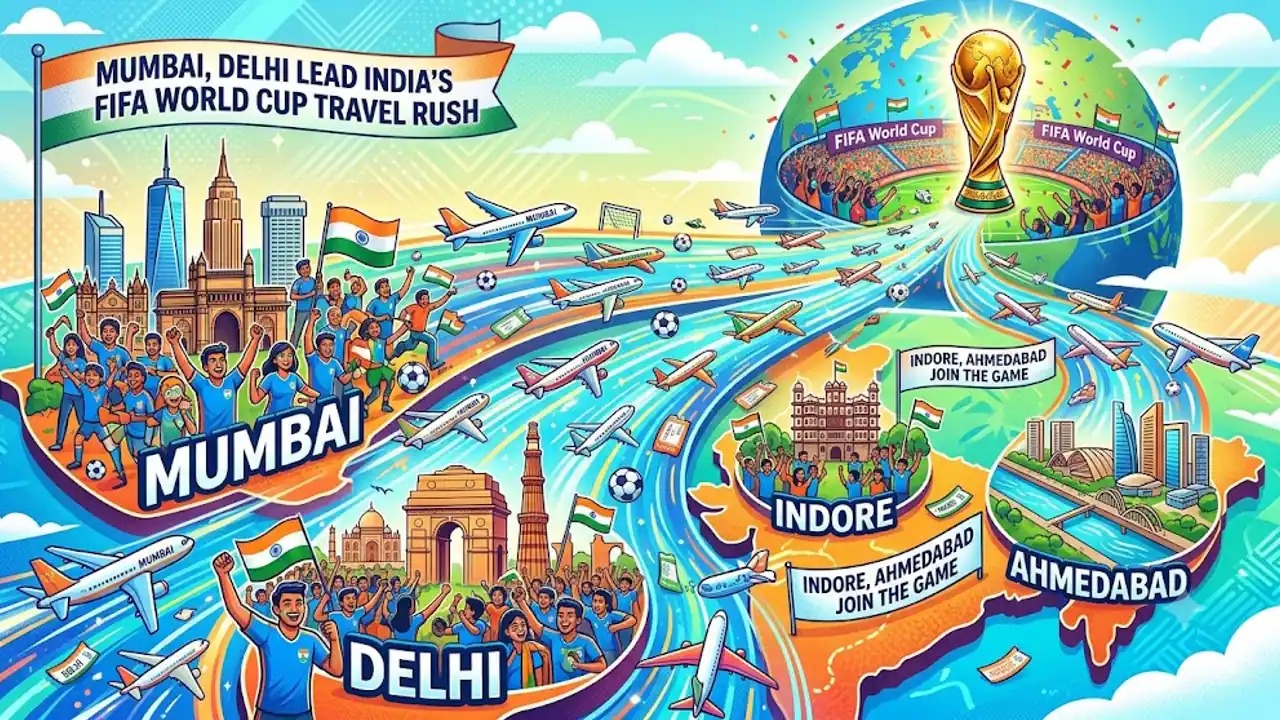
Indian travel to the FIFA World Cup 2026 has surged 60–65% over 2022 figures, with fans from major metros and rising tier-two hubs like Indore and Ahmedabad flocking to North America. Despite visa complexities and rising costs, travelers are increasingly securing early bookings for extended, multi-country sports tourism experiences.
As football’s marquee event unfolds in North America, a growing wave of Indian travelers from major metros and tier-two cities is heading abroad to witness the FIFA World Cup 2026 firsthand.
The FIFA World Cup 2026 has ignited a significant travel trend across India, with fans from metropolitan hubs like Mumbai and Delhi spearheading a surge in outbound tourism to the United States, Canada, and Mexico. Despite complex visa requirements and rising travel costs, industry data indicates that Indian interest in the tournament has translated into a 60–65% increase in World Cup-linked travel compared to the 2022 edition held in Qatar.
While Delhi and Mumbai continue to dominate, there is a notable rise in participation from tier-two cities including Indore and Ahmedabad, signaling a broadening base of sports tourism in India. Travelers are increasingly viewing the tournament not just as a sporting fixture, but as an opportunity for extended multi-city North American holidays.
Rising Demand for North American Sports Tourism
The influx of Indian fans into host nations is part of a larger, global shift in sports tourism. According to travel industry reports, booking windows for the 2026 tournament have lengthened significantly, with many fans securing flights and accommodations four to five months in advance—a departure from the 3–4 month trend seen previously.
The primary demographic driving this demand consists of travelers aged 28 to 45. While Mumbai, Delhi, Bengaluru, and Chennai remain the primary origin points, travel management firms report an uptick in inquiries from emerging urban centers like Indore and Ahmedabad. This shift suggests that the appeal of the FIFA World Cup 2026 is penetrating deeper into India’s interior, as fans look to combine match-day excitement with visits to iconic North American landmarks.
Navigating Logistical and Visa Hurdles
The logistical landscape for this year’s tournament is more demanding than in 2022. Unlike the previous edition, which benefited from proximity to India and simpler travel regulations, the 2026 tournament requires navigating distinct entry policies for the United States, Canada, and Mexico.
Travel experts emphasize that the U.S. B-2 tourist visa remains the cornerstone for most itineraries. Notably, Indian travelers possessing a valid U.S. visa may be exempt from separate requirements for Mexico, simplifying transit for those planning combined trips. However, experts continue to warn that high airfares and the rigorous nature of visa interviews at U.S. Consulates in major Indian cities remain significant barriers to entry for some.
Official Perspectives and Market Trends
According to analysts at leading travel firms, while the absolute number of visitors from India may face headwinds due to geopolitical uncertainty and costs, the profile of the "average" Indian traveler has shifted toward higher spending. These affluent visitors are prioritizing premium hospitality, often opting for multi-country packages that include luxury stays and curated stadium experiences.
"The FIFA World Cup 2026 provides a clear example of how data-driven decision-making can help global stakeholders maximize opportunities," notes a recent tourism industry analysis. Organizers state that the expanded 48-team format has extended the tournament's footprint, ensuring that demand remains sustained across the 16 host cities throughout the competition.
Why It Matters
For Indian travelers, the 2026 FIFA World Cup represents a "once-in-a-lifetime" opportunity to explore North American culture alongside elite global sport. For businesses and the travel sector, the event serves as a critical test of managing long-haul, complex itineraries for the Indian outbound market. The trend underscores a clear evolution in the Indian consumer’s willingness to invest heavily in "experiential" tourism.
Key Facts at a Glance
Growth Trend: FIFA World Cup-linked travel from India has increased by 60–65% compared to the 2022 edition.
Planning Behavior: Travelers are booking 4–5 months in advance, showing a shift toward earlier, more calculated planning.
Geographic Reach: While Mumbai, Delhi, Bengaluru, and Chennai lead in volume, interest is expanding to cities like Indore and Ahmedabad.
Visa Strategy: A U.S. B-2 visa is the primary requirement for most, with specific advantages for those visiting Mexico under the same travel authorization.
Frequently Asked Questions
1. Is a U.S. visa enough to visit all three host countries?
No. While a valid U.S. B-2 visa may exempt you from a Mexican tourist visa, Canada requires a separate Temporary Resident Visa (TRV) applied for through official channels.
2. Why are fans booking earlier this year?
Due to the high demand and the complexity of securing visas and flights to North America, travelers are securing arrangements months in advance to avoid price surges and logistical bottlenecks.
3. Which age group is driving this travel trend?
Data indicates that the strongest demand comes from travelers aged 28 to 45, who are often balancing work commitments with the desire to attend extended international holidays.
Source: Travelistaan, India Outbound, BookMyForex, The Economic Times, FIFA Official, U.S. Department of State.