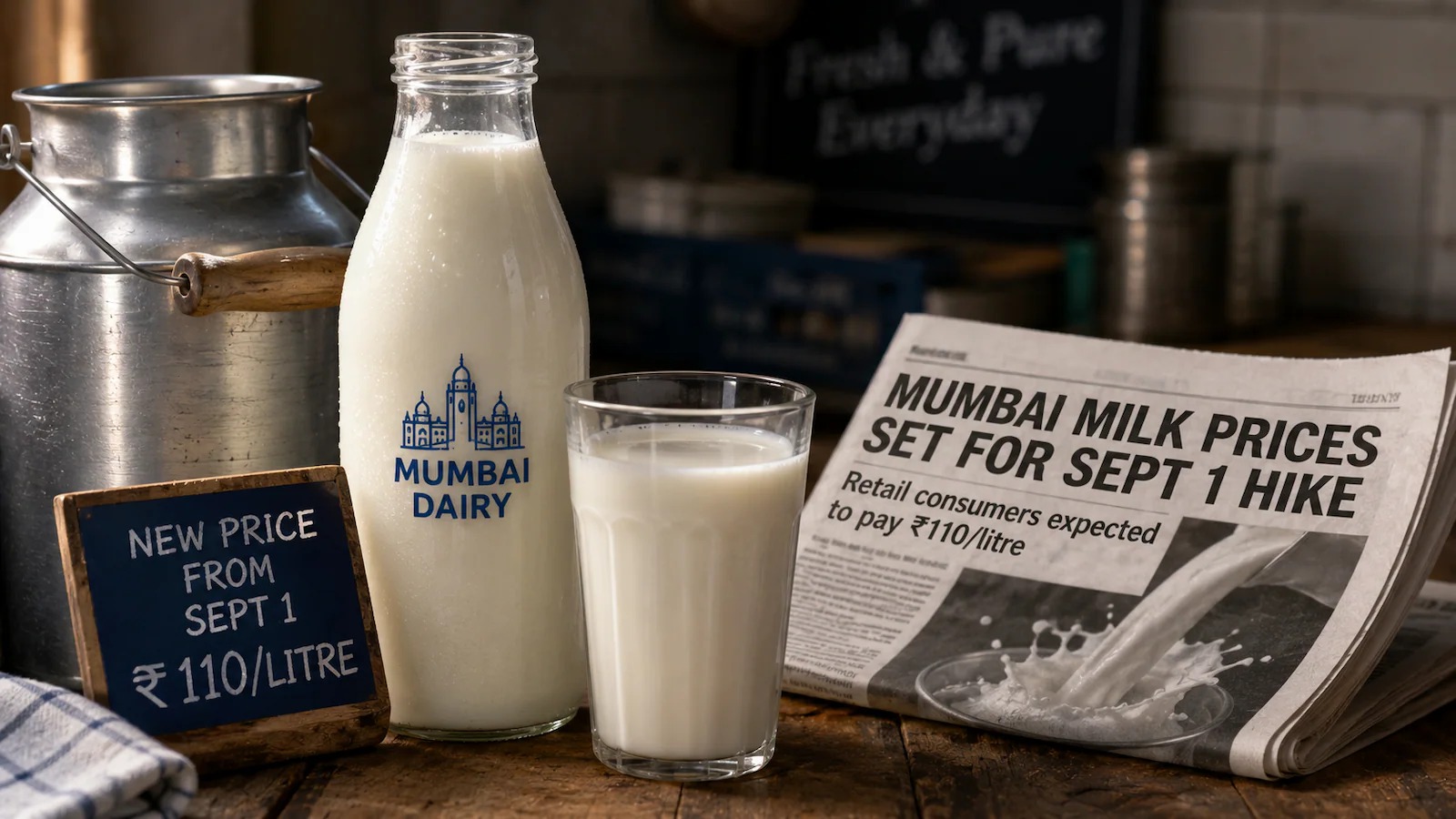
Mumbai milk prices are set to jump as the Bombay Milk Producers Association implements a Rs 9 per litre wholesale hike starting September 1, 2026. Driving wholesale rates to Rs 102, the increase pushes direct retail prices toward Rs 110 per litre due to soaring feed and maintenance costs.
The Bombay Milk Producers Association announced a Rs 9 per litre wholesale price hike in Mumbai starting September 1, 2026, pushing consumer costs up ahead of the festive season.
Household and commercial budgets across Mumbai face an immediate inflationary squeeze as the Bombay Milk Producers Association (BMPA) confirmed a steep increase in wholesale dairy rates. Effective September 1, 2026, the wholesale price of milk sourced from local dairies and urban tabela (cattle shed) networks will jump from Rs 93 to Rs 102 per litre. For everyday consumers relying on direct farm-supplied and independent vendor deliveries, retail prices are projected to surge as high as Rs 110 per litre. The revised rates will remain locked for a six-month duration through February 28, 2027.
Rising Production Costs and Tabela Pressures
The decision to revise rates was finalized during an association meeting held at the Diwan Centre Hall in Jogeshwari, Mumbai. According to trade representatives, the upward price adjustment is driven by mounting operational pressures on dairy farmers and cattle shed operators.
Over the past year, input expenses have escalated sharply, marked by a 25% surge in the cost of essential animal feed components, including green fodder, grains, tur chuni, chana chuni, and oil cakes. Furthermore, continuous hikes in transportation logistics, labor wages, and livestock maintenance have rendered the previous baseline rate of Rs 93 per litre economically unsustainable for regional producers.
Impact on Households, Retailers, and Businesses
The timing of the price escalation coincides with the onset of the peak festive calendar, bringing additional financial strain to households across the Mumbai Metropolitan Region. Local retail vendors, neighbourhood dairy outlets, and doorstep suppliers are expected to pass the full wholesale hike—and potentially supplementary distribution margins—directly onto retail buyers.
Beyond residential consumers drinking fresh milk, commercial establishments such as sweet shops (mithai walas), local bakeries, tea stalls, and restaurants will experience higher bulk procurement costs. Industry analysts warn that these elevated input costs will likely trigger secondary price ripples across derivative dairy items, including paneer, curd, and festival-specific sweets.
"According to officials and association representatives, the Rs 9 per litre wholesale hike was necessitated by a 25% surge in animal feed costs and escalating livestock maintenance expenses, with the new rates remaining in force until February 28, 2027."
Why It Matters
For citizens, consumers, and local small businesses, the milk price revision directly tightens monthly disposable incomes during a high-consumption festive period. Navigating higher dairy expenses requires households to reallocate grocery budgets, while commercial vendors must absorb or pass on input costs, affecting urban retail inflation metrics across western India.
Key Facts at a Glance
Effective Date: The new wholesale milk rates become active on September 1, 2026.
Wholesale Price Change: Rates increase by Rs 9 per litre, moving from Rs 93 to Rs 102 per litre.
Estimated Retail Impact: Direct farm and tabela-supplied retail milk prices may climb up to Rs 110 per litre.
Duration of Rate Lock: The revised pricing structure is scheduled to remain stable through February 28, 2027.
Frequently Asked Questions
When do the new milk prices take effect in Mumbai?
The revised wholesale and retail milk prices go into effect starting September 1, 2026.
How much is the wholesale price increasing?
The Bombay Milk Producers Association has raised wholesale rates by Rs 9 per litre, taking the baseline cost from Rs 93 to Rs 102 per litre.
Why are milk prices increasing at this time?
Producers cited a significant 25% surge in cattle feed items like grains, chuni, and oil cakes, alongside rising transportation and livestock maintenance expenditures.
How long will these revised milk rates stay in place?
Association leaders confirmed that the new pricing tier will remain in effect for a six-month period, expiring on February 28, 2027.
Official Sources Section
Bombay Milk Producers Association (BMPA) Official Proceedings
Regional Dairy Farmer and Tabela Operator Statements, Mumbai
Consumer Price Intelligence Bulletins, Maharashtra