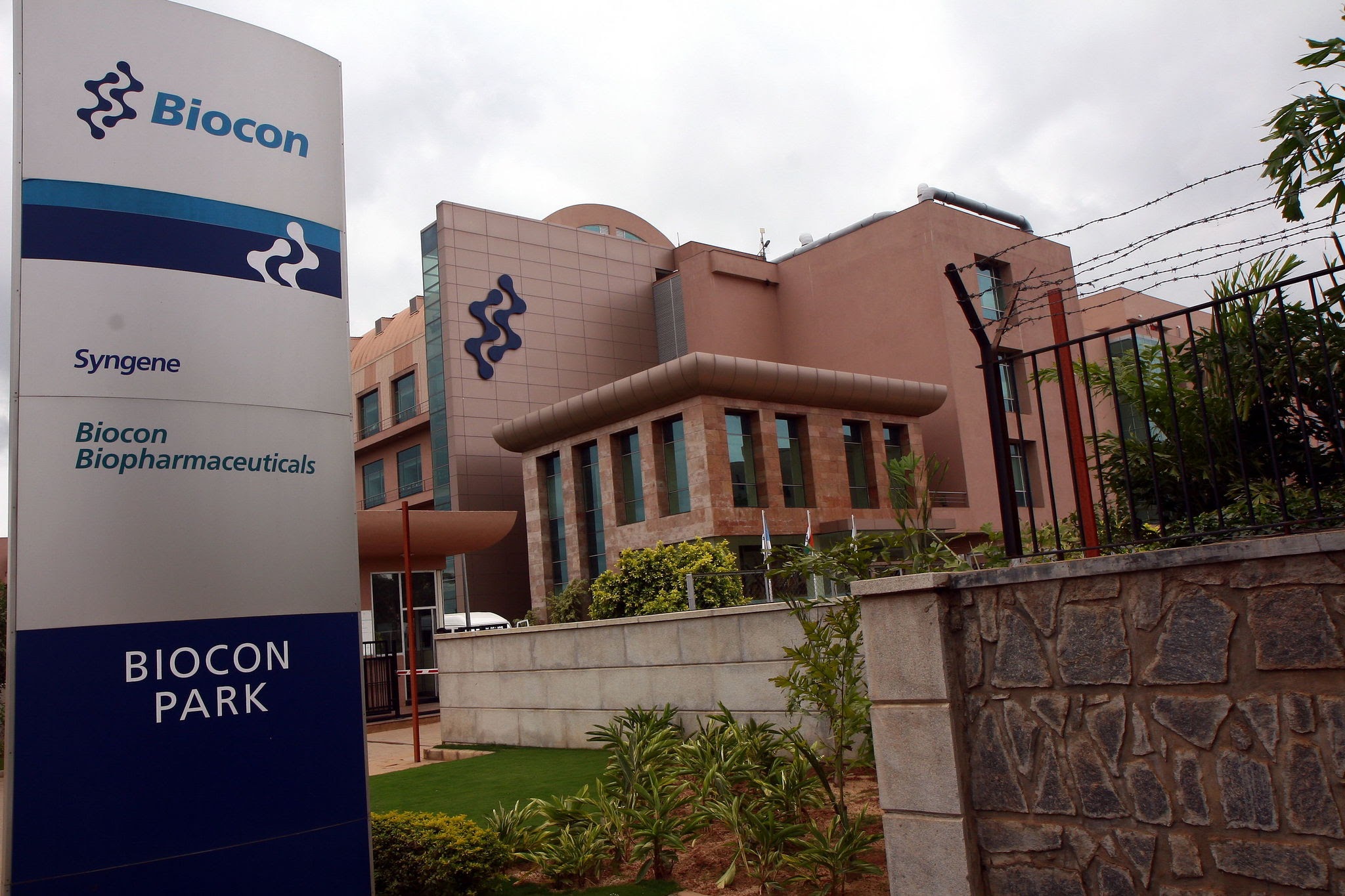
Global healthcare enterprise Mylan is planning to divest a stake worth up to $363 million in Indian biopharmaceutical company Biocon Limited through a structured stock market block deal. The planned capital exit follows previous corporate portfolio restructurings between the two companies within the high-growth biosimilars manufacturing sector.
BENGALURU, INDIA — Global pharmaceutical conglomerate Mylan is launching a capital divestment program to sell a significant equity stake in Indian biopharmaceutical manufacturer Biocon Limited, according to an institutional transaction term sheet circulated on July 13, 2026. The financial docket reveals that the planned transaction is valued at up to $363 million, structured to execute via secondary market block deals on domestic stock exchanges. The institutional equity offloading develops as global drug developers realign their non-core asset portfolios following massive cross-border corporate acquisitions.
Block Deal Structure and Pricing Benchmarks
According to the private term sheet distributed to institutional desk managers by the investment banking consortium managing the book, the base transaction size aims to divest a fixed percentage of Biocon's outstanding share capital. The financial arrangements include an upsize option that allows the seller to expand the total volume, bringing the complete value of the transaction to the $363 million ceiling depending on incoming institutional demand.
Market intelligence indicators show that the shares are slated to be offered within a specific pricing bracket, which includes a standard discount relative to the company's prior closing spot price on the domestic bourses. By utilizing a coordinated block deal window rather than open-market sales, the institutional seller limits prolonged downward pressure on the target firm's stock price, transferring large equity blocks directly to mutual funds, sovereign wealth managers, and large-scale insurance funds in a single trading session.
Context of the Mylan-Biocon Strategic Realignment
The planned equity sale represents a subsequent chapter in the long-term corporate relationship between the two pharmaceutical entities. Over the past decade, the companies operated a highly successful global co-development partnership aimed at winning regulatory approvals for complex biosimilar products—including generic iterations of trastuzumab, pegfilgrastim, and insulin glargine—across the United States and European Union markets.
However, the structural dynamics of this alliance shifted permanently when Biocon's dedicated subsidiary, Biocon Biologics, successfully completed a $3.34 billion acquisition of Mylan’s global biosimilars business unit, which had previously transitioned under Viatris Inc. As part of that multi-billion dollar consolidation, Mylan and its corporate affiliates received a combination of upfront cash assets alongside a substantial equity allocation in the expanded biopharmaceutical business. The current share sale via the block deal matrix serves as a targeted capital extraction strategy, converting non-voting corporate equity holdings into liquid asset balances to fund independent corporate debt reduction or parallel healthcare pipelines.
Broader Impact on Global Investors and the Biotech Sector
The implementation of the multi-million dollar institutional equity divestment introduces clear structural shifts across several market segments:
Public Equity Investors: Shareholders tracking the listed firm (NSE: BIOCON) must adjust to a near-term increase in active trading float, though the clearance of a major legacy corporate holder removes a long-term capital overhang.
Biopharmaceutical Competitors: The capital restructuring highlights a broader trend where international generic drug giants are exiting direct equity holdings in manufacturing partners to focus entirely on proprietary next-generation therapies.
Institutional Asset Managers: The large-scale block deal allows domestic mutual funds and global index trackers to build substantial long-term positions in a major biopharma provider without triggering sharp market price movements.
Official Sources Section
The transaction structures, valuation caps, and historical corporate alignment data detailed in this financial report are compiled from the verified institutional term sheet managed by the transaction coordinators, alongside historical asset acquisition records archived on the Biocon Limited Investor Portal and regulatory capital tracking logs managed by the Securities and Exchange Board of India (SEBI).
Quote Section
"According to officials, the upcoming block deal represents a standard portfolio optimization exercise rather than a shift in localized operational commitments," an investment banking representative close to the transaction details stated under anonymity. "Organizers stated that the operational manufacturing ties and distribution coordination networks established between the underlying business units will continue to run fully independent of the shifting shareholder equity ledger."
Why It Matters
In the capital-intensive biopharmaceutical sector, the transition of large equity blocks between corporate partners marks the natural evolution of global alliances. By liquidating a portion of its equity position through a controlled block deal, Mylan frees up significant cash reserves without disrupting the underlying commercial partnerships. This transaction allows Biocon to transition its shareholder base toward long-term institutional investors, stabilizing its corporate valuation as the company expands its biosimilar pipelines worldwide.
Key Facts at a Glance
Transaction Cap: Mylan plans to sell equity shares valued up to $363 million.
Execution Method: The transaction will be finalized through secondary market block deals on Indian exchanges.
Historical Context: The share position was established through past global biosimilar business consolidations.
Core Business Continuity: Underlying industrial manufacturing and drug distribution agreements remain unaffected by the share sale.
Frequently Asked Questions (FAQ)
Why is Mylan selling up to $363 million worth of shares in Biocon?
Following past asset restructurings, including the sale of its global biosimilars business to Biocon Biologics, Mylan held a substantial equity stake. Selling these shares allows the company to monetize non-core equity holdings and reallocate capital toward independent corporate objectives.
What is a block deal, and why is this method being used?
A block deal is a large-scale stock transaction involving a minimum number of shares or transaction value executed outside normal retail trading systems. This mechanism allows institutional sellers to transfer massive equity blocks directly to large buyers without destabilizing the public spot price.
Will this transaction impact the supply or availability of Biocon medications?
No. The transaction is strictly a shift on the corporate shareholder ledger. All active pharmaceutical manufacturing operations, research laboratories, and commercial pharmacy distribution networks remain fully operational.
Source: Institutional deal term sheets distributed to transaction desks; corporate filing histories archived by Biocon Limited under market tickers NSE: BIOCON and BSE: 532523.