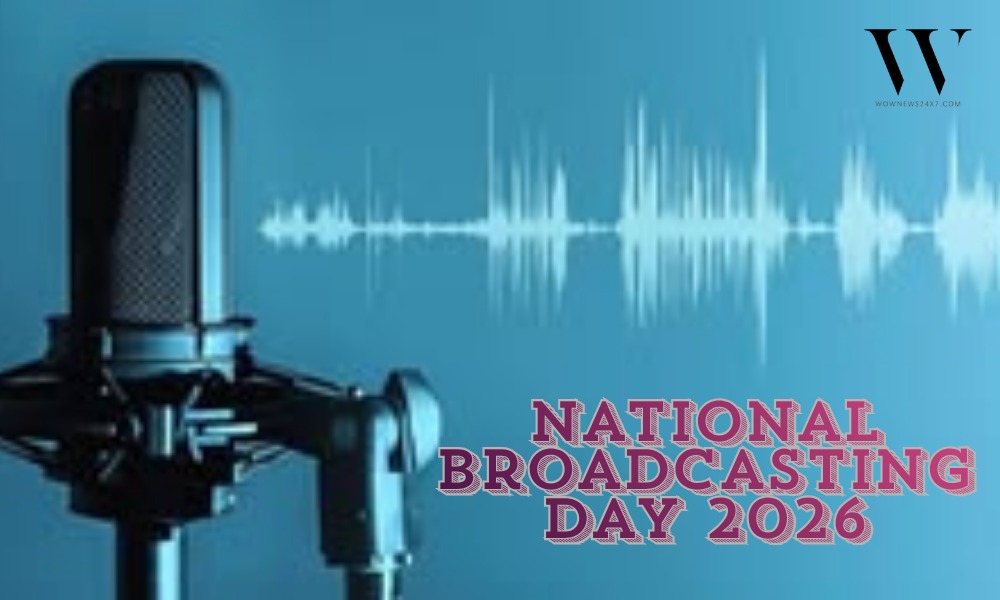
Observed annually on July 23, National Broadcasting Day 2026 highlights the transformative evolution of audio media in India. Marking nearly a century since the first broadcast by the Indian Broadcasting Company, modern educational frameworks leverage traditional radio and digital podcasts to significantly enhance student learning, remote academic outreach, and cognitive engagement across urban and rural classrooms.
National Broadcasting Day is being observed across India on July 23, 2026, marking the 99th anniversary of organized radio broadcasting in the country. Across New Delhi and state capitals, educational institutions and public media networks are emphasizing how traditional radio transmissions and modern digital podcasts are fundamentally reshaping student learning methodologies. This technological integration is critical today as educational policymakers seek low-cost, high-reach mediums to bridge learning gaps, deliver curriculum updates, and democratize academic resources for students in remote regions.
Evolution from Radio Waves to Digital Podcasts
The journey of Indian broadcasting began on July 23, 1927, when the first organized radio broadcast went on air from the Bombay Station under the private Indian Broadcasting Company. Transitioning through the establishment of the All India Radio (AIR)—officially adopting the name Akashvani in 1956—the medium has continuously adapted to public needs.
In 2026, the traditional wireless receiver has transformed into on-demand educational podcasts, streaming applications, and multi-lingual audio modules. According to Prasar Bharati official updates, curriculum-based audio segments and specialized student-focused programming are now reaching millions of households, ensuring uninterrupted supplementary education alongside traditional classroom instruction.
Impact on Academic Outreach and Accessibility
The integration of educational broadcasts into daily student routines offers profound advantages for learners, educators, and school administrators. Unlike text-heavy or high-bandwidth video formats, audio learning requires fewer data resources, making it exceptionally viable for semi-urban and rural student demographics.
Enhanced Comprehension: Auditory learning modules improve language acquisition, pronunciation, and active listening skills among primary and secondary students.
Remote Inclusivity: Students lacking constant internet connectivity or personal computing devices can access lessons via standard FM radio receivers and community radio stations.
Curriculum Flexibility: Teachers utilize archived podcast series to reinforce complex concepts in science, mathematics, and social studies at the students' own pace.
Official Announcements and Institutional Perspectives
Government bodies and public broadcasters have reinforced their commitment to expanding educational audio content as part of broader national development goals. The alignment of public service broadcasting with contemporary pedagogical tools reflects a strategic effort to modernize public instruction without alienating offline learners.
"According to officials, public service broadcasting remains a foundational pillar for national development, ensuring that educational outreach matches the pace of digital transformation while upholding its core mission to inform and educate the masses."
Why It Matters
For students, parents, and educators, the modern pivot toward audio broadcasting provides an affordable, highly accessible bridge to quality education. By combining the historical trust of All India Radio with the flexibility of contemporary podcasts, academic institutions can deliver standardized lessons nationwide, mitigating geographical disparities and supporting lifelong learning habits from an early age.
Key Facts at a Glance
Historical Milestone: July 23 marks the inception of organized radio broadcasting in India, initiated in 1927 by the Indian Broadcasting Company.
Public Broadcasting Identity: The national broadcaster, All India Radio, formally adopted the name Akashvani in 1956.
Modern Learning Integration: 2026 initiatives heavily feature curriculum-aligned podcasts and audio modules designed to support student learning across diverse linguistic regions.
Core Mandate: Public broadcasting continues to operate under its foundational guiding motto, "Bahujana Hitaya, Bahujana Sukhaya" (for the welfare and happiness of the masses).
FAQ Section
What is the historical significance of National Broadcasting Day?
National Broadcasting Day commemorates the launch of the country's first radio broadcast on July 23, 1927, by the Indian Broadcasting Company in Bombay.
How are podcasts helping students in 2026?
Podcasts provide flexible, low-bandwidth, and curriculum-aligned audio lessons that students can access on-demand to supplement their school education.
Does radio still play a role in formal education?
Yes, traditional radio networks and community stations continue to broadcast dedicated educational programs targeting remote and underserved student populations.
Who oversees public broadcasting operations in India?
Public broadcasting services are managed by Prasar Bharati, which oversees networks including All India Radio (Akashvani).
Source: Prasar Bharati, Ministry of Information and Broadcasting (India), All India Radio Archives