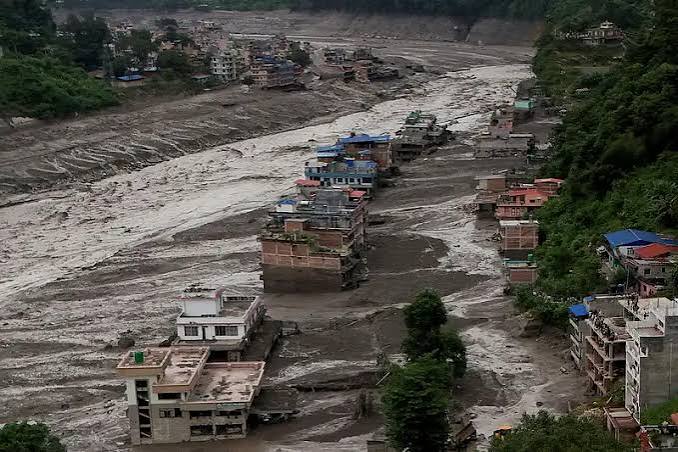
The death toll from devastating flash floods along Nepal's northern border has risen to 95, with rescue teams searching for hundreds of missing individuals. The sudden deluge destroyed homes, bridges, and power infrastructure, prompting a massive multi-agency emergency response across the affected mountain districts.
KATHMANDU — At least 95 people were confirmed dead, and nearly 400 others remained unaccounted for after a massive flash flood swept down the Bhote Koshi and Trishuli river corridors on Wednesday.
The disaster struck the Himalayan border region near Tibet, heavily impacting Rasuwa, Nuwakot, and Dhading districts. Triggered by a sudden surge of water and debris originating across the border, the deluge swept away houses, bridges, and key market settlements, disrupting travel routes and prompting an emergency response from the central government.
Devastating Impact Across Border Valleys and Hydropower Infrastructure
The sudden wall of water and mud overwhelmed communities near the border, including Timure and Syapru Besi in the Rasuwa district. According to local administration and disaster management reports, the floods severely damaged critical transport links, sweeping away several bridges along the Trishuli river system and obstructing key regional access points.
The infrastructure toll extended heavily into the energy sector, with multiple hydropower projects impacted, resulting in temporary disruptions to over 430 megawatts of power generation capacity. The Nepal Tourism Board confirmed that hundreds of travelers, including numerous domestic pilgrims and foreign nationals, were listed as missing as communication lines and transit paths remained cut off.
According to official updates from the Nepal Police, the Bagmati Province Police Office, and disaster management authorities:
Casualties: The confirmed death toll reached 95, with bodies recovered across Rasuwa, Nuwakot, Dhading, Chitwan, Gorkha, Tanahun, and Nawalparasi East.
Missing Persons: Nearly 400 individuals, including tourists and local residents, remain out of contact.
Rescue Deployments: The Nepal Army, Nepal Police, and Armed Police Force deployed helicopters, drones, and sniffer dogs to reach isolated pockets.
Infrastructure Damage: Multiple bridges, police outposts, and regional hydropower stations sustained heavy structural damage.
Official Sources Section
Quote Section
"Rescue and search operations are continuing across the affected areas as authorities work to locate missing people and assess the full scale of the disaster following the sudden flash floods,"
— stated emergency management officials in Kathmandu.
Why It Matters
For citizens, regional travelers, and commercial operators, the disaster highlights the severe vulnerability of Himalayan valley settlements to cross-border hydrological events. With major transport arteries and power assets disrupted, emergency authorities face intense pressure to restore connectivity, manage humanitarian relief, and locate missing tourists, while neighboring nations coordinate support to assist affected families.
Key Facts at a Glance
Event: Catastrophic flash flood originating from the Tibet border region into northern Nepal.
Confirmed Fatalities: 95 deaths recorded across multiple downstream districts.
Primary Impact Zones: Rasuwa, Nuwakot, Dhading, and Chitwan.
Rescue Response: Multi-agency mobilization featuring the Nepal Army, aerial support, and specialized ground teams.
FAQ Section
What caused the flash floods in northern Nepal?
Authorities report that a sudden, massive surge of water and debris originated from the Tibetan side of the border down the Bhote Koshi river basin.
Which districts were hit hardest by the disaster?
The worst-hit areas include Rasuwa, Nuwakot, Dhading, and Chitwan along the Bhote Koshi and Trishuli river corridors.
How many casualties and missing persons have been reported?
Police confirmed at least 95 fatalities, while nearly 400 individuals remain listed as missing pending ongoing verification.
Where can families check official updates regarding missing travelers?
Updates and verification notices are coordinated through the Nepal Tourism Board Portal and local district administration offices.
Source: Nepal Police, NDRRMA, Nepal Tourism Board, Reuters